Sustainable Weight Loss With GLP-1: A Holistic Guide to Long-Term Success
Discover how combining GLP-1 therapies with healthy habits leads to sustainable weight loss and long-term success. Learn tips for lifelong well-being.

Estimated reading time: 12 minutes
Key Takeaways
- GLP-1 meds curb appetite but must be paired with healthy habits for lasting results.
- Sustainable weight loss means gradual 0.5–1 lb/week reduction, supported by balanced nutrition and exercise.
- Window of opportunity: low hunger on GLP-1 is the best time to build new routines.
- Complementary changes—diet, activity, sleep, stress management—lock in progress.
- Monitoring & long-term plan ensure you adjust for plateaus and maintain gains.
Table of Contents
- 1. Understanding GLP-1 Therapy
- 2. The Concept of Sustainable Weight Loss
- 3. Integrating Behavioral & Lifestyle Changes
- 4. Complementary Lifestyle Modifications
- 5. Addressing Common Challenges
- 6. Real-Life Success Stories & Expert Insights
- Conclusion
- FAQ
1. Understanding GLP-1 Therapy
What is GLP-1?
GLP-1 (glucagon-like peptide-1) is a hormone released by the gut post-meal. It signals fullness to the brain and stimulates insulin release.
- Appetite suppression & increased satiety: binds to brain receptors to ease cravings (Mayo Clinic).
- Delayed gastric emptying: slows stomach emptying so you feel full longer (Intermountain Healthcare guide).
- Better blood sugar control: boosts insulin when needed and lowers glucagon (Harvard Health).
Documented benefits: average weight loss of 10–15% (newer drugs reach 20–25%), plus improved HbA1c, blood pressure, and cholesterol (YNHHS).
Potential side effects & risks:
- Common GI issues: nausea, vomiting, constipation (Harvard Health).
- Rare but serious: pancreatitis, gallbladder problems, kidney injury (Mayo Clinic).
- Unknown long-term effects—regular medical check-ups are vital (YNHHS).
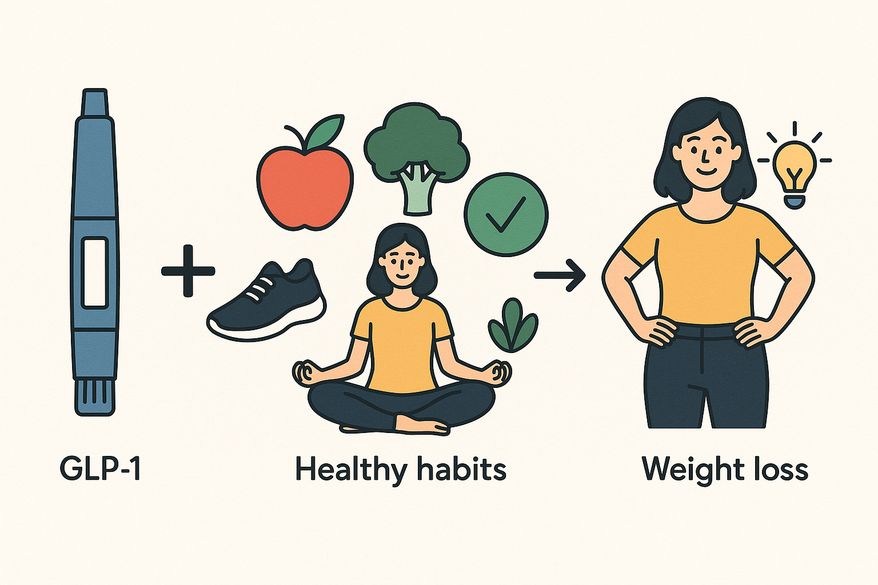
Why combine medication + lifestyle? GLP-1 eases hunger but without balanced eating, movement, sleep, and stress routines, weight often returns. For a deeper dive into the medications, results, and safety, see our definitive guide to GLP-1 weight loss.
2. The Concept of Sustainable Weight Loss
Define sustainable weight loss:
- Slow, steady loss of 0.5–1 lb per week
- Maintains muscle and metabolism
- 5–10% total weight reduction yields significant health gains (Mayo Clinic)
Quick-Fix vs. Sustainable Approaches
- Quick-Fix: extreme calorie cuts, rapid drop, no habit change, high rebound risk
- Sustainable: balanced meals, regular exercise, gradual loss, lifelong habit building
GLP-1 supports gradual plans—fewer cravings make slow loss feel more manageable. If you’re unsure whether your current weight loss approach is healthy, check out how to tell if you are at a healthy weight for a comprehensive overview.
3. Integrating Behavioral & Lifestyle Changes
“Window of opportunity”: when GLP-1 reduces hunger, it’s prime time to establish new habits (Intermountain Healthcare guide). For more on how to build sustainable habits for lasting results, see our guide on behavior change with GLP-1 therapy.
Actionable habit-building steps:
- Structured meal planning
- Balanced plate: 20–30 g lean protein, high-fiber carbs, healthy fats (ScienceDirect study).
- Batch cook and portion to curb impulse eating.
- Regular physical activity
- 150 min/week moderate aerobic exercise
- Strength training 2–3×/week to preserve muscle (FitOn Health).
- Mindful/intuitive eating
- Chew slowly, turn off screens, tune into fullness
- Distinguish emotional vs. physical hunger; use coping tools (Harvard Health).
- Environmental design
- Keep healthy snacks visible; hide processed foods
- Use smaller plates; establish meal routines
Monitoring & adjustment: track weight, waist, energy, sleep, and meals—see progress and tweak via a complete Trimm guide. Consult clinicians to adjust dosing and break through plateaus (YNHHS).
4. Complementary Lifestyle Modifications
Dietary modifications:
- Prioritize protein each meal to preserve muscle (ScienceDirect study).
- Fill half the plate with high-fiber vegetables and whole grains.
- Minimize processed, sugary foods to trust satiety.
- Drink 8–10 cups of water daily for appetite control.
- Avoid overly low calories to prevent rebound eating.
The best diet for GLP-1 therapy focuses on balanced nutrition, protein, fiber, and healthy fats to support both weight loss and overall health.
Exercise enhancements:
- Combine cardio and strength to boost insulin sensitivity (Mayo Clinic).
- Exercise uplifts mood and reduces stress, supporting habit adherence.
Sleep & stress management:
- Get 7–9 hours nightly; limit screens an hour before bed. For more on optimizing rest, see our sleep tips for GLP-1 users. You can also learn more about improving sleep during GLP-1 therapy for better health to further support your journey.
- Practice guided breathing, meditation, or journaling (FitOn Health).
5. Addressing Common Challenges
Common challenges: GI side effects, motivational dips, drug-only expectations, rebound worries, cost/access hurdles.
Strategies to overcome each:
- Side effects: increase dose slowly, eat small meals, avoid fatty foods early on, stay hydrated (Harvard Health).
- Motivation: focus on process goals, track energy and mood, join support groups (Intermountain Healthcare guide). For additional tips, see our guide on staying motivated with GLP-1 therapy.
- Expectations: recognize GLP-1 needs lifestyle education (ScienceDirect study).
- Long-term planning: prepare for medication transition and keep habits strong (YNHHS).
6. Real-Life Success Stories & Expert Insights
Most patients lose 10–20% of body weight when combining GLP-1 with support (Mayo Clinic).
“GLP-1s reduce ‘food chatter,’ making it easier to build new habits,” says a Mayo Clinic physician.
Bariatric specialists call GLP-1 therapy “one piece of the puzzle,” emphasizing nutrition, fitness, and mental health as partners (YNHHS).
Multidisciplinary approach: medication + nutrition + exercise + mental health + monitoring = best outcomes.
Conclusion
GLP-1 therapies can drive significant weight loss by curbing hunger and improving metabolism. Yet, sustainable weight loss with GLP-1 only happens when paired with solid lifestyle habits. For insights on building lasting habits, see Building Habits Guide.
Core pillars for lasting success:
- Balanced, protein-rich diet
- Regular aerobic and strength exercise
- Quality sleep and stress management
- Mindful eating and intuitive hunger cues
- Thoughtful environmental design
Ready to set a goal date, map injection sites, detect side-effect patterns, and track smooth trends? Learn more in our Long-Term Success Guide or check out our practical guide to sticking to GLP-1 therapy for long-term success.
Before starting GLP-1 therapy, talk with a qualified healthcare provider. Seek a plan that includes nutrition and behavior support. By combining medication with healthy habits—and using tools like Trimm—you can build a path to lifelong well-being.
FAQ
- What is GLP-1 therapy?
It uses synthetic GLP-1 hormones to suppress appetite, slow digestion, and improve blood sugar control. - Are side effects long term?
Most GI side effects lessen with dose adjustments; serious risks are rare but require monitoring. - How do I maintain weight loss after stopping GLP-1?
Continue solid habits—balanced diet, exercise, sleep, and stress management—and regular check-ins. For more detailed strategies, check out our comprehensive guide to maintaining weight loss after GLP-1 and these essential post-GLP-1 maintenance tips. For additional support, explore these GLP-1 medication adherence tips to help you stay on track.