
Long Term Success with GLP-1 Therapy: A Comprehensive Guide to Sustained Weight Management
Explore strategies for long term success with GLP-1 therapy, integrating medication, lifestyle changes, behavior support, and monitoring for lasting results.

Estimated reading time: 8 min read
Key Takeaways
- GLP-1 receptor agonists support long-term weight loss maintenance by reducing appetite and improving metabolic health.
- Success metrics include a 5–10% body weight reduction and retention of ≥75% of that loss after 1–2 years.
- A holistic plan—balanced nutrition, regular exercise, sleep, stress management, and behavioral support—is essential.
- Ongoing medical monitoring, dose titration, and readiness to adjust therapy mitigate risks and side effects.
- Practical strategies like routine injection habits, meal planning, self-monitoring, and support networks boost adherence.
Table of Contents
- Introduction
- Understanding GLP-1 Therapy
- Defining Long-Term Success
- Core Strategies
- Research & Evidence-Based Insights
- Potential Side Effects & Risk Management
- Practical Tips
- Conclusion
- FAQ
Introduction
“Long term success with GLP-1 therapy” means not just losing weight but keeping it off for years and improving metabolic health. Obesity is a chronic, relapsing condition—it comes back unless we manage it over time, much like high blood pressure or diabetes.
GLP-1 receptor agonists—such as semaglutide, liraglutide, and tirzepatide—reduce appetite, increase fullness, and help control blood sugar. In this comprehensive guide, we will:
- Explain how GLP-1 works
- Define clinical benchmarks for lasting weight loss
- Outline key lifestyle, medical, and behavior strategies
- Summarize research evidence
- Review side effects and risk management
- Share practical tips for everyday life
Tracking all aspects—doses, weight, side effects, meals, and measurements—is key to success. Apps like Trimm can streamline logging with clear charts and reminders.
Understanding GLP-1 Therapy
What is GLP-1?
- GLP-1 (glucagon-like peptide-1) is a hormone released from the gut after eating.
- It signals fullness to the brain and prompts insulin release from the pancreas.
How GLP-1 Drugs Work
- Slow gastric emptying to increase fullness.
- Reduce hunger signals in the hypothalamus, cutting cravings.
- Enhance glucose-dependent insulin release and lower glucagon when blood sugar is high.
Key Clinical Insights
- Average weight loss ranges from 5–18% across trials of semaglutide, liraglutide, and tirzepatide.
- Sustained improvements in blood pressure and cholesterol often follow.
- Common side effects include nausea, vomiting, diarrhea, and constipation.
Defining Long-Term Success
Clinical Benchmarks
- A 5–10% drop in body weight is considered clinically meaningful.
- Maintaining at least 75% of that loss after 1–2 years indicates good maintenance.
Metabolic Health Criteria
- Stable HbA1c and fasting glucose readings.
- Lowered blood pressure and LDL cholesterol.
Real-World Considerations
- Tolerable side effects that fit daily life.
- Cost, insurance coverage, and access.
Core Strategies
1. Sustainable Lifestyle Modifications
Balanced Nutrition- High-protein intake (1.2–1.5 g/kg/day) to preserve muscle mass.
- High-fiber, minimally processed foods for fullness and stable blood sugar.
- Light calorie tracking to avoid gaps when appetite is low. For more guidance on optimizing your eating plan, see our comprehensive guide to the best diet for GLP-1 therapy.
- Strength training 2–4 times per week to maintain muscle mass.
- At least 150 minutes/week of moderate aerobic exercise for heart health.
- Aim for 7–9 hours of quality sleep—poor sleep raises ghrelin and hunger.
- Use mindfulness or cognitive-behavioral tools to curb emotional eating.
2. Consistent Medical Monitoring & Adherence
- Regular check-ins: every 1–3 months initially, then every 3–6 months to track weight, vitals, labs, and side effects.
- Gradual dose titration to lower GI side effects—see GLP-1 titration schedule guide.
- Maintain effective dosing and partner with your provider to adjust only if stable.
- Have a plan for weight regain: re-escalate dose or restart therapy as needed. For practical advice on staying consistent, check out our practical guide to sticking to GLP-1 therapy.
3. Behavioral & Psychological Support
- Team approach: involve dietitians, psychologists, and exercise coaches.
- Set patient-centered goals that fit personal preferences and barriers.
- Structured counseling to manage social cues, stress, and triggers.
- Group support or telehealth check-ins to boost accountability. You may also benefit from exploring the best GLP-1 support groups for lasting results.
Research & Evidence-Based Insights
Long-Term Clinical Trials- Semaglutide 68-week trial: 80% of initial weight loss retained at week 68.
- Tirzepatide vs. placebo 72-week study: mean 18% weight loss with lasting metabolic gains.
- Meta-analysis of 40–120 week studies: durable benefits when therapy is continued.
- Observational data show 10–15% weight loss maintained at 2 years when combined with healthy habits.
Potential Side Effects & Risk Management
Common Adverse Events- Nausea (30–50%) and vomiting (10–20%).
- Diarrhea or constipation (10–30%).
- Risk of low nutrient intake if appetite becomes too suppressed.
- Slow dose increases per label to reduce GI upset.
- Eat small, bland meals and stay hydrated to ease nausea.
- Regular nutrition checks to catch deficiencies early; add vitamins if needed.
Practical Tips
- Build a routine: take injections on the same day and link them to a daily habit.
- Plan meals: set protein and vegetable targets even when hunger is low.
- Self-monitor: record weight, hunger/fullness, and side effects; share logs with your doctor—see how to track your journey.
- Preserve metabolism: include strength workouts and adequate protein.
- Maintenance planning: discuss low-dose therapy vs. tapering and triggers for restart.
- Lean on support: involve family or join peer groups and use digital coaching for accountability. For more on the value of community, see the essential role of GLP-1 community support for long-term success.
Conclusion
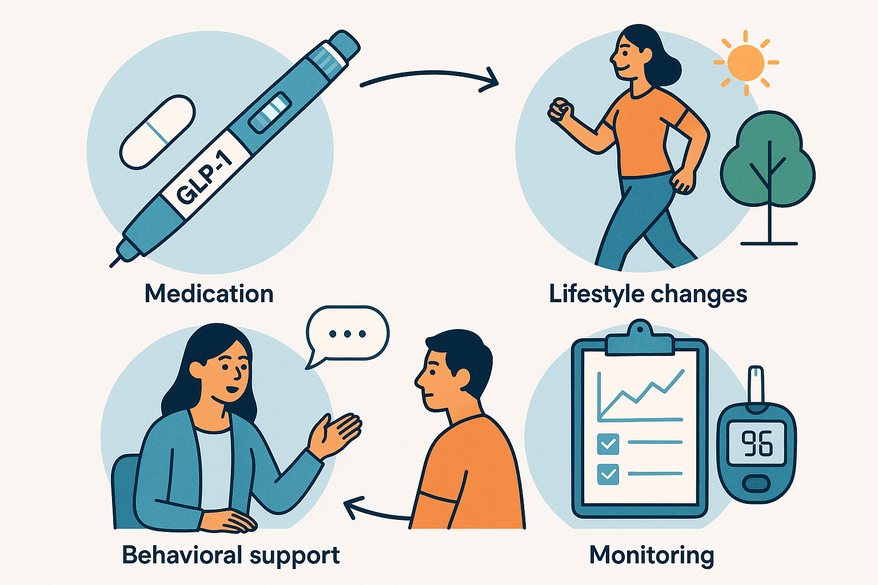
Achieving long-term success with GLP-1 therapy depends on embedding medication within a holistic plan: balanced nutrition, regular exercise, sleep and stress management, behavioral support, and close medical supervision. Durable weight loss and metabolic improvements are most likely when therapy continues alongside healthy habits. Work with your healthcare team to build a personalized, ongoing strategy for sustained wellness and weight management. For more practical strategies, read our guide on staying motivated with GLP-1 therapy. For a comprehensive overview of medications, results, and safety, see our definitive guide to GLP-1 weight loss.
FAQ
- What qualifies as long-term success with GLP-1 therapy?
A clinically meaningful outcome is a 5–10% body weight loss, with maintenance of at least 75% of that loss over 1–2 years. - How often should I see my healthcare provider?
Initial visits every 1–3 months, then every 3–6 months, to monitor weight, labs, vitals, and side effects. - Can I stop therapy once I reach my goal?
Stopping may lead to weight regain. Discuss maintenance dosing or tapering strategies and have a plan to restart if needed. - What if I experience side effects?
Common GI issues often improve with slow dose titration and dietary adjustments. Stay hydrated and consult your provider for personalized guidance. - How important are lifestyle changes?
They’re essential. Combining medication with balanced nutrition, exercise, sleep, stress management, and behavioral support maximizes results. For more on building sustainable habits, see our article on behavior change with GLP-1 therapy. For actionable adherence strategies, check out our GLP-1 medication adherence tips.