How to Log Body Measurements Accurately for Your Weight Journey
Learn how to log body measurements accurately with consistent methods, tips, and tools to track your progress confidently and body-positively.

Estimated reading time: 8 min
Key Takeaways
- Use a flexible, non-stretch tape measure and measure the same landmarks each time.
- Take measurements under consistent conditions and wear minimal or fitted clothing.
- Keep the tape snug, level, and avoid compressing skin or sucking in.
- Record measurements multiple times and track changes over time rather than relying on one reading.
- Understand your body type for personalized tracking and dressing tips.
Tracking your body measurements accurately can be helpful for monitoring progress on any weight or health journey, including when using GLP-1 medications like Ozempic or Wegovy. Knowing how to log body measurements consistently helps you observe changes over time, supports motivation, and encourages a body-positive approach to health. This guide covers how to measure consistently and interpret your unique body shape—because your body type and shape can be useful when it comes to tracking, dressing, and feeling your best.
Step 1: Choose the Right Measuring Tape and Tools
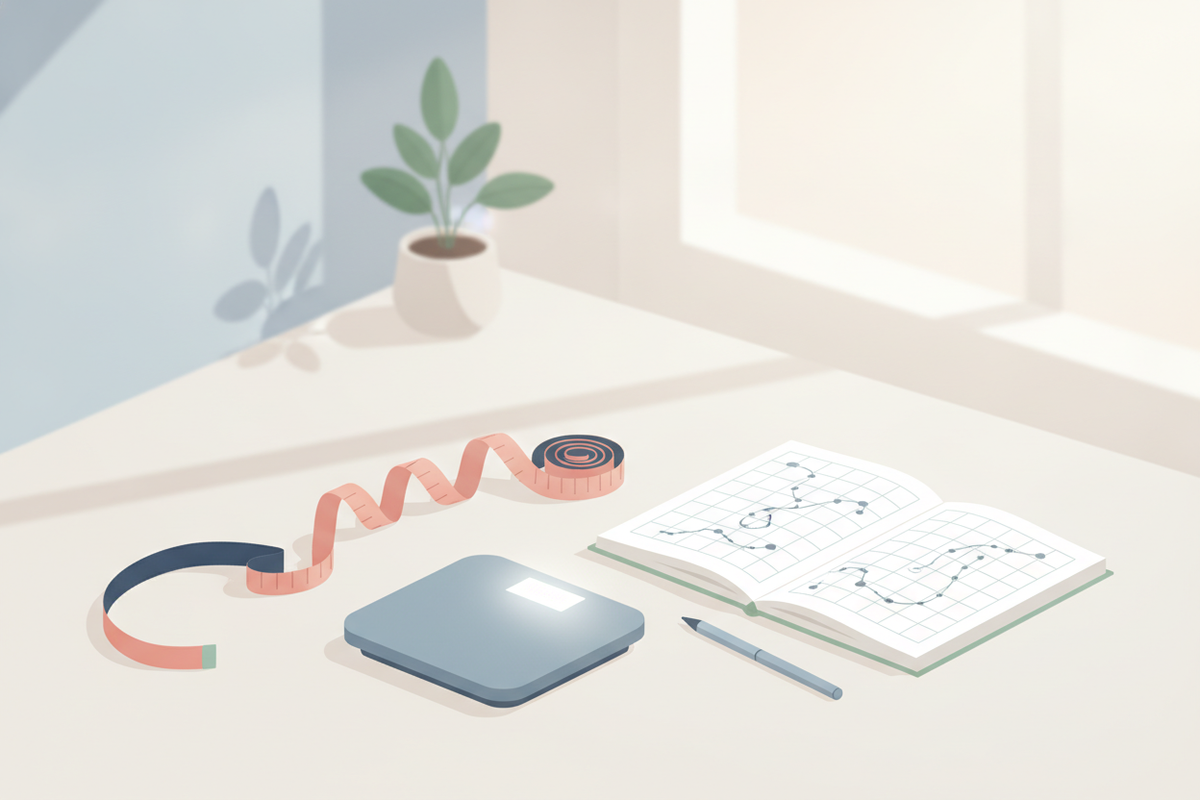
Start with a flexible, non-stretch tape measure designed for body measurements. Avoid metal or rigid tapes, which don’t conform to curves well and can cause inaccurate readings. Cloth or plastic tapes with clear measurement markings in centimeters and inches are ideal.
In addition to a tape, have a notebook, app, or digital tracker ready. Apps like Trimm let you log measurements alongside weight, doses, and side effects, creating comprehensive progress charts.
- Use a tape measure that lies flat without gaps
- Choose a tool with fine but clear markings for precision
- Prepare a consistent place to record your numbers
Step 2: Measure Under Consistent Conditions
To capture progress, take your measurements at the same time and conditions every time. Experts recommend:
- Measuring in the morning before eating or drinking
- After using the bathroom for comfort
- Wearing minimal or the same fitted clothing each session
- Standing in the same posture with relaxed but straight alignment
This consistency helps reduce fluctuations caused by water retention, food intake, or clothing bulk. Keeping these variables steady can help show physical changes rather than daily noise.
Step 3: Identify and Measure the Same Anatomical Landmarks
Focus on these common body parts for tracking:
- Waist (usually at the narrowest point or just above the belly button)
- Hips (widest part below the waist)
- Chest (across the nipples)
- Thighs (around the fullest part)
- Arms (mid bicep relaxed)
Learn how to find these landmarks reliably for consistency. For example, measuring your waist at the narrowest point is standard but some prefer the belly button level — just stick to one method each time.
Understanding your body type can also help interpret these measurements. Frameworks like ectomorph, mesomorph, endomorph or apple, pear, hourglass, and rectangle shapes describe different proportions. For a deep dive, see our detailed Apple vs Pear Body Shape guide and body type explanations. For more on how to measure your body accurately, check out our How to Measure Healthy Weight with Body Measurements guide.
Step 4: Keep the Tape Level, Snug, but Not Too Tight
Wrap the tape measure so it’s parallel to the floor around your body part. Avoid twisting or angling the tape, which can distort numbers.
The tape should be snug enough to stay in place but not compress the skin or cause indentations. Don’t suck in your stomach or flex muscles, as this skews true size. Relax your body to get natural readings.
- Hold the tape flat against skin or fitted clothing
- Check levelness with a mirror or by feeling the tape around
- Breathe normally and stand naturally
Step 5: Take Each Measurement Multiple Times and Calculate the Average
To reduce error, measure each site 2–3 times per session. Then average these numbers or use the median to smooth out inconsistencies.
This method is especially helpful if you’re learning how to log body measurements accurately for the first time or measuring tricky areas like hips or thighs.
Step 6: Record Measurements Consistently and Precisely
Log your numbers in a consistent unit format—either inches or centimeters—and stick to one. Note the decimal precision you prefer (e.g., 1 decimal place) and keep it uniform.
Whether you use a paper log, spreadsheet, or an app like Trimm, consistent recording helps you easily compare progress and generate reliable charts.
Step 7: Track Changes Over Time, Not Just Single Readings
Body measurements naturally fluctuate day-to-day. Don’t get discouraged by small ups and downs. Instead, focus on trends over weeks and months.
Regular tracking can help you spot patterns and correlate changes with your GLP-1 medication doses, diet, and exercise. This holistic view supports informed discussions with healthcare providers.
Step 8: Use Photos, Notes, or Apps to Support Consistency
In addition to numbers, photos and notes add valuable context. Taking pictures from multiple angles in fitted clothing under similar lighting can visually complement your measurements.
Keeping notes about how you felt, your posture, or any unusual factors (like bloating) helps explain anomalies. Apps like Trimm integrate these elements so you can see your journey progress clearly.
Tips & Common Mistakes
Accurate body measurement logging takes practice. Avoid these pitfalls:
- Sucking in your stomach: This alters waist size artificially.
- Twisting or angling the tape: Leads to inconsistent readings.
- Measuring over bulky clothing: Adds centimeters or inches.
- Not measuring the same landmarks: Changes results unpredictably.
- Taking only one measurement: Increases chance of error.
- Poor posture or flexing muscles: Distorts natural body shape.
Remember, body shape and type are largely genetic and descriptive, not prescriptive. No matter if you identify as an ectomorph, mesomorph, endomorph, or an apple or pear shape, your unique body deserves respect and positive care. You can learn how to dress for your body type and train smartly, but your measurement journey is about health and confidence, not shame. You can also find insights on how body types influence weight loss in our Body Types and Weight Loss Success: 10 Essential Insights and explore Weight Loss Progress by Body Type: A Complete Guide for detailed information.
Conclusion
Learning how to log body measurements accurately can empower you with clear, reliable data to track your weight loss or health journey, including when using GLP-1 medications. Consistency in method and conditions, combined with understanding your unique body shape, can make the process easier and more rewarding.
Use flexible tape measures, measure the same anatomical points under stable conditions, take multiple readings, and record them precisely. Complement numbers with photos and notes for a full picture.
For a seamless experience, try Trimm, the all-in-one app that tracks your doses, weight, side effects, and measurements — turning your progress into charts and milestones you can actually see.
FAQ
What is the best time of day to take body measurements?
The best time is in the morning before eating or drinking and after using the bathroom. This helps ensure your body is in a consistent state free from food or water weight fluctuations.
How tight should the measuring tape be when logging body measurements?
The tape should be snug enough to stay in place but not so tight that it compresses the skin or causes indentations. Avoid pulling too tight or leaving it loose.
Should I measure my waist at the belly button or the narrowest point?
Both methods are used, but choose one and stick with it for consistency. The narrowest point is common, but some prefer the belly button level. Consistency is key. For more on understanding your ideal size, see our complete guide on how to tell if you are at a healthy weight.
How many times should I repeat each body measurement for accuracy?
Take each measurement 2–3 times and use the average or median to reduce errors and improve reliability.
What body parts should I measure to track progress?
Common sites include waist, hips, chest, thighs, and arms. Measuring these gives a comprehensive view of body changes. For tailored advice on tracking measurements by body type, see our Tracking Body Measurements for Body Types: The Ultimate Guide and learn more about weight loss progress for pear shape women.
How often should I take body measurements to see real changes?
Measuring once a week or every two weeks is a common approach. This frequency balances capturing progress with avoiding daily fluctuations.
Free to start
Try the Trimm app
Everything in this guide, in your pocket.
Get it on iPhoneGet it on Android