Tracking Body Measurements for Body Types: The Ultimate Guide
Learn how to track body measurements for body types with ease. Master measuring tips, shape categories, and progress tracking for fitness and style.

Estimated reading time: 12 min
Key Takeaways
- Accurate bust/chest, waist, and hip measurements are key to identifying your body type.
- Body shape categories like apple, pear, hourglass, and rectangle help you understand your proportions.
- Tracking secondary measurements like shoulders and thighs can aid in monitoring fitness progress.
- Consistent measuring techniques and tools improve reliability over time.
- Use body measurements to guide clothing choices and support fitness goals.
Understanding your body type through tracking body measurements for body types is a supportive, body-positive way to appreciate your unique shape and guide your fitness and style choices. Whether you wonder, "what body type am I?" or want to know how to dress for your body type, mastering measurement techniques and knowing the common frameworks can empower your journey. This guide covers all you need—from taking accurate measurements and decoding body shape categories to tracking progress effectively and using tools like the Trimm app to log your journey.
1. Core Body Measurements: Bust/Chest, Waist, and Hips
The foundation of tracking body measurements for body types lies in three primary measurements: bust (or chest for men), waist, and hips. These three points form the basis for most body shape classifications.
To measure correctly, use a flexible tape measure and stand relaxed. For bust/chest, wrap the tape around the fullest part of your chest, usually across the nipple line. For waist, measure at the narrowest point, often just above the belly button. For hips, measure at the widest part of your hips and buttocks.
- Keep the tape snug but not tight to avoid compressing the skin.
- Measure in front of a mirror or get help for accuracy.
- Record measurements in the same units each time (inches or centimeters).
2. Understanding Body Shape Categories and Ratios
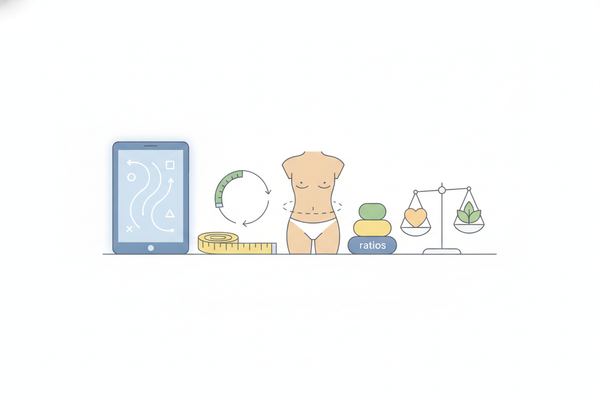
Body shapes are commonly grouped by how your bust/chest, waist, and hip measurements relate to each other. These ratios can help identify shapes such as apple, pear, hourglass, and rectangle.
For example, an apple shape often features a larger bust and waist relative to hips, while a pear shape has narrower bust and wider hips. Hourglass shapes typically have balanced bust and hips with a smaller waist, and rectangles have similar bust, waist, and hip measurements.
- Calculate waist-to-hip ratio to help differentiate between apple and pear shapes.
- Refer to guides like the Apple vs Pear Body Shape article for detailed explanations.
- Remember, these categories are descriptive, not prescriptive, emphasizing self-acceptance.
3. Measuring Secondary Points: High Hip, Shoulders, Arms, and More
Sometimes, your core measurements may yield borderline or unclear body type results. Secondary measurements, like the high hip (just below the hip bone), shoulders, arms, thighs, calves, and neck, can provide additional insight.
For instance, shoulder width may help clarify whether you lean towards a mesomorph frame, while thigh and calf measurements can track muscle growth or fat loss. Including high hip measurements assists with more precise clothing fit, especially for pants and skirts.
- Measure shoulders from bone to bone across the back.
- Track arm circumference at the fullest point of your biceps.
- Include these measurements in your logs consistently for fitness progress.
4. How to Measure Consistently for Reliable Tracking
Consistency is key when tracking body measurements for body types. Always measure under the same conditions to help ensure comparability over time.
Tips include:
- Use the same tape measure to avoid discrepancies.
- Measure at the same time of day, preferably in the morning before eating.
- Wear minimal or similar clothing each time.
- Record any relevant conditions like recent workouts or menstrual cycle phases that might affect measurements.
5. Frequency of Remeasuring: Tailoring to Your Goals
How often you should remeasure depends on your personal goals:
- For fitness progress or muscle gain, measuring every 2-4 weeks can help you observe changes.
- If tracking weight loss, monthly measurements are often sufficient.
- When shopping or evaluating body type, once every few months may work well.
Regular tracking can help you notice trends and adjust training or nutrition accordingly. For more on healthy weight management, see How to Tell If You Are at a Healthy Weight: The Complete Guide.
6. Recording Measurements: Tools and Notes
Accurate records are important. Use printable charts, logs, or mobile apps like Trimm to organize your data clearly.
Include notes with each entry such as:
- Date and time of measurement
- Current weight
- Physical condition (e.g., soreness, training phase)
- Menstrual cycle phase for females
These details can help contextualize your measurements for better interpretation.
7. Using Body Measurements to Inform Clothing and Style
Knowing your body type and measurements can help you shop smarter and dress for your unique shape. For example, if you identify as pear-shaped, you might choose tops that accentuate your shoulders or fitted pants that flatter your hips.
Understanding your shape also guides fabric choices, cuts, and styles that enhance your confidence and comfort. For detailed tips, check out our Female Body Shapes Explained: Types, Measurements & Tips guide.
- Consult style guides on how to dress for your body type.
- Compare your measurements to size charts to select the best fit.
- Consider tailoring for a perfect fit based on your unique proportions.
8. Common Body Type Frameworks: Ectomorph, Mesomorph, Endomorph
Besides shape categories, the somatotype framework classifies body types as ectomorph (lean and long), mesomorph (muscular and well-built), or endomorph (rounder and softer). This system describes general body composition tendencies rather than exact shapes.
Tracking measurements like shoulders, arms, and waist circumference may give clues about your somatotype and help tailor workout routines and nutrition. Learn more about body types and metabolic rate differences to optimize your approach.
- Ectomorphs often benefit from strength training and calorie-dense diets.
- Mesomorphs may excel with balanced training and moderate calories.
- Endomorphs might focus on cardiovascular fitness and mindful nutrition.
9. Can You Change Your Body Type?
Body type is largely genetic and descriptive, but you can influence your appearance through training, nutrition, and lifestyle. While you can’t change your bone structure or natural fat distribution, building muscle or losing fat can shift your proportions within your body type category.
Tracking your body measurements regularly with tools like Trimm can help you see how your body responds over time without judgment.
10. Integrating Body Measurement Tracking into Your GLP-1 Weight Loss Journey
For those using GLP-1 medications such as Ozempic or Wegovy, tracking body measurements alongside dose logs and side effects may provide a more comprehensive view of progress. The Trimm app supports this by letting you log injections, weight, measurements, and symptoms in one place.
Consistent measurement tracking can highlight changes in body composition that weight alone may not reveal, supporting a more nuanced, body-positive approach to your health journey. Always consult your healthcare provider regarding medication use and any changes to your treatment plan. For detailed information, see our GLP-1 Weight Loss guide.
Conclusion
Tracking body measurements for body types offers you a practical, empowering way to understand and celebrate your unique physique. By mastering accurate measurement techniques, recognizing your body shape and somatotype, and consistently logging your data, you gain insights that can inform fitness, style, and health decisions.
Remember, body types are descriptive, not rules. Whether you identify as apple, pear, ectomorph, or mesomorph, embracing your shape with kindness and using tools like Trimm to track your progress supports a positive, sustainable journey.
FAQ
Q: What measurements do I need to determine my body shape?
A: The key measurements are bust/chest, waist, and hips. These three points help classify shapes like apple, pear, hourglass, or rectangle. Secondary measurements like shoulders and high hips can provide more detail.
Q: How do I measure bust, waist, and hips correctly?
A: Use a flexible tape measure. Measure bust at the fullest chest point, waist at the narrowest part above the belly button, and hips at the widest part of the buttocks. Keep the tape snug but not tight, and measure consistently.
Q: How often should I take body measurements to track progress?
A: For fitness or muscle gain, measuring every 2-4 weeks can be helpful. For weight loss, monthly measurements often work well. For general body type awareness or shopping, every few months is usually sufficient.
Q: What is the difference between hip and high-hip measurements?
A: Hip measurements are taken at the widest part of your buttocks, while high-hip measurements are taken just below the hip bones. High-hip is useful for more precise clothing fit, especially for pants.
Q: What body measurements should I track for weight loss or fitness?
A: Tracking bust/chest, waist, hips, shoulders, arms, thighs, calves, and neck can provide a comprehensive view of your body composition changes over time.
Q: How do I know if my body type is hourglass, pear, rectangle, or apple?
A: Compare your bust, waist, and hip measurements. Hourglass features balanced bust and hips with a smaller waist; pear has wider hips than bust; apple has a larger bust and waist than hips; rectangle has similar measurements across bust, waist, and hips.
Free to start
Try the Trimm app
Everything in this guide, in your pocket.
Get it on iPhoneGet it on Android