
Body Types and Metabolic Rate Differences: The Definitive Guide
Discover how body types affect metabolic rate, weight, and shape. Learn about ectomorph, mesomorph, endomorph, and how to dress and train for you.

Estimated reading time: 12 min
Key Takeaways
- Body types like ectomorph, mesomorph, and endomorph describe physique patterns but don’t rigidly define metabolism or potential.
- Metabolic rate varies moderately between individuals, influenced more by lean mass than body shape.
- Apple, pear, hourglass, and rectangle shapes describe fat distribution, mostly genetic and descriptive, not prescriptive.
- Sex, age, hormones, and genetics impact metabolism and body composition significantly.
- Understanding your body type helps tailor training, dressing, and health approaches positively without shaming.
Every body is unique. When it comes to body types and metabolic rate differences, it’s easy to get lost in labels and myths. This guide unpacks the common body type frameworks like ectomorph, mesomorph, and endomorph alongside the popular apple versus pear body shapes. We’ll explore what these terms really mean, how metabolism varies, and practical tips to dress and train in harmony with your natural shape. Plus, we’ll clarify why the idea of a “slow metabolism” body type is often oversimplified, promoting a balanced, body-positive perspective.
1. Understanding Body Types vs. Body Composition
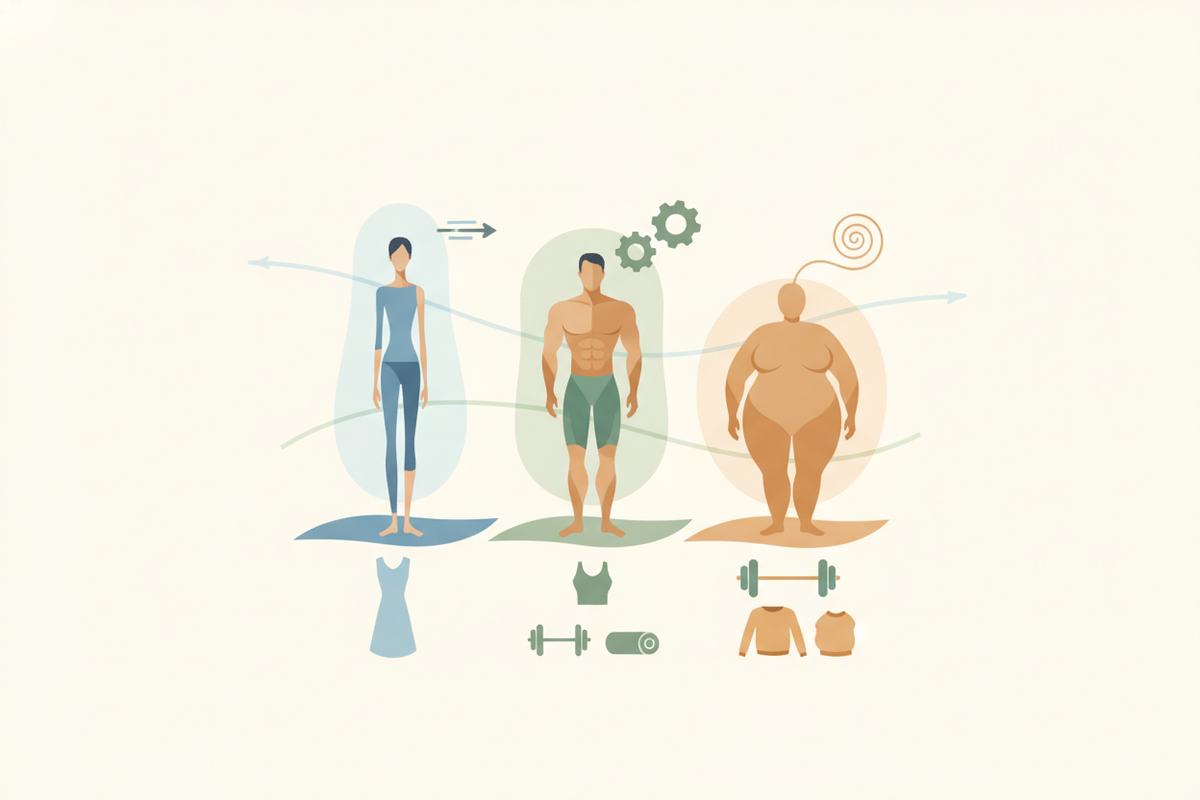
Body types historically come from somatotypes developed in the 1940s by psychologist William Sheldon, categorizing physiques into ectomorph, mesomorph, and endomorph. These describe general physical characteristics — ectomorphs tend to be slender, mesomorphs muscular, and endomorphs rounder.
However, body composition — the amounts of lean mass (muscle, bone, organs) versus fat mass — drives metabolic differences far more than shape alone. For example, two people may have similar weights but different muscle-to-fat ratios, affecting their resting metabolic rate (RMR) significantly.
- Ectomorph: Narrow frame, low fat, light muscle mass
- Mesomorph: Athletic build, naturally muscular, moderate fat
- Endomorph: Wider frame, higher fat storage, softer muscle tone
Remember, these categories are descriptive, not prescriptive. Most people show traits from multiple types, and your body composition can change with lifestyle.
2. The Somatotypes: Ectomorph, Mesomorph, Endomorph Explained
The somatotype system captures typical body forms but doesn’t tell the whole story about metabolism or weight management. Ectomorphs often report having a “fast metabolism” because they struggle to gain weight, but that perception is more about lower fat and muscle mass than an inherently higher metabolic rate.
Mesomorphs usually build muscle relatively easily and have a moderate metabolism, while endomorphs tend to store fat more readily and may have a lower resting metabolic rate due to less lean mass. Still, lifestyle, diet, and exercise heavily influence outcomes.
- Ectomorph traits: Lean limbs, small joints, perception of quick metabolism
- Mesomorph traits: Broad shoulders, strong muscles, efficient metabolism
- Endomorph traits: Rounder shape, perception of slower metabolism, fat storage focus
For more on this, see detailed guides on how to dress and train for your somatotype, such as our definitive guide to body types.
3. Apple vs. Pear Body Shape: Fat Distribution and Its Meaning
Another way people describe body types is by fat distribution patterns — commonly apple, pear, hourglass, and rectangle shapes. Unlike somatotypes, these shapes emphasize where fat tends to accumulate, which can influence health considerations and clothing choices.
Apple shapes carry more weight around the abdomen, while pear shapes store fat mainly in hips and thighs. Hourglass bodies show balanced bust-to-hip ratios with a defined waist, and rectangle shapes have more uniform measurements without much waist definition.
- Learn more about how body shape affects fat distribution
- Fat distribution is largely genetic and hormonal, especially influenced by sex hormones.
- Knowing your shape can guide styling choices to highlight your best features.
4. How Much Does Metabolic Rate Vary Between Individuals?
Resting metabolic rate (RMR) — the calories your body burns at rest — varies between people but usually only by about 15-30%. The main driver is lean mass, especially muscle, which burns more calories than fat even at rest.
For example, a muscular mesomorph and a lean ectomorph of the same weight can have different RMRs because of differing muscle mass. Age and sex also play a role — men generally have higher RMRs due to greater muscle mass, and metabolism gradually slows with age due to muscle loss.
- Lean mass increases RMR; fat mass has a smaller effect
- Hormones like thyroid hormones regulate metabolism speed
- Genetics influence but don’t rigidly determine metabolic rate
5. Sex Differences in Resting Metabolic Rate
Men typically have higher resting metabolic rates than women, primarily because of differences in body composition. Men generally carry more lean muscle mass and less body fat percentage, which increases calorie needs at rest.
Women’s bodies are naturally designed to store a higher fat percentage for reproductive health, which slightly lowers their RMR. However, individual variations and lifestyle choices can outweigh these average differences.
- Men burn roughly 5-10% more calories at rest than women of similar size on average
- Hormonal fluctuations during menstrual cycles can affect metabolism temporarily
- Strength training can boost metabolism by increasing muscle mass for all genders
6. Age-Related Changes in Metabolism and Body Composition
Metabolism naturally slows as we age, mainly due to the gradual loss of muscle mass and hormonal changes. Starting in the 30s, people can lose 3-8% of muscle per decade if inactive, reducing resting metabolic rate and making weight management more challenging.
However, resistance training and adequate protein intake can help preserve muscle and metabolic health. Body composition shifts with age, often increasing fat mass relative to lean mass even if weight stays stable.
- Muscle loss reduces metabolism; muscle maintenance is key
- Hormone levels (like thyroid and sex hormones) often decline
- Age-related fat redistribution can change body shape
7. Genetics, Hormones, and Thyroid Effects on Metabolism
Metabolic rate is influenced by genetics and hormonal regulation. The thyroid gland produces hormones that control how quickly your body uses energy — hypothyroidism can lower metabolism, while hyperthyroidism can increase it.
Other hormones, including insulin, leptin, and sex hormones, affect appetite, fat storage, and muscle growth, interacting complexly with your genetic blueprint. While you can’t change genetics, lifestyle, diet, and medical care can optimize metabolic health.
- Thyroid function tests can diagnose metabolic disorders
- Hormonal imbalances can cause weight and energy changes
- GLP-1 medications, tracked easily with Trimm, interact with metabolism by influencing appetite and glucose regulation
8. Why the “Slow Metabolism” Body-Type Idea Is Oversimplified
The belief that some people have an inherently “slow metabolism” leading to obesity or difficulty losing weight is mostly an oversimplification. While metabolic rates vary, the differences usually aren’t large enough to explain significant weight changes alone.
Weight gain and fat storage depend on calorie balance, hormones, lifestyle, and genetics. Blaming body type or metabolism oversimplifies complex factors and can lead to frustration or unhealthy dieting. A balanced approach focusing on nutrition, activity, and self-acceptance is key.
9. How to Measure Metabolism and Body Composition Accurately
There are several ways to get precise insights into your metabolism and body composition:
- Resting Metabolic Rate Testing: Measures calories burned at rest using indirect calorimetry.
- DEXA Scans: Considered a gold standard, this scan measures bone density, fat mass, and lean mass accurately.
- Bioelectrical Impedance Analysis: Estimates body composition using electrical currents, often available in gyms or scales.
Tracking tools like Trimm help monitor weight, side effects, and progress during GLP-1 medication journeys, integrating data to support metabolic health awareness.
10. Evidence-Based Ways Body Type Affects Weight Gain and Training Response
Body types influence how your body stores fat and responds to training but don’t fix your fate. For example, endomorphs may gain fat more easily, requiring focused strength training and diet control, while ectomorphs might build muscle more slowly and benefit from calorie-dense meals.
Mesomorphs often respond well to various training styles due to balanced muscle and fat. However, tailored exercise plans that suit your preferences and goals matter more than strict adherence to body type rules.
- Strength training helps improve metabolic rate and body composition for all types
- Cardio supports fat loss but should complement resistance work
- Consistent nutrition aligned with energy needs optimizes results
11. Can You Change Your Body Type?
While your genetic body framework remains stable, your body composition and appearance can change significantly. Through diet, exercise, and lifestyle, you can increase muscle mass, reduce fat, and alter your silhouette.
Understanding your natural tendencies helps you set realistic goals and celebrate progress. Rather than trying to “change” your body type, focus on enhancing your health and confidence within your unique shape, as explained in our definitive guide to body types and shapes.
12. How to Dress for Your Body Type
Knowing your body shape can boost your confidence and style by guiding choices that highlight your best features. For example:
- Apple shape: Emphasize legs and shoulders with A-line skirts and V-neck tops
- Pear shape: Balance hips with structured shoulders and darker bottoms
- Hourglass: Highlight your waist with belts and fitted clothes
- Rectangle: Create curves with layered outfits and cinched waists
For somatotypes, mesomorphs often rock athletic styles, ectomorphs suit layered looks, and endomorphs shine in streamlined, comfortable fits. Embrace your body positively and wear what makes you feel great.
Conclusion
Body types and metabolic rate differences are fascinating but complex topics. The somatotype and body shape frameworks serve as helpful guides to understand your physique better — not rules to limit you. Metabolism is influenced most by lean muscle mass, genetics, hormones, and age, with moderate natural variation between individuals.
Adopting a body-positive mindset, focusing on balanced nutrition, regular activity, and self-care, is the best path forward. Using tools like Trimm can help you track your health journey with precision and kindness, especially if you’re managing weight with GLP-1 medications.
FAQ
Q: Do ectomorphs, mesomorphs, and endomorphs really have different metabolisms?
A: These body types describe general physique patterns, but metabolic differences are mostly due to lean muscle mass and genetics rather than body type alone.
Q: What body type has the fastest metabolism?
A: Ectomorphs often appear to have faster metabolisms because they are leaner with less fat and muscle, but metabolic rate varies widely among individuals.
Q: Why do men usually burn more calories than women?
A: Men typically have more muscle mass and less body fat, which increases resting metabolic rate compared to women of similar size.
Q: How much does metabolism vary between people of the same size?
A: Metabolism can vary by about 15-30% between individuals of the same size, largely influenced by muscle mass and hormonal factors.
Q: Is 'slow metabolism' real or just a myth?
A: While metabolic rates differ, the idea that a “slow metabolism” alone causes significant weight gain is mostly an oversimplification; lifestyle and genetics play bigger roles.
Q: What matters more for metabolism: muscle mass or body type?
A: Muscle mass is a stronger driver of metabolism than body type since muscle burns more calories at rest than fat.