Male Body Types: The Definitive Guide to Shapes, Styles & Training
Discover male body types, how to identify yours, dress for your shape, and train smarter. Ectomorph, mesomorph, endomorph & more—body-positive, actionable tips.

Estimated reading time: 11 min
Key Takeaways
- Male body types fall into several classic categories—knowing yours can help you dress and train smarter.
- Most men are hybrids, not pure types; genetics play a big role but you can optimize with lifestyle changes.
- The main frameworks are somatotypes (ectomorph, mesomorph, endomorph) and body shapes (rectangle, triangle, oval, etc.).
- Body positivity matters—there’s no ‘ideal’ type. Style and fitness are about feeling your best, not fitting a mold.
"What body type am I?" is one of the most common questions men ask when starting a new fitness, weight loss, or style journey. Understanding male body types—whether you’re looking at somatotypes (ectomorph, mesomorph, endomorph) or visual body shapes (rectangle, triangle, inverted triangle, oval, and trapezoid)—can empower you to dress better and train smarter. This guide is your clear, body-positive breakdown of male body types, how to identify yours, what they mean for clothing and workouts, and how tools like Trimm can help you see and celebrate your progress.
1. The Main Male Body Type Systems Explained
When people talk about "male body types," they usually mean one of two things: somatotypes (how your body stores muscle and fat) or body shapes (your silhouette and proportions).
- Somatotypes: Ectomorph, Mesomorph, Endomorph—based on muscle/fat distribution, metabolism, and frame.
- Body Shapes: Rectangle, Triangle, Inverted Triangle, Oval, and Trapezoid—based on shoulder, waist, and hip measurements.
Both frameworks are useful: somatotypes can offer general guidance for fitness and weight management strategies, while body shapes help with choosing flattering clothing. Most men are a blend, not a perfect fit for one box. And remember, these systems are descriptive, not prescriptive—your worth isn’t defined by your shape.
2. Ectomorph, Mesomorph, Endomorph: The 3 Classic Somatotypes
The somatotype system was developed in the 1940s and is still referenced by some trainers and nutritionists. Here’s what each type means:
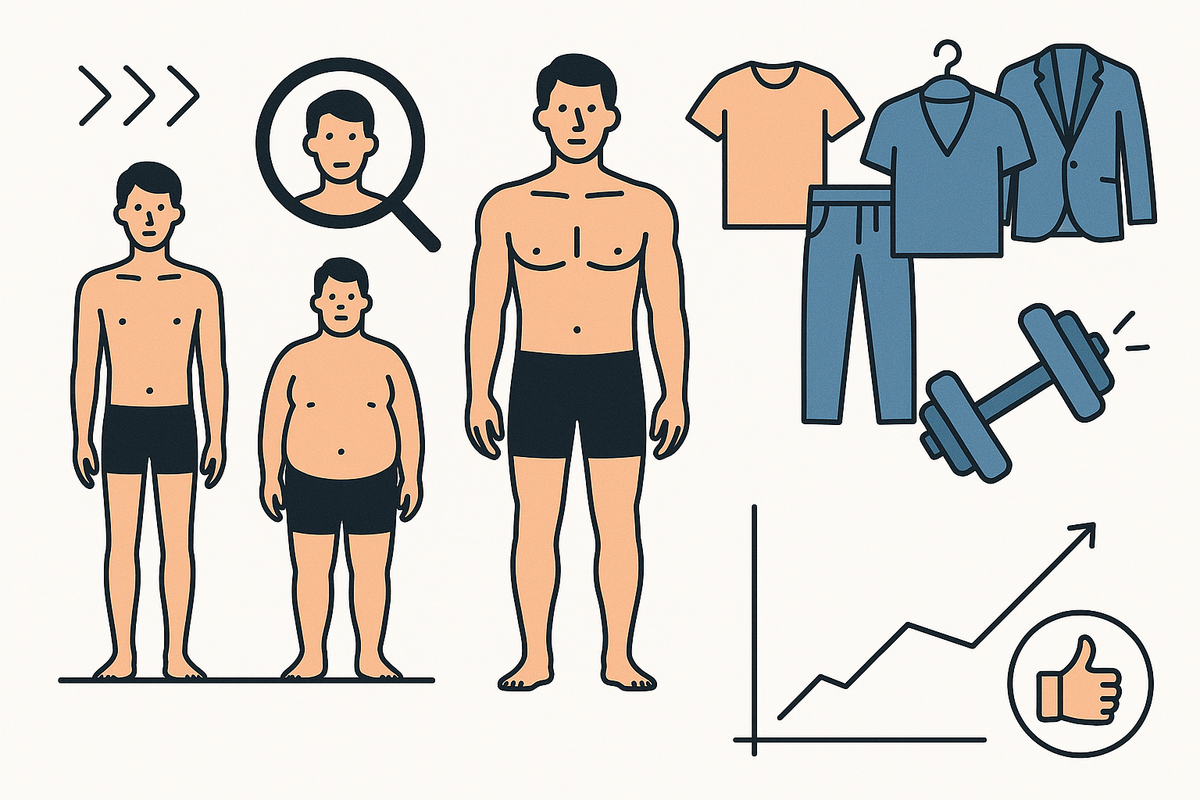
- Ectomorph: Lean, long limbs, narrow shoulders/hips, often described as having a faster metabolism. Ectomorphs may find it harder to gain weight or muscle.
- Mesomorph: Naturally more muscular, broader shoulders than hips, and may have an efficient metabolism. Often described as having an "athletic" build. Mesomorphs may put on muscle more easily and tend to stay leaner.
- Endomorph: Softer, rounder body, wider waist and hips, sometimes described as having a slower metabolism. There may be a tendency to store fat, especially in the midsection and lower body.
Most men are a combination (e.g., ecto-meso). No somatotype is ‘better’—they just respond differently to diet and training.
3. Male Body Shapes: Rectangle, Triangle, Inverted Triangle, Oval, Trapezoid
Body shape is about visible proportions—shoulders, waist, hips, and chest. The main male shapes are:
- Rectangle: Shoulders, waist, and hips are about the same width. Common for tall, slim men.
- Triangle: Hips wider than shoulders. More common as men age or with weight gain.
- Inverted Triangle: Broad shoulders and chest, narrow waist and hips. The ‘V’ shape, often seen as athletic.
- Oval: Fuller midsection, with a rounder appearance at the waist—sometimes called "apple-shaped."
- Trapezoid: Shoulders slightly wider than hips, chest gently tapers to the waist. Considered balanced and common.
Want to see how these compare to common apple vs pear body shapes? Men’s shapes tend to be less curvy than women’s, but there’s overlap—everyone’s unique.
4. How to Identify Your Male Body Type
Not sure where you fit? Here’s how to figure out your male body type and shape:
- Stand in front of a mirror (or take a photo) in fitted clothing.
- Measure (or visually compare) your shoulders, chest, waist, and hips.
- Note where you naturally store muscle and fat—upper vs lower body, arms vs waist, etc.
If your shoulders are much wider than your waist, you’re likely inverted triangle. If your waist is the broadest point, you’re oval (apple). If all measurements are similar, you’re rectangle. For more on visual comparisons, see female body shapes explained—the same logic applies!
Remember, most men are hybrids. Your body can change with age, exercise, or weight loss (including GLP-1 journeys tracked in Trimm), but your basic frame is set by genetics.
5. What Each Body Type Means for Clothing Fit
Knowing your male body type makes shopping and styling much easier. Here’s how to dress for maximum confidence and comfort:
- Ectomorph / Rectangle: Add bulk visually. Try structured jackets, layers, and tapered trousers to create shape. Avoid overly slim fits that exaggerate leanness.
- Mesomorph / Inverted Triangle: Highlight the V-shape. Fitted tees, raglan sleeves, and straight-leg pants are flattering. Watch out for tops that are too tight in the chest but baggy at the waist.
- Endomorph / Oval: Go for clean lines and simple patterns. Choose structured fabrics, vertical stripes, and dark colors to elongate your look. Avoid clingy or shiny materials.
- Triangle or Pear: Draw the eye upward with lighter or brighter tops, and keep lower halves neutral.
Your goal isn’t to ‘hide’—it’s to highlight your best features. For a deeper dive, check out our guide on apple vs pear body shape for men and women.
6. Which Male Body Type Is Most Attractive?
There’s no single "ideal" male body type—attractiveness is subjective and shaped by culture, media, and individual taste. Some surveys and media portray the inverted triangle (broad shoulders, narrow waist) as a classic standard, but confidence and health matter much more.
What’s most attractive? Feeling good in your skin, dressing well for your shape, and maintaining good health—whether you’re a lean ectomorph, a solid endomorph, or anywhere in between. Body positivity and self-care never go out of style. For a comprehensive perspective on embracing all shapes, see our ultimate body-positive guide to body types and shapes.
7. How to Train and Eat for Your Body Type
Your somatotype may offer general clues for fitness and nutrition:
- Ectomorphs: May benefit from focusing on strength training (compound lifts), moderate cardio, and higher-calorie, protein-rich meals. Progress may be gradual—tracking gains can help with motivation.
- Mesomorphs: May respond well to both weights and cardio. Mixing routines can help avoid plateaus. Balancing calories can support muscle while managing fat gain.
- Endomorphs: May benefit from emphasizing whole foods, regular activity, and a mix of strength and cardio. Progress may be steady but slower—tracking changes can help with motivation.
Changing your male body type entirely isn’t realistic—genetics set your basic frame—but you can improve your health, strength, and shape at any age. If you’re tracking weight loss (including GLP-1s like Ozempic or Wegovy), tools like Trimm can help you see your progress and milestones, not just numbers on a scale. Always consult your doctor before starting, stopping, or changing any medication or major health routine. For more on these medications, check out our definitive guide to GLP-1 weight loss.
8. Body Type Hybrids: Why Most Men Aren’t Pure Types
Pure ectomorphs, mesomorphs, or endomorphs are rare. Most men are hybrids—think "ecto-meso" or "meso-endo." You might have broad shoulders and a thick waist, or lean arms and muscular legs.
Your lifestyle, age, hormones, and fitness history all influence how you look. Embrace your unique mix—use the frameworks as guides, not rules. As your body changes (for example, during a weight-loss journey tracked in Trimm), your proportions and shape may shift, but your frame remains your foundation. For a detailed breakdown of the classic somatotypes, see our definitive guide to ectomorph, mesomorph, and endomorph body types.
9. Visual References: Body Type Charts
Seeing examples can help. While we don’t have a chart image here, search "male body type chart" for helpful visuals, or consult detailed guides like Female Body Shapes Explained for comparison. Many brands and fitness professionals offer silhouette diagrams showing common male body types side-by-side.
- Tip: Take a progress photo every month. Over time, you’ll see how your shape evolves—especially helpful when tracking with an app like Trimm.
10. Body Positivity and Health First
Whatever your male body type, your value isn’t measured by your silhouette. Focus on health, confidence, and self-care. If you’re on a GLP-1 medication journey, always follow medical advice and celebrate every win—big or small. For tracking medications, weight, side effects, and progress, try Trimm or read our complete app guide.
Conclusion
Male body types—whether you’re thinking ectomorph, mesomorph, endomorph, or visual shapes like rectangle and oval—are a helpful lens for understanding your body, setting goals, and building a wardrobe or fitness routine that works for you. Most men are a mix, and your body type can shift with age and healthy habits, but your uniqueness is your strength. For anyone on a weight-loss or health journey—especially with GLP-1 medications—tracking progress with apps like Trimm helps you celebrate every milestone along the way.
FAQ
Q: What are the different male body types?
A:
There are two main systems: somatotypes (ectomorph, mesomorph, endomorph) based on muscle and fat distribution, and body shapes (rectangle, triangle, inverted triangle, oval, trapezoid) based on your silhouette. Most men are a blend, not a single type.
Q: Am I an ectomorph, mesomorph, or endomorph?
A:
Ectomorphs are lean with long limbs, mesomorphs are naturally muscular and athletic, and endomorphs have a rounder build with more body fat. Most men are hybrids. You can determine yours by looking at where you store fat/muscle and your bone structure.
Q: What is the most attractive male body type?
A:
There’s no universally ‘ideal’ male body type. While the inverted triangle (broad shoulders, narrow waist) is often celebrated in media, attractiveness is personal. Confidence, health, and style matter most.
Q: How should men dress for their body shape?
A:
Dress to flatter your proportions: rectangles benefit from layers, inverted triangles from fitted shirts, ovals from structured, vertical lines. The goal is to highlight your best features and feel comfortable.
Q: Can your male body type change with exercise and diet?
A:
Your bone structure and basic frame are set by genetics, but you can build muscle, lose fat, and improve health—which may shift your shape. Major changes should always be done safely, ideally with medical guidance, especially if using medications.
Q: Which male body type builds muscle the easiest?
A:
Mesomorphs are often described as building muscle more easily, but with consistent training and nutrition, anyone can gain strength. Tracking progress—like with Trimm—can help keep you motivated regardless of type.