Female Body Shapes Explained: Types, Measurements & Tips
Female body shapes explained: Learn the core types, how to measure yours, differences between apple, pear, hourglass, and more. Body-positive and practical tips.

Estimated reading time: 7 min
Female body shapes are categories based on the proportions of your bust, waist, hips, and sometimes shoulders—not your weight or clothing size. The most recognized types include hourglass, pear, apple, rectangle, and inverted triangle, with additional variants like oval and diamond. Understanding your body shape is a body-positive way to choose clothes that flatter your proportions, regardless of size or health goals.
Key Takeaways
- Body shape is about bone structure and fat distribution, not weight or size.
- Common female shapes: hourglass, pear, apple, rectangle, inverted triangle.
- Measuring bust, waist, hips, and sometimes shoulders is key to identifying your shape.
- Body shape is mostly genetic and doesn't dictate health or attractiveness.
Female Body Shapes Explained: The Core Types
When people ask, "What body type am I?" they're often referring to these five classic shapes:
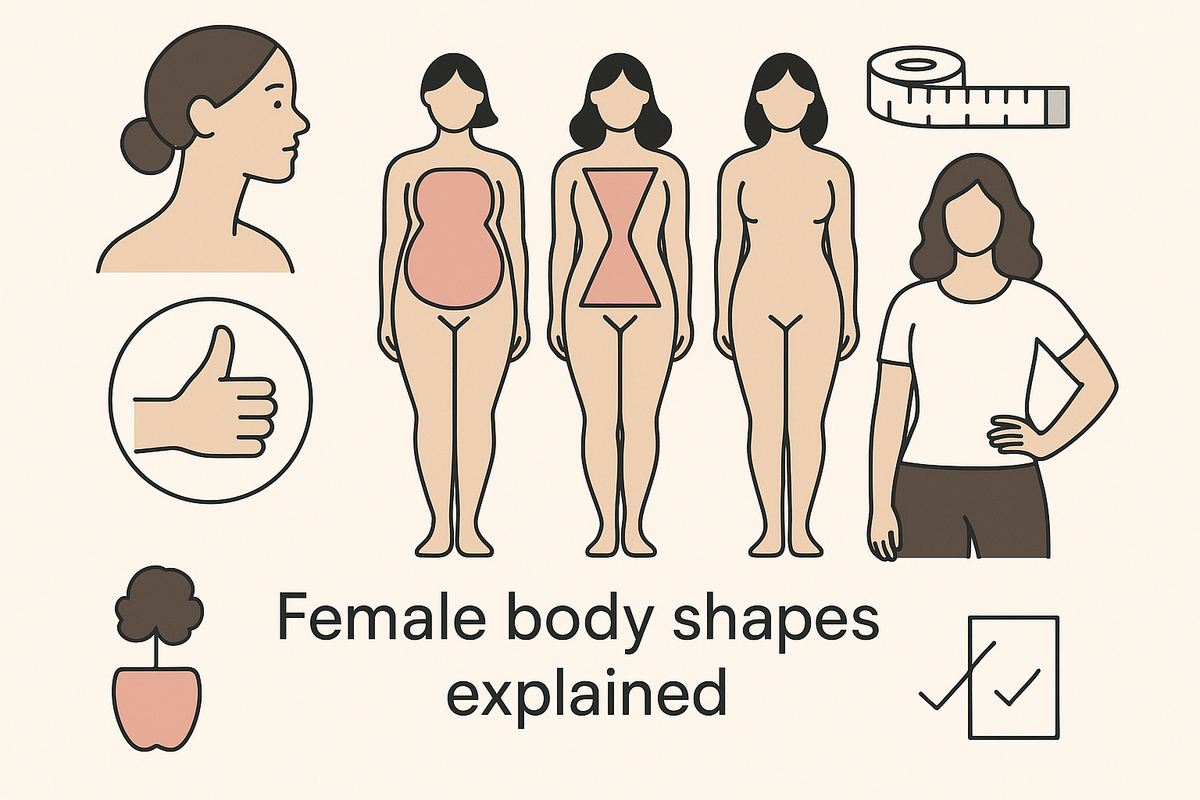
- Hourglass: Bust and hips are roughly the same width, with a well-defined, narrower waist.
- Pear (Triangle): Hips are wider than bust and shoulders, with a defined waist and narrower upper body.
- Apple (Round/Oval): Midsection is fuller, waist is less defined, with bust and hips similar in width.
- Rectangle (Straight): Bust, waist, and hips are similar in width, creating a straighter silhouette.
- Inverted Triangle: Shoulders and bust are broader than hips; waist may or may not be defined.
Variants like spoon, diamond, and oval are used in some systems, but most women will find their closest match in the five main types. For a deep dive into apple vs pear body shape differences, check our detailed comparison guide.
How to Measure Your Body Shape
Identifying your body shape starts with four key measurements:
- Bust: Measure around the fullest part of your chest, keeping the tape snug but not tight.
- Waist: Find the narrowest point between your ribs and hips (usually just above the belly button).
- Hips: Measure around the widest part of your hips and buttocks.
- Shoulders: (optional, but helpful) Measure around the widest part of your shoulders.
Stand straight, measure over bare skin or thin clothing, and keep the tape parallel to the floor. Avoid common mistakes like measuring over bulky clothes or slouching, which can alter your results. Use these measurements to see which areas are widest and narrowest—this determines your core shape, not your weight or fitness level.
Body Shape vs. Body Type vs. Body Composition
"Body shape" refers to your visible silhouette based on bone structure and fat distribution. "Body type" can also mean the somatotype system (ectomorph, mesomorph, endomorph):
- Ectomorph: Naturally slim, long limbs, minimal fat or muscle.
- Mesomorph: Athletic build, easily gains muscle, well-proportioned.
- Endomorph: Softer, rounder body, tends to store fat more easily.
These are broad genetic tendencies, not rigid categories. Unlike somatotypes, body shapes (like apple or hourglass) focus on visible proportions. "Body composition" describes the ratio of fat, muscle, and bone in your body—something you can change with lifestyle, unlike your bone structure. For a comprehensive overview of the somatotype system, see our definitive guide to ectomorph, mesomorph, and endomorph body types.
Does Body Shape Matter for Health or Style?
Your body shape is descriptive—not a prescription for health or attractiveness. While some research suggests that certain waist-to-hip ratios (like those sometimes seen in apple shapes) may be associated with different health risks, body shape alone does not determine your health. Health is complex and best discussed with your doctor, especially if you're considering or using GLP-1 medications. For tracking changes in your shape, weight, or measurements over time, an app like Trimm can help visualize your progress in a supportive, non-judgemental way. For a more detailed understanding of how to assess your health in relation to your body, see How to Tell If You Are at a Healthy Weight: The Complete Guide.
When it comes to style, knowing your shape can help you pick clothes that accentuate your favorite features:
- Hourglass: Emphasize the waist with fitted or wrap styles.
- Pear: Balance proportions with A-line skirts and statement tops.
- Apple: Choose empire waists and V-necks to elongate the torso.
- Rectangle: Create curves with belts, peplums, or fit-and-flare cuts.
- Inverted Triangle: Soften shoulders with V-necks and add volume to the lower half.
Remember, these are guidelines—not rules. The best look is one you feel confident in.
How Many Body Shape Systems Exist?
Most style guides use 5 or 6 main female body shapes, but more detailed systems exist:
- 5-type: Hourglass, pear, apple, rectangle, inverted triangle.
- 6-type: Adds spoon or diamond.
- 10-type and 21-type: Used in some fashion and scientific analyses, but rarely needed for everyday use.
For most people, the 5-type system is clear and practical. If you want to know "can you change your body type?"—the answer is: you can influence body composition and fat/muscle distribution with lifestyle, but your underlying bone structure (and thus your core body shape) is mostly genetic. For a body-positive perspective on all shapes and types, check out Can You Change Your Body Type? The Definitive Guide to Body Types and Shapes.
FAQ
Q: What are the different female body shapes?
A: The main female body shapes are hourglass, pear (triangle), apple (round/oval), rectangle (straight), and inverted triangle. Variants like spoon or diamond may also be used.
Q: How do I know what body shape I am?
A: Measure your bust, waist, hips, and optionally shoulders. Use these measurements to see which parts are widest or narrowest, then compare to the main shape definitions. For a more detailed breakdown, see our ultimate guide to body shapes and types.
Q: What measurements do I need to identify my body shape?
A: You'll need your bust, waist, and hip measurements—shoulder width is optional but helpful. Always measure over bare skin or thin clothing for best accuracy.
Q: What is the difference between pear, apple, and hourglass body shapes?
A: Pear shapes have wider hips than bust/shoulders; apple shapes carry more around the midsection with similar bust/hip width; hourglass shapes have bust and hips about the same width and a defined waist. See our apple vs pear body shape guide for more details.
Q: Does body shape determine health or attractiveness?
A: No—body shape is largely genetic and says little about your health or attractiveness. Waist-to-hip ratio may be relevant in some health contexts, but always talk to your doctor about health questions. For more on understanding your health in relation to your body, see Body Fat Percentage Explained: Definition and Health Guide.
Q: How should I dress for my body shape?
A: Choose clothes that emphasize your favorite features and balance proportions—for example, highlight the waist for hourglass shapes or add volume to the lower body for inverted triangles. Dress for comfort and confidence above all.
Ready to track your progress, measurements, or GLP-1 journey? Try Trimm to see your body changes and milestones in one supportive app.