Lifestyle Modifications for GLP-1 Users: A Comprehensive Guide to Sustainable Habits
Explore lifestyle modifications for GLP-1 users focusing on nutrition, exercise, and stress management to sustain weight loss and improve overall health.

Estimated reading time: 10 minutes
Key Takeaways
- GLP-1 therapy enhances weight loss and blood sugar control but requires complementary lifestyle changes for durability.
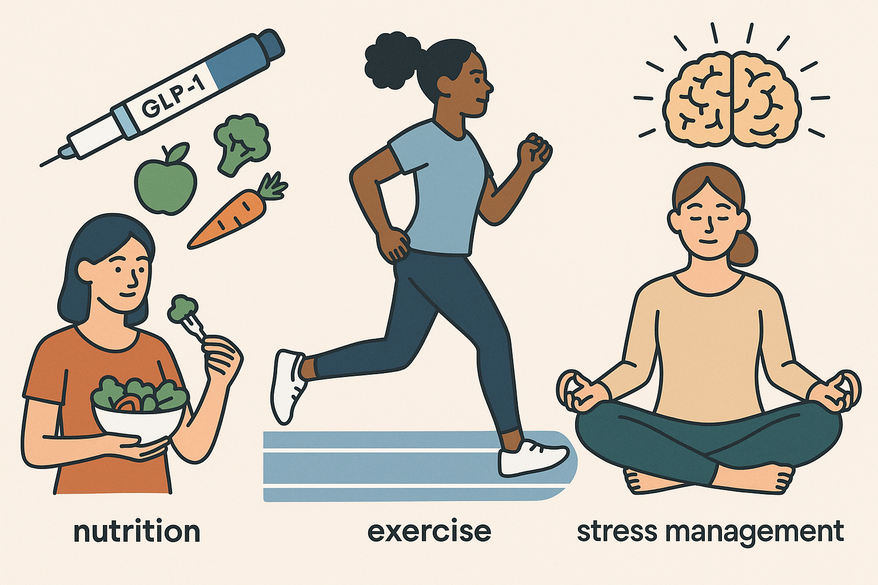
- Four core pillars—nutrition, exercise, behavior change, and stress & sleep—support long-term success.
- Managing common GI side effects through meal timing and food choices improves tolerability.
- Setting SMART goals and tracking progress fosters habit formation and motivation.
Table of Contents
- How GLP-1 Therapy Works and Why Lifestyle Changes Matter
- Key Lifestyle Modifications
- Nutrition and Diet
- Physical Activity and Exercise
- Behavior Change and Habit Formation
- Managing Stress and Sleep
- Integrating Lifestyle Modifications with GLP-1 Therapy
- Overcoming Common Challenges for GLP-1 Users
- Conclusion
How GLP-1 Therapy Works and Why Lifestyle Changes Matter
GLP-1 therapy helps control blood sugar and body weight, but lifestyle modifications ensure lasting success by boosting fullness, stabilizing glucose, and preventing weight regain. For those interested in a deeper understanding of how GLP-1 therapy can specifically aid in blood sugar management, see our comprehensive guide to using GLP-1 for blood sugar management.
- Mechanism of action
- Activates receptors in the pancreas to increase insulin and reduce glucagon.
- Slows gastric emptying to prolong fullness and reduce hunger.
- Enhances satiety signals in the brain.
- Key benefits
- Average weight loss of 5–15% of body weight with consistent use.
- Improved A1c and blood sugar control.
- Reduced risk of cardiovascular events.
- Common side effects
- Nausea, vomiting, diarrhea, constipation.
- Mitigation tips: eat small meals slowly, avoid fatty foods, stay hydrated.
- Why pair with lifestyle
- Behavioral changes yield more durable outcomes.
- Prevents weight regain when diet and activity are addressed.
Key Lifestyle Modifications
Nutrition and Diet
Goals: support fullness, stabilize blood sugar, minimize GI side effects, and encourage steady weight loss.
- Balanced meals
- Lean protein (chicken, fish, tofu), healthy fats (avocado, olive oil), and fiber-rich vegetables or whole grains at every meal.
- Synergizes with GLP-1’s fullness effect to curb appetite.
- Portion control
- Use smaller plates and pre-portion snacks.
- Pause mid-meal to assess hunger and fullness.
- Reduces risk of nausea from overeating.
- Meal timing
- Aim for three small meals plus one or two healthy snacks daily.
- Avoid heavy late dinners to lower reflux and GI upset.
- Side-effect troubleshooting
- Nausea: bland foods (rice, toast), ginger or peppermint tea.
- Vomiting: 5–6 mini-meals, sip oral rehydration solutions.
- Diarrhea: moderate fiber intake, electrolyte beverages.
- Constipation: increase water and soluble fiber (oats, bananas).
Physical Activity and Exercise
Regular movement enhances weight loss, maintains muscle mass, and boosts heart health. For safe and effective exercise plans tailored to GLP-1 users, see our GLP-1 physical activity guidelines.
- Cardio
- At least 150 minutes/week of moderate exercise: brisk walking, cycling, swimming.
- Strength training
- Two or more sessions/week with body-weight moves, resistance bands, or weights.
- Flexibility and balance
- Yoga or gentle stretching for joint health and stress relief.
Tips:
- Start with 10 minutes/day and build gradually.
- Tie exercise to routine (e.g., post-meal walk).
- Use an app or pedometer to track steps.
- Avoid vigorous activity right after eating to limit nausea.
Behavior Change and Habit Formation
Building good habits during GLP-1 use makes benefits stick even if medication changes. For a step-by-step approach, see our guide to building habits for GLP-1 success. For a deeper dive into how to build sustainable habits and support lasting results, see our comprehensive guide to behavior change with GLP-1 therapy.
- SMART goals
- Specific, Measurable, Attainable, Relevant, Time-bound (e.g., “Walk 15 minutes at lunch”).
- Tiny steps
- Break large goals into micro-actions (add one extra vegetable serving).
- Self-monitoring
- Log meals, hunger levels, workouts, and sleep in a journal or app—see detailed tracking guidance.
- Mindful eating
- Dine without screens; chew slowly; focus on fullness signals heightened by GLP-1.
Managing Stress and Sleep
Stress and poor rest can undermine GLP-1’s effects; managing both is essential. For more on how sleep quality impacts GLP-1 weight-loss outcomes, read our article on GLP-1 and sleep quality.
- Stress reduction
- Daily 5–10 minutes of deep breathing, guided meditation, or yoga.
- Helps prevent emotional eating and blood sugar spikes.
- Sleep hygiene
- Aim for 7–9 hours per night on a consistent schedule.
- Create a dark, cool, quiet bedroom; avoid caffeine after 2 pm.
- Good sleep supports metabolic health and reduces appetite.
Integrating Lifestyle Modifications with GLP-1 Therapy
Combining medication with nutrition, exercise, and behavior change yields superior outcomes versus drugs alone. Structured approaches maximize weight loss, lower A1c, and improve cardiovascular markers. For a comprehensive overview of GLP-1 weight loss medications, results, and safety, see our definitive guide to GLP-1 weight loss.
Example case studies:
- Case 1: A person with type 2 diabetes eats protein-rich breakfasts, walks 30 minutes daily after lunch, and logs meals in an app. Over 12 months they lose 12% of body weight and cut A1c by 1.5%.
- Case 2: An obesity patient adds two weekly strength sessions and practices mindful eating, losing 15% of body weight while preserving lean mass.
Healthcare providers guide therapy selection, offer counseling, monitor side effects, and tailor lifestyle plans to individual needs.
Overcoming Common Challenges for GLP-1 Users
Obstacles:
- GI side effects (nausea, diarrhea) that impede eating or activity.
- Time constraints for meal prep or exercise.
- Emotional eating triggered by stress.
- Weight-loss plateaus and waning motivation.
- Cost and access concerns for long-term therapy.
Solutions:
- GI issues: opt for mini-meals, avoid fatty or spicy triggers.
- Time: batch-cook healthy staples; split workouts into short “micro-sessions.”
- Motivation: track non-scale victories such as energy levels and lab improvements.
- Plateaus: shift workout types, revisit goals, and celebrate small wins.
Support networks:
- Family and friends for shared meals and joint activities.
- Peer groups or online forums for GLP-1 users.
- Professionals: registered dietitians, health coaches, therapists, obesity specialists.
Conclusion
GLP-1 therapies are powerful tools for weight and blood sugar control but deliver lasting results only when paired with lifestyle modifications. Integrating balanced nutrition, regular physical activity, behavior-change strategies, stress management, and quality sleep transforms short-term drug benefits into lifelong health gains. Work with your healthcare team to set personalized goals, start with small habit shifts, and monitor progress for a sustainable, holistic plan. For more strategies on achieving sustained weight management, see our comprehensive guide to long-term success with GLP-1 therapy.
FAQ
- What are GLP-1 receptor agonists? They are medications that mimic the body’s GLP-1 hormone to boost insulin, slow gastric emptying, and enhance satiety.
- How can I manage nausea when starting GLP-1 therapy? Eat small, frequent meals; choose bland foods; sip ginger or peppermint tea; avoid fatty or spicy items.
- How long should I maintain lifestyle changes? Ideally, lifelong. Continued healthy habits prevent weight regain and sustain metabolic benefits even after medication adjustments. For more on long-term outcomes, see our comprehensive guide to maintaining weight loss after GLP-1.
- When should I adjust my exercise routine? If you hit a plateau, consider increasing intensity, adding strength training, or varying activities to challenge your body. For GLP-1 users, check out the best workouts to maximize results.
- Can I use an app to track my progress? Yes. For detailed guidance, consider Trimm to log doses, meals, side effects, and visualize milestones.