GLP-1 Routine Building: Practical Strategies for Consistent Therapy Adherence
Discover GLP-1 routine building techniques to enhance therapy adherence, focusing on dose timing, meal planning, exercise, and long-term benefits.

Estimated reading time: 10 minutes
Key Takeaways
- GLP-1 routine ensures timely doses aligned with meals, exercise, and hydration for optimal benefits.
- A structured pattern of dose timing and healthy habits maximizes adherence and sustainable weight and metabolic outcomes.
- Practical tools like reminders, apps, and professional support reduce side effects and preserve lean mass.
- Regular monitoring and adjustment with healthcare teams keeps your routine effective and personalized.
Table of Contents
- Section 1: Understanding GLP-1 Therapy
- Section 2: The Concept of Routine Building
- Section 3: Practical Strategies for Consistency
- Section 4: Tools, Resources, and Support
- Section 5: Monitoring and Adjusting the Routine
- Conclusion and Next Steps
Section 1: Understanding GLP-1 Therapy
GLP-1 receptor agonists are used for:
- Type 2 diabetes management: improves glycemic control and reduces cardiovascular risk.
- Weight management: reduces appetite and increases fullness.
Key outcomes include stabilization of blood sugar, portion control, and clinically meaningful weight loss when combined with diet and exercise. For in-depth research, see PMC article and Intermountain Healthcare guide. If you want a comprehensive overview of medications, results, and safety, check out GLP-1 Weight Loss: The Definitive Guide.
Section 2: The Concept of Routine Building
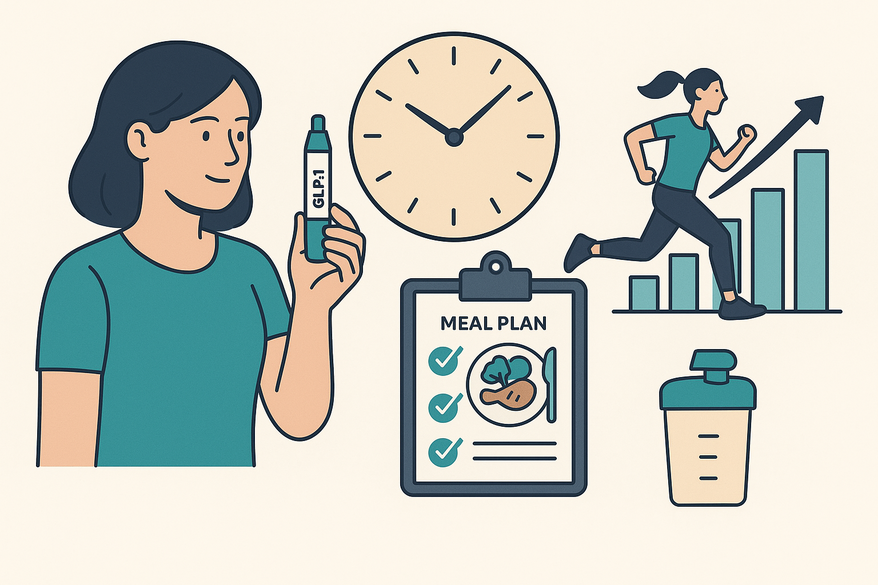
Designing a GLP-1 routine means creating a plan that ties together dose timing, meal planning, exercise, hydration, sleep, stress management, and self-monitoring.
- Dose timing (daily vs. weekly injections)
- Meal planning and scheduled eating
- Aerobic and resistance exercise
- Hydration (~64 oz/day) and sleep hygiene
- Stress management tactics (breathing, journaling)
- Self-monitoring (weight, blood glucose, symptoms)
Learn how to track every aspect of your journey at Trimm tracking guide.
Section 3: Practical Strategies for Consistency
Implement these tactics to simplify your GLP-1 plan:
3.1 Build a Daily/Weekly Schedule
- Select fixed times (e.g., Monday 8 AM for weekly injections) and pair with weigh-ins and logging.
- Link daily doses to existing habits like brushing teeth or first meal.
- Use a schedule template:

3.2 Integrate Medication with Habits
- Plan protein-rich meals and eat slowly to sync with satiety effects.
- Schedule walks or resistance sessions during energy peaks.
- Start with water and aim for ~64 oz/day.
- Example Day:
- Morning: dose, protein breakfast, short walk
- Mid-morning: stretch or walk break
- Lunch: lean protein, veggies, whole grains
- Afternoon: protein snack, hydration
- Evening: light meal, review next day’s plan
3.3 Use Technology Aids
- Smartphone alarms for doses, meals, and water breaks.
- Medication apps for logging and side-effect tracking.
- Fitness and nutrition apps for activity and food intake.
3.4 Overcoming Common Challenges
- Forgetfulness: keep meds visible; use checklists or trackers.
- Travel: anchor dose to post-brushing activity; pack a travel kit.
- Side effects: start with smaller meals; focus on fiber and protein.
- Motivation: set SMART goals and use non-food rewards. For more ideas, see these practical strategies for staying motivated with GLP-1 therapy.
Additional tips at Adherence Tips.
Section 4: Tools, Resources, and Support
4.1 Role of Healthcare Providers
- Physicians/Endocrinologists: select and adjust medications, monitor labs.
- Dietitians: design meal plans and manage GI effects.
- Exercise Specialists: create safe aerobic and resistance programs. For tailored exercise guidance, see GLP-1 Physical Activity Guidelines.
4.2 Patient Tools & Resources
- Manufacturer support programs (coaching, guides).
- Community forums for tips and motivation. Joining a community can be crucial; learn more about the essential role of GLP-1 community support.
- Educational PDFs and videos.
4.3 Example Success Patterns
- Weekly injection + scheduled weigh-in.
- ≥150 minutes of aerobic activity + 2–3 resistance sessions weekly. If you need ideas, check out the best workouts for GLP-1 users or follow a GLP-1 exercise plan to maximize your therapy.
- High-protein meals; minimal ultra-processed foods.
- Daily tracking of weight, food, activity, and symptoms.
Section 5: Monitoring and Adjusting the Routine
5.1 Tracking Progress
- Weight and waist measurements.
- Blood glucose around meals and exercise.
- Activity volume (cardio and resistance minutes).
- Diet quality and protein intake.
- Subjective hunger, energy, mood, and GI symptoms.
5.2 Working with Professionals
- Regular follow-ups to review metrics and side effects.
- Adjust doses or lifestyle plans as needed.
- Collaborate on barriers like schedule changes or stress.
5.3 When to Adjust
- Persistent GI symptoms (nausea, vomiting).
- Fatigue, dizziness during activity.
- Rapid unintended weight or muscle loss.
- Plateau in weight or glucose trends.
- Emotional distress or missed doses.
Conclusion and Next Steps
A well-structured routine boosts adherence, optimizes outcomes, preserves lean mass, and manages side effects for lasting success.
Next-step action plan:
- Map your week with fixed dose times, meals, exercise, and monitoring.
- Share your routine with your healthcare team for feedback.
- Join support programs or communities for accountability. For more on this, explore peer support options for GLP-1 users.
Document, reflect, and refine to achieve consistent, long-term benefits.
FAQ
- What is GLP-1 routine building? It’s a structured plan combining medication timing with supportive habits to maximize therapy benefits and adherence.
- How do I align doses with my meals? Anchor daily doses to routines like breakfast or oral hygiene; plan protein-rich meals that match satiety effects. For a deeper dive, see the best diet for GLP-1 therapy and learn more about intermittent fasting and GLP-1 therapy synergy.
- What tools can help me stay on track? Use smartphone alarms, medication-tracking apps, and fitness/nutrition tools for reminders and analytics.
- When should I adjust my routine? Reevaluate if GI symptoms persist, weight plateaus, or you experience unintended side effects; consult your healthcare provider. For practical tips, read this guide to sticking to GLP-1 therapy.