Peer Support for GLP-1 Users: Coaching, Communities & Groups to Enhance Your Therapy
Explore coaching, community support, and peer groups to enhance your GLP-1 therapy. Get emotional reassurance and practical strategies today.

Estimated reading time: 8 minutes
Key Takeaways
- Peer support bridges the gap between clinical care and daily GLP-1 therapy management.
- Coaching programs offer structured, personalized guidance from health professionals.
- Community and peer groups provide emotional validation, practical tips, and accountability.
- Combining coaching and peer support maximizes adherence and sustainable outcomes.
- Follow clear criteria to choose, vet, and engage with the best support resources.
Table of Contents
- What Is GLP-1 Therapy & Who Uses It?
- Why Peer Support Matters
- Coaching Programs Tailored for GLP-1 Users
- Navigating Community Support & Peer Groups
- Choosing the Best Coaching & Peer Options
- Actionable Tips & Real-World Examples
- Resources & How to Get Started
- Conclusion
What Is GLP-1 Therapy & Who Uses It?
GLP-1 therapy refers to injectable or oral medications that mimic the gut hormone glucagon-like peptide-1, improving insulin secretion, slowing gastric emptying, and reducing appetite. These drugs are FDA-approved for Type 2 diabetes and obesity management.
- Type 2 diabetes patients seeking better glycemic control
- Individuals with obesity aiming for sustainable weight loss
Key mechanisms include:
- Stimulating insulin release when blood sugar is elevated
- Slowing gastric emptying and increasing satiety
- Reducing appetite to support weight loss
Common medications: semaglutide (Ozempic, Wegovy), liraglutide (Victoza, Saxenda), dulaglutide (Trulicity), tirzepatide (Mounjaro).
Typical side effects are nausea, vomiting, diarrhea or constipation, often managed with dietary adjustments and hydration strategies.
Why Peer Support Matters
Pairing GLP-1 therapy with emotional and practical peer-based help makes the treatment more sustainable and effective. Studies like our overview demonstrate that integrating mental health support boosts adherence.
- Emotional validation: Shared experiences reduce isolation.
- Practical tips: Meal ideas for nausea, hydration strategies, GI hacks.
- Motivation: Celebrating non-scale victories and tracking progress.
- Information exchange: Dosing insights and lifestyle hacks (always verify with clinicians).
Coaching Programs Tailored for GLP-1 Users
Structured coaching services led by health coaches, registered dietitians, or clinicians offer personalized support via clinics, digital platforms, or telehealth. For more details, see our guide.
- Assessment: Set goals (A1C, weight), identify barriers (side effects, schedule), and map support systems.
- Nutrition: Protein-rich, small meals; timing around injections; GI side-effect management.
- Exercise & Habits: Sustainable plans, habit stacking for consistency.
- Accountability: Regular check-ins and progress tracking.
- Medical Collaboration: Liaison with prescribers for dose adjustments.
Navigating Community Support & Peer Groups
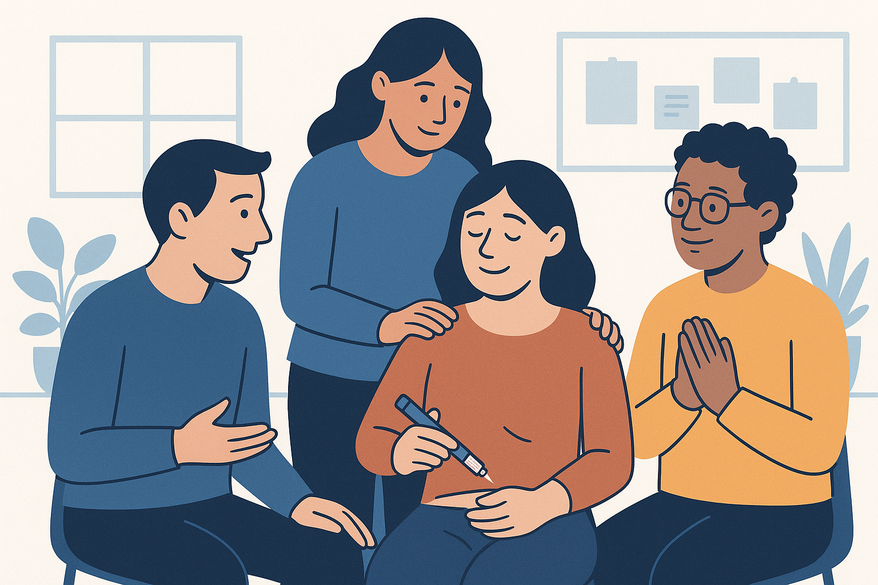
Peer communities—online or in person—provide a safe space to share wins and challenges. Explore successful models in this case study.
- Online forums: Diabetes and weight-loss boards with GLP-1 threads.
- Social media groups: Facebook, Discord channels, live video meetups.
- Local meet-ups: Clinic-hosted or community health program support groups.
These groups reduce shame, normalize medication use, and improve quality of life.
Choosing the Best Coaching & Peer Options
Select support based on clear criteria and proactive vetting:
- Coaching Programs: Credentials (RDN, MD/DO), evidence-informed approaches, collaboration with prescriber, transparent pricing.
- Peer Groups: Respectful rules, clear disclaimers, low product bias, active moderation.
Vetting steps:
- Ask your healthcare provider for referrals.
- Review testimonials and affiliations.
- Verify provider credentials via official boards.
Actionable Tips & Real-World Examples
Practical strategies:
- Schedule dose-change check-ins with your coach or group.
- Build a “side effect toolkit” with hydration, gentle foods, and movement.
- Create a non-scale victory list (better labs, energy improvements).
- Reflect weekly on wins, challenges, and clinician questions.
Case Study – Alex: Managed early nausea by joining a GLP-1 forum, adopting protein-dense small meals, and adjusting meal timing—nausea subsided in 3 weeks with a 0.7% A1C drop by month 3.
Case Study – Sam: Faced a weight plateau after 12 months; joined a virtual community and coach, shifted to strength training and mindful eating—maintained >90% of weight loss and improved confidence.
Resources & How to Get Started
- Medical programs: Weight-management and diabetes clinics offering integrated GLP-1 support.
- Professional societies: Obesity Medicine Association, American Diabetes Association programs.
- Digital platforms: Apps with GLP-1 coaching modules.
- Moderated communities: Forums and groups with strict medical disclaimers.
Action checklist:
- Ask your prescriber about affiliated coaching and peer networks.
- Try one professional program and one peer group for 4–8 weeks.
- Reassess and adjust your support mix based on experience.
Conclusion
Combining GLP-1 therapy with peer support and coaching transforms treatment into a collaborative, empowering process. Emotional reassurance, practical strategies, and accountability help you achieve sustainable health benefits. Talk with your healthcare team and join a peer group today to maximize your GLP-1 therapy.
FAQ
- What is GLP-1 therapy? GLP-1 therapy uses medications that mimic a gut hormone to improve insulin function, control appetite, and support weight management.
- How does peer support benefit GLP-1 users? It offers emotional validation, practical tips, motivation, and accountability, improving therapy adherence and well-being.
- What should I look for in a coaching program? Verify credentials (RDN, MD/DO), evidence-based methods, medical collaboration, transparent pricing, and measurable goals.
- Are peer groups free? Many peer groups are free or low-cost, though some specialized forums or platforms may charge nominal fees for premium features.