Understanding the Emotional Challenges of GLP-1 Therapy
Explore the emotional challenges of GLP-1 therapy, including mood swings and identity shifts, and learn strategies for navigating these changes effectively.

Estimated reading time: 8 minutes
Key Takeaways
- Complex Emotional Landscape: GLP-1 therapy can trigger anxiety, mood swings, and shifts in body image and identity.
- Interconnected Physical–Emotional Effects: Rapid weight loss and hormonal changes influence reward pathways and stress responses.
- Influence of External Factors: Support systems, societal stigma, insurance concerns, and lifestyle adjustments play major roles.
- Strategies for Coping: Mood tracking, flexible goal setting, alternative coping mechanisms, and professional support are critical.
- Integrated Care Approach: Combining medical treatment with psychotherapy, nutrition counseling, and peer support yields the best outcomes.
Table of Contents
- I. Background on GLP-1 Therapy and Emotional Challenges
- II. Understanding the Emotional Challenges
- III. Psychological Impact and User Experiences
- IV. Contributing Factors
- V. Strategies for Overcoming Emotional Challenges
- VI. Expert Opinion & Future Perspectives
- VII. Conclusion
- VIII. Additional Resources & References
- FAQ
I. Background on GLP-1 Therapy and Emotional Challenges
GLP-1 receptor agonists mimic a naturally occurring hormone to improve blood sugar control, slow gastric emptying, and reduce appetite. Beyond peripheral effects, they influence brain centers tied to reward, stress, and emotional regulation.
Mechanism of Action
- Enhances insulin secretion and suppresses glucagon release.
- Acts on appetite and reward circuits to decrease hunger and food-cue reactivity.
- Modulates stress and reward pathways, potentially impacting mood.
Physical Benefits & Uses
- Promotes weight loss, improves A1c levels, and lowers blood pressure.
- Reduces binge eating and “food noise.”
- Explored off-label for binge-eating disorder and certain addictive behaviors.
Transition: Because GLP-1 drugs influence brain circuits tied to reward and stress, they can trigger emotional effects beyond physical changes.
II. Understanding the Emotional Challenges
Common Emotional Responses
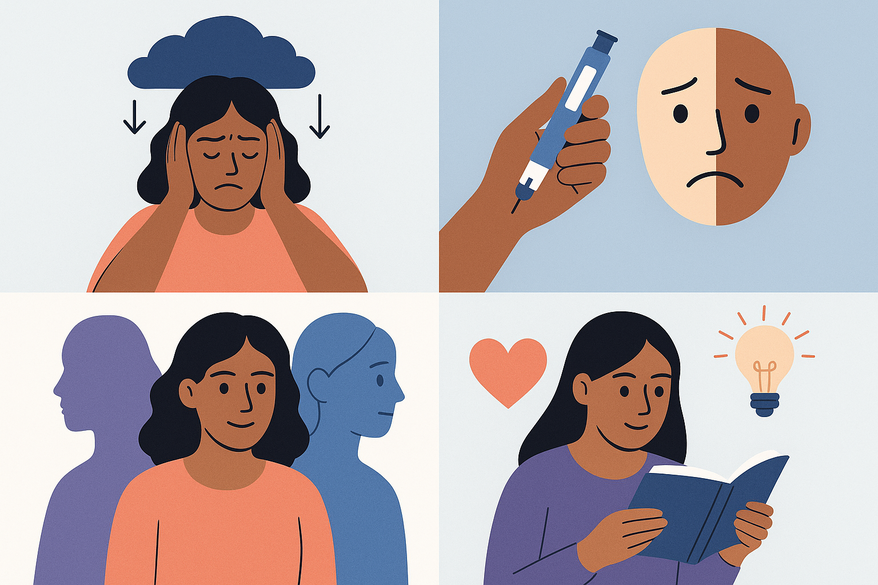
- Anxiety & Stress
Unprovoked worry about health coverage, fear of side effects, and treatment uncertainty. - Mood Swings & Irritability
Fluctuations linked to appetite shifts and weight‐loss plateaus, often triggering irritability when progress slows. - Depression Risk & Variability
Rare case reports of depression or suicidal thoughts exist, though large datasets show no overall increase; individual vulnerability matters. - Body Image & Identity Shifts
Grief or confusion over a rapidly changing body; old identities fade while new ones emerge. - Food-Related Emotions
Relief at reduced cravings, coupled with fear or guilt around eating and lingering emotional‐eating patterns.
Interplay Between Physical & Emotional Changes
- Rapid weight loss can disrupt food-based coping strategies, leading to stress when a familiar comfort is removed.
- Reduced stigma may feel liberating, but new pressures arise to maintain results and justify medication use.
- Social reactions shift: praise and curiosity can bring both relief and alienation.
III. Psychological Impact and User Experiences
Anecdotal & Qualitative Evidence
- Social Media Reports
Users describe insomnia, anxiety spikes, improved focus, and reduced food obsession on platforms like Reddit and TikTok. - Therapy Practice Insights
Clinicians note obsessive worries about weight regain and heightened body-image anxiety in counseling sessions.
Research & Expert Findings
- 2024 Systematic Review
Potential improvements in depressive symptoms and cognition, with reductions in binge and alcohol use. - APA Expert Consensus
GLP-1 can alleviate or exacerbate disordered eating depending on individual history and context.
Balancing Expectations vs. Reality
- View GLP-1 as a tool, not a cure; disappointment may follow plateaus or side effects.
- Tension between “miracle drug” and “cheating” narratives can fuel guilt or shame.
IV. Contributing Factors
Hormonal & Physiological Influences
- GLP-1’s action on the HPA axis and reward pathways can affect mood and stress responses.
- Gastrointestinal side effects, rapid nutrition changes, and sleep disruption may trigger low mood or irritability.
External Influences
- Support System
Encouragement from friends, family, and providers can buffer anxiety, while weight-shaming criticism heightens stress. - Societal Stigma
Medication use may reduce self-stigma but invite moral judgment; fears of “erasing” a higher-weight identity can threaten self-concept. - Insurance & Access
Chronic stress over cost and coverage insecurity undermines emotional wellbeing.
Lifestyle Adjustments
- Eating & Social Routines
Changed mealtimes, reduced alcohol use, and dining-out challenges can isolate—or empower—users. - Exercise & Self-Care
Empowerment through movement vs. overwhelm from perfectionistic routines. - Motivation Plateaus
As weight stabilizes, psychological momentum can wane, leading to frustration.
V. Strategies for Overcoming Emotional Challenges
Practical Tips
- Mood & Symptom Tracking
Log mood, sleep, appetite, and side effects daily to spot trends and share with your doctor. Learn more about building a sustainable tracking system. Consider using Trimm to centralize your tracking, visualize trends, and get reminders. - Flexible, Process-Oriented Goals
Emphasize balanced meals, enjoyable activity, and stress management over scale changes. - Alternative Coping to Emotional Eating
Grounding exercises, journaling, breathing techniques, and non-food rewards. - Building a Supportive Environment
Communicate needs clearly to trusted friends and family; avoid blame or shame language. For emotional support strategies, see this guide.
Role of Mental Health Professionals
- Pre-Treatment Screening
Assess for depression, trauma, and disordered eating to tailor care. - Evidence-Based Therapies
CBT, ACT, and trauma-informed approaches for body image, binge eating, and anxiety. - Holistic Treatment Framing
Position GLP-1 as one component in a broader wellness plan.
Self-Care & Coping Mechanisms
- Regular, enjoyable movement and sleep hygiene.
- Mindfulness and relaxation techniques for anxiety spikes.
- Structured meal planning with dietitian support.
VI. Expert Opinion & Future Perspectives
Expert Insights Summary
- GLP-1 is powerful but incomplete: integrated psychological and medical care is essential.
- Individual variability in mood effects underscores the need for personalized monitoring and support.
Emerging Integrated Care Models
- Combining GLP-1 management with psychotherapy, nutrition counseling, and peer support groups.
Future Research Directions
- Long-term effects on reward circuitry, stress reactivity, and emotional eating patterns.
- Identifying high-risk subgroups (prior trauma, depression history) for negative mood shifts.
Balanced Benefits vs. Downsides Recap
- Benefits: weight/glycemic control, reduced binge/addictive behaviors, possible cognitive and mood gains.
- Downsides: anxiety, depression in some, identity/body-image struggles, social stigma.
VII. Conclusion
GLP-1 therapy transforms physical health but reshapes emotions, identity, coping strategies, and relationships with food and body. Addressing the emotional challenges of GLP-1 therapy alongside physical outcomes is critical for sustainable success. If you experience mood changes or distress, discuss them openly with your healthcare team and consider mental health support. You can also explore techniques for managing mood swings at this resource.
VIII. Additional Resources & References
Patient-Focused Explainers:
• “How GLP-1 Weight Loss Drugs Affect Appetite, Mood & Behavior”
• Lifestance article on GLP-1 & mental health
Professional Resources:
• Therapy Athens GLP-1 support
• TCC4Change mental side of bariatric & GLP-1
• APA Monitor: Weight-loss drugs & mental health
Scientific Literature:
• Semaglutide & depression case reports
• Reviews on GLP-1, mood, cognition, addictive behaviors
FAQ
- What emotional changes might I experience on GLP-1 therapy?
You may notice anxiety, mood swings, irritability, or shifts in body image and identity as your body and brain adapt. - How can I differentiate normal mood swings from depression?
Track symptoms—such as persistent sadness, loss of interest, or suicidal thoughts—for more than two weeks and consult a mental health professional if concerns arise. - When should I seek mental health support?
If anxiety or depression symptoms interfere with daily life, relationships, or treatment adherence, reach out to a psychiatrist, psychologist, or counselor. - Can GLP-1 therapy affect my sense of self?
Yes. Rapid weight loss and changing body shape can prompt grief, confusion, or a redefinition of personal identity. - What resources are available for emotional support?
Consider mood tracking apps, peer support groups, professional counseling, and the links provided in our Additional Resources section.