Is My Weight Healthy? Understanding BMI, Body Fat, and More
Wondering 'is my weight healthy'? Learn about BMI, waist-to-height ratio, body fat, and what these numbers really mean for your health—without judgment.

Estimated reading time: 14 min
Key Takeaways
- Healthy weight is about more than just BMI—body composition and waist measures matter too.
- BMI is a useful screening tool but has important limitations, especially for muscular or older adults.
- Waist circumference and waist-to-height ratio offer extra insight into health risks.
- Body fat percentage and distribution play a key role in overall health.
- Always consult a healthcare provider for personalized guidance on weight, especially if considering medications or major lifestyle changes.
Table of Contents
- Section 1: Is My Weight Healthy? The Big Picture
- Section 2: What Does BMI Really Mean?
- Section 3: How to Calculate BMI and Understand the Results
- Section 4: BMI Limitations and the "Skinny Fat" Phenomenon
- Section 5: Waist Circumference and Waist-to-Height Ratio
- Section 6: Body Fat Percentage Explained
- Section 7: Healthy Weight Guidelines by Age and Height
- Section 8: When to Talk to a Doctor and Next Steps
- Conclusion
- FAQ
Section 1: Is My Weight Healthy? The Big Picture
What Does 'Healthy Weight' Really Mean?
When you ask "is my weight healthy?" you're tapping into a complex question. While weight is easy to measure, health is much more than a number on the scale. A healthy weight is generally defined as a weight that lowers your risk for serious health problems, supports your daily activities, and fits your unique body type and lifestyle.
Why It Matters
Carrying extra weight—especially around the waist—can be associated with a higher chance of developing conditions like type 2 diabetes, heart disease, or certain cancers. But being underweight can also bring health risks, such as weaker bones and a suppressed immune system. Recognizing that health is more than just weight is essential for a balanced, non-judgmental approach to well-being.
Key Health Indicators
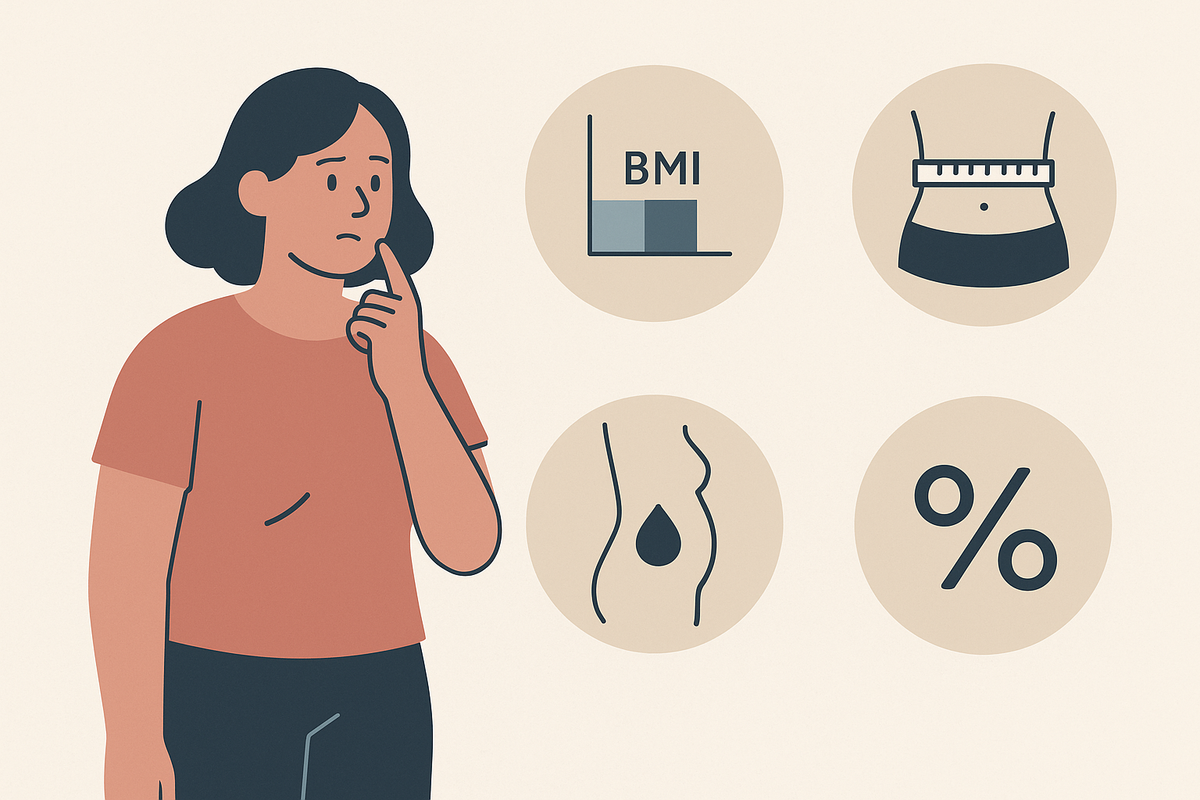
- BMI (Body Mass Index): A screening tool for assessing weight relative to height.
- Waist Circumference: Measures abdominal fat, which is linked to higher health risks.
- Waist-to-Height Ratio: Offers a more personalized risk assessment than BMI alone.
- Body Fat Percentage: Shows how much of your body is fat versus muscle, bone, and water.
It's important to consider all these factors—along with diet, activity, sleep, and stress—when evaluating your health. Apps like Trimm can help you track your weight, GLP-1 medication, and progress, providing a holistic view of your journey.
Section 2: What Does BMI Really Mean?
Defining BMI
BMI, or Body Mass Index, is a formula that uses your height and weight to estimate body fat. It's calculated as your weight in kilograms divided by your height in meters squared, or (kg/m²). BMI is widely used by health professionals as a quick way to screen for potential weight-related health problems.
BMI Categories
- Underweight: BMI below 18.5
- Normal (Healthy) Weight: BMI 18.5 to 24.9
- Overweight: BMI 25.0 to 29.9
- Obesity (Class I): BMI 30.0 to 34.9
- Obesity (Class II): BMI 35.0 to 39.9
- Obesity (Class III): BMI 40.0 and above
Why BMI Is Used
BMI is popular because it's fast, inexpensive, and gives a general idea of risk for health problems. Doctors may use it to flag people who might benefit from further evaluation or support. But as we'll see in the next section, BMI doesn't tell the whole story about your health or body composition.
If you want a deeper dive into the strengths and weaknesses of BMI, check out our in-depth guide: BMI Limitations: What BMI Really Means (and Misses) for Your Health.
Section 3: How to Calculate BMI and Understand the Results
Step-by-Step BMI Calculation
- Metric Formula: BMI = weight (kg) / [height (m)]²
- Imperial Formula: BMI = [weight (lb) / (height (in))²] x 703
For example, if you weigh 70 kg and are 1.75 meters tall:
BMI = 70 / (1.75 x 1.75) ≈ 22.9 (Healthy weight)
Using BMI Calculators
Many health websites and apps, including Trimm, offer built-in BMI calculators. Just enter your height and weight, and the tool does the rest. Some calculators even let you track changes over time, which is especially useful if you're on a weight-loss journey or monitoring GLP-1 medication effects. For a deeper understanding of how these calculators work and their limitations, see our guide to healthy BMI, categories, and limitations.
Interpreting the Result
- 18.5–24.9: Healthy weight for most adults
- 25–29.9: May indicate an increased risk for health issues
- Below 18.5: Potential risk for nutrient deficiencies or weakened immunity
Remember, BMI is a screening tool—not a diagnosis. For some people, especially those with lots of muscle or certain ethnic backgrounds, BMI can over- or underestimate health risks.
Section 4: BMI Limitations and the "Skinny Fat" Phenomenon
BMI Limitations
While BMI is a valuable starting point for assessing "is my weight healthy," it doesn't account for everything. Here are some common limitations:
- Muscle vs. Fat: BMI can't tell if weight comes from muscle or fat.
- Body Shape: Doesn't reflect fat distribution—where you carry extra weight.
- Age & Sex: Older adults and women generally have more body fat at the same BMI as younger adults and men.
- Ethnicity: Some groups may face higher health risks at lower BMIs.
For a detailed breakdown, see our post on BMI Limitations.
"Skinny Fat" Explained
The term "skinny fat" describes people who have a normal or low BMI but a higher body fat percentage, particularly around the belly. These individuals may appear slim but still face increased risks for metabolic issues like insulin resistance or heart disease. This highlights why relying on BMI alone can be misleading.
Beyond the Numbers
To get a full picture of your health, consider tracking additional measurements—like waist circumference, waist-to-height ratio, and body fat percentage—alongside your BMI. Apps such as Trimm can help you keep a comprehensive record of these metrics as part of your GLP-1 or overall health journey.
Section 5: Waist Circumference and Waist-to-Height Ratio
Why Waist Size Matters
Where you store fat is just as important as how much you have. Fat around your abdomen ("visceral fat") is associated with higher health risks like heart disease and diabetes than fat carried elsewhere. That’s why waist measurements are a valuable addition to BMI.
Measuring Your Waist
- Use a soft tape measure.
- Find the top of your hip bones and measure around your bare abdomen, just above them.
- Keep the tape snug but not compressing your skin.
Healthy Waist Circumference
- Women: Less than 35 inches (88 cm)
- Men: Less than 40 inches (102 cm)
Values above these may suggest increased risk for health issues, regardless of overall weight.
Waist-to-Height Ratio: A Useful Alternative
Divide your waist circumference by your height. A ratio under 0.5 is generally considered healthy for adults. For example, if your waist is 80 cm and your height is 170 cm, your ratio is 0.47—within the healthy range.
Waist-to-height ratio can sometimes flag risks missed by BMI, especially in people with a "normal" BMI but high abdominal fat. This makes it a useful tool for answering "is my weight healthy?" beyond BMI alone.
For more about how body shape relates to health, see our guide: Apple vs Pear Body Shape: How to Tell & What It Means.
Section 6: Body Fat Percentage Explained
What Is Body Fat Percentage?
Body fat percentage is the proportion of your body made up of fat tissue. Unlike BMI, which is based only on height and weight, body fat percentage gives a clearer picture of your body composition—the balance between fat, muscle, bone, and water.
Measuring Body Fat
- Bioelectrical Impedance Scales: Common in gyms and some smart scales; results can vary based on hydration.
- Calipers: Pinch and measure skinfold thickness at various sites.
- DEXA Scans: Medical imaging for precise body composition (often used in research or clinics).
Healthy Body Fat Ranges
- Women: 21–33% for adults (ranges vary by age)
- Men: 8–24% for adults (ranges vary by age)
Body fat percentage matters because it distinguishes between someone who is "overweight" due to muscle (like athletes) versus fat. Tracking this metric can help you avoid the "skinny fat" trap and focus on real health improvements.
Body Composition and Health
Improving your body composition—by building muscle and reducing excess fat—may help lower disease risk, boost metabolism, and improve daily functioning. Apps like Trimm let you log weight and measurements so you can visualize changes over time, supporting your journey toward a healthier you. For a body-positive perspective on different body types and shapes, see our ultimate guide to body types and shapes.
Section 7: Healthy Weight Guidelines by Age and Height
Healthy Weight for Your Height
Many people ask, "How much should I weigh for my height?" While BMI charts offer a quick reference, healthy weight can vary based on age, sex, and body type. The following table gives general healthy weight ranges for adults based on height and a BMI of 18.5–24.9:
- 5'0" (152 cm): 95–128 lbs (43–58 kg)
- 5'5" (165 cm): 114–149 lbs (52–68 kg)
- 6'0" (183 cm): 140–183 lbs (64–83 kg)
These are guidelines, not strict rules. Individual factors like muscle mass, bone structure, and genetics all play a role. For a comprehensive approach to determining if you are at a healthy weight, see our complete guide to healthy weight.
Children, Teens, and Older Adults
- Children and Teens: Use age- and sex-specific growth charts, not adult BMI ranges. A pediatrician should interpret these numbers.
- Older Adults: Slightly higher BMI may be protective; unintentional weight loss can signal health problems.
Other Considerations
Body shape also matters. For example, individuals with a "pear" shape (more fat on hips/thighs) may have different risks compared to those with an "apple" shape (more belly fat). For more on this, see Female Body Shapes Explained: Types, Measurements & Tips.
Section 8: When to Talk to a Doctor and Next Steps
When Should You Seek Medical Advice?
- If your BMI, waist size, or body fat percentage is outside the recommended ranges
- If you've experienced rapid or unexplained weight changes
- If you have a personal or family history of weight-related health issues
- If you're considering starting, stopping, or adjusting GLP-1 medications
Remember, only a healthcare provider can assess your full health picture and recommend the best steps for you. Never make medication decisions on your own.
Holistic Lifestyle Factors
Maintaining a healthy weight is about more than numbers. Consider these lifestyle pillars:
- Nutrition: Focus on balanced, nutrient-dense meals.
- Physical Activity: Aim for regular movement and exercise, as recommended by your healthcare provider.
- Sleep: Quality sleep supports weight and metabolic health.
- Stress Management: Chronic stress can affect weight and appetite hormones.
Tracking Your Progress
Whether you're using GLP-1 medications or making lifestyle changes, tracking your doses, weight, and measurements can help you stay motivated and spot trends. Trimm offers tools to track your injections, weight, side effects, and more—so you can visualize your journey and celebrate milestones.
For those who want to prepare for the upcoming mobile app release, see Mobile App Launch: What to Expect and How to Prepare.
Conclusion
Asking "is my weight healthy?" is an important—and deeply personal—question. While BMI, waist-to-height ratio, and body fat percentage are valuable tools, no single number can capture the full picture of your health. The best approach is holistic: consider multiple measurements, your lifestyle, and most importantly, how you feel in your body. If you have concerns about your weight or are navigating a GLP-1 journey, reach out to a healthcare provider for personalized advice. And remember, tracking your progress with tools like Trimm can help you see real, meaningful change over time—without judgment.
FAQ
Q: What BMI is considered a healthy weight?
A: For most adults, a BMI between 18.5 and 24.9 is considered healthy. However, BMI is only a screening tool and may not reflect individual differences in muscle, bone structure, or fat distribution. Always interpret your BMI in context and consult a healthcare provider for personalized advice.
Q: How do I calculate my BMI?
A: Divide your weight in kilograms by your height in meters squared (kg/m²), or use the imperial formula: [weight in pounds / (height in inches)²] x 703. Many online calculators and health apps, like Trimm, can do the math for you.
Q: Is BMI accurate for everyone?
A: No—BMI has limitations. It doesn't differentiate between muscle and fat, and may not accurately reflect health for athletes, older adults, or certain ethnic groups. Additional measures like waist circumference and body fat percentage provide a fuller picture.
Q: What is a healthy waist size or waist-to-height ratio?
A: For adults, a waist circumference under 35 inches (88 cm) for women and under 40 inches (102 cm) for men is considered healthy. A waist-to-height ratio below 0.5 is also a general target for most adults, but individual factors matter.
Q: How much should I weigh for my height?
A: Healthy weight ranges depend on your height, age, sex, and body composition. BMI charts can give a general guideline, but individual factors matter. For adults, a BMI of 18.5–24.9 is typically considered healthy.
Q: Does age affect what a healthy weight is?
A: Yes. Children and teens use growth charts instead of adult BMI categories, and older adults may have different healthy weight ranges. Slightly higher BMI can sometimes be protective in older adults, but unintentional weight loss may signal health issues.