How to Start GLP-1 Therapy: A Beginner’s Guide for Safe Weight Loss
Learn how to start GLP-1 therapy safely for effective weight loss. This guide covers preparation, initiation steps, benefits, and side effects.

Estimated reading time: 12 minutes
Key Takeaways
- GLP-1 therapies control appetite, slow gastric emptying, and improve blood sugar for sustained weight loss.
- A comprehensive plan includes medical evaluation, lifestyle adjustments, and a clear dosing schedule.
- Monitoring, dose titration, and professional follow-up optimize safety and effectiveness.
- Common side effects can be managed with diet tweaks and gradual dose increases.
- Long-term success relies on ongoing lifestyle support and professional guidance.
Table of Contents
- Understanding GLP-1 Therapy
- Preparations Before Starting GLP-1 Therapy
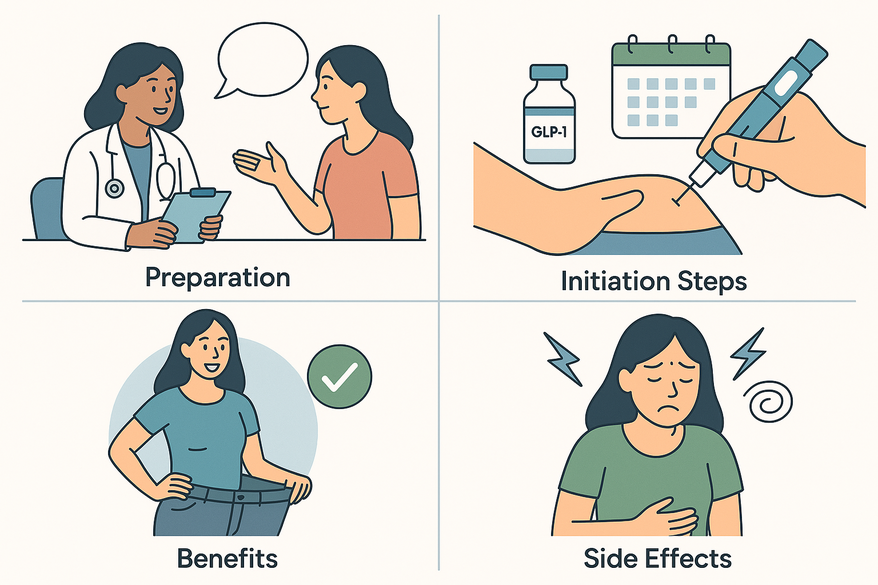
- Step-by-Step Guide to Initiation
- Expected Benefits and Potential Side Effects
- Lifestyle Considerations and Support Systems
- FAQ
Understanding GLP-1 Therapy
What exactly is GLP-1? Glucagon-like peptide-1 (GLP-1) is a natural gut hormone that:
- Stimulates insulin release when blood sugar rises.
- Suppresses glucagon, the hormone that raises blood glucose.
- Slows gastric emptying to prolong fullness.
- Increases satiety, reducing meal size and snacking.
GLP-1 receptor agonists are synthetic drugs that mimic these effects by binding to receptors in the pancreas and brain, offering consistent appetite suppression and improved insulin sensitivity.
Originally developed for type 2 diabetes, agents like semaglutide and tirzepatide now have FDA approvals for chronic weight management. Needle-free oral options are also emerging.
Preparations Before Starting GLP-1 Therapy
1. Consultation Is Crucial
You need a prescription from a qualified provider—PCP, endocrinologist, or obesity-medicine specialist—to ensure safety and suitability.
2. Eligibility Criteria
- BMI ≥ 30 (obesity) or ≥ 27 with a weight-related comorbidity.
- Comprehensive work-up: medical history, physical exam, and labs (glucose, lipids, liver/kidney function).
3. Lifestyle Groundwork
- Nutrition: Lean proteins, high fiber, healthy fats.
- Exercise: Start with walks, then add strength and cardio.
- Well-being: Prioritize sleep hygiene, stress management, and a long-term mindset.
Step-by-Step Guide to Initiation
Step 1 – Self-Education
Review reputable resources—medical societies, academic centers, and your healthcare team—to understand indications, benefits, and risks. For a detailed overview, see our GLP-1 beginner tips guide.
Step 2 – Schedule Consultation
Choose in-person or telehealth. Prepare your medication list, health history, and insurance details.
Step 3 – Clinical Evaluation & Prescription
During your visit, confirm eligibility, review contraindications, and select a GLP-1 agent with a titration plan tailored to your tolerance.
Step 4 – Administration & Dosing
Injection sites include abdomen, thigh, arm, or buttock; oral pills are an alternative. Start at a low dose and increase monthly as tolerated. For detailed guidance, consult our dosage guidelines and titration schedule.
Step 5 – Monitor & Follow-Up
- Track weight, BMI, and labs (glucose, lipids, renal/liver panels).
- Review side effects regularly and adjust the dose for optimal balance.
Expected Benefits and Potential Side Effects
Anticipated Benefits
- Average ≥ 10% body-weight loss with lifestyle support. For a comprehensive look at results and safety, see our definitive guide to GLP-1 weight loss.
- Improved glycemic control, blood pressure, and lipid profile.
- Enhanced satiety and reduced cravings.
Common Side Effects
- Nausea, vomiting, diarrhea, constipation, bloating.
- Tips: Eat smaller meals, choose bland low-fat foods, stay hydrated, and titrate slowly.
Rare but Serious Risks
Pancreatitis, gallbladder disease, acute kidney injury, and potential thyroid tumor risk. Seek urgent medical care if you experience severe symptoms and never self-discontinue without professional advice.
Lifestyle Considerations and Support Systems
Diet & Exercise Synergy
Whole foods rich in fiber and lean protein amplify GLP-1’s satiety effect, while tailored exercise preserves muscle mass and boosts metabolism. For safe and effective movement, review our GLP-1 physical activity guidelines.
Integrating a Comprehensive Plan
- Nutrition counseling and behavioral therapy to reshape habits.
- Sleep hygiene and stress reduction to balance hormones.
- Adjunct options: additional pharmacotherapy or bariatric surgery if needed.
Building Your Support Network
Engage registered dietitians, mental-health professionals, and peer support groups. Apps like Trimm can track doses, meals, side effects, and progress with clear visuals.
FAQ
- Is GLP-1 therapy safe? Under medical supervision, GLP-1 agonists are well-researched and safe for appropriately screened patients.
- How long must I stay on therapy? GLP-1 is typically long-term; stopping abruptly often leads to weight regain. Plan a gradual transition with your provider.
- What weight-loss results can I expect? Trials show average weight loss of 10–15% with diet and exercise; individual outcomes vary.
- What does it cost and is it covered? Coverage varies by drug and plan; many insurers cover GLP-1s for obesity. Check eligibility and prior authorization with your provider.
- Can non-diabetics use GLP-1s? Yes. Some agents (e.g., Wegovy, Zepbound) are approved for weight management regardless of diabetes status.
- Are there oral alternatives? Oral semaglutide and other GLP-1 pills exist, requiring specific empty-stomach dosing but avoiding injections.
- What if I stop after goal weight? Discontinuation can lead to weight regain; discuss a maintenance plan, including tapering or lifestyle support, with your clinician.
- Is GLP-1 a “quick fix”? No. It’s an effective tool within a holistic, long-term strategy of nutrition, activity, and behavior change.