
GLP-1 Integration with Wearables: Data-Driven Therapy for Better Outcomes
Explore how GLP-1 integration with wearables creates personalized, data-driven therapy for conditions like type 2 diabetes and obesity, enhancing patient outcomes.

Estimated reading time: 8 minutes
Key Takeaways
- Personalized Care: Combining GLP-1 receptor agonists with wearable data allows clinicians to tailor dosing and lifestyle goals in real time.
- Continuous Monitoring: Smartwatches, CGMs, smart rings, and scales provide ongoing insights into heart rate, glucose trends, sleep, and weight.
- Enhanced Engagement: Visual dashboards and alerts reinforce healthy habits, improving adherence and motivation.
- Early Detection: High-frequency data reveal side effects or nonresponse patterns before they become problematic.
Table of Contents
- Understanding GLP-1 Therapy for GLP-1 Integration with Wearables
- Overview of Wearable Technology in Healthcare for GLP-1 Integration with Wearables
- How GLP-1 Integration with Wearables Works
- Benefits of Integrating GLP-1 with Wearables
- Challenges and Considerations for GLP-1 Integration with Wearables
- Best Practices for Successful Integration of GLP-1 with Wearables
- Future Trends and Innovations in GLP-1 Integration with Wearables
- Conclusion
GLP-1 integration with wearables combines powerful metabolic drugs and real-time health sensors to create personalized care for type 2 diabetes and obesity. Patients on GLP-1 receptor agonists—like semaglutide or tirzepatide—use smartwatches, fitness bands, continuous glucose monitors, smart rings, or connected scales to track metrics that help fine-tune dosing, spot side effects early, and reinforce healthy habits. For a deep dive into what to track and how to build a sustainable logging system, see our complete guide.
Understanding GLP-1 Therapy for GLP-1 Integration with Wearables
GLP-1 receptor agonists (GLP-1 RAs) mimic the natural gut hormone, binding to receptors in the pancreas, gut, and brain to support glycemic control and weight loss.
- Semaglutide (Ozempic, Wegovy)
- Liraglutide (Victoza, Saxenda)
- Exenatide (Byetta, Bydureon)
- Dulaglutide (Trulicity)
- Tirzepatide (Mounjaro)
Common applications:
- Type 2 diabetes management – Improved insulin secretion, lower hypoglycemia risk.
- Obesity and chronic weight management – Average 10–20% body weight loss.
- Cardiovascular and renal protection – Reduced risk of heart attack, stroke, and kidney decline.
Mechanism of action:
- Glucose-dependent insulin release
- Glucagon suppression
- Delayed gastric emptying for prolonged satiety
- Appetite reduction via central nervous system pathways
Sources: Nature review, NCBI book
Overview of Wearable Technology in Healthcare for GLP-1 Integration with Wearables
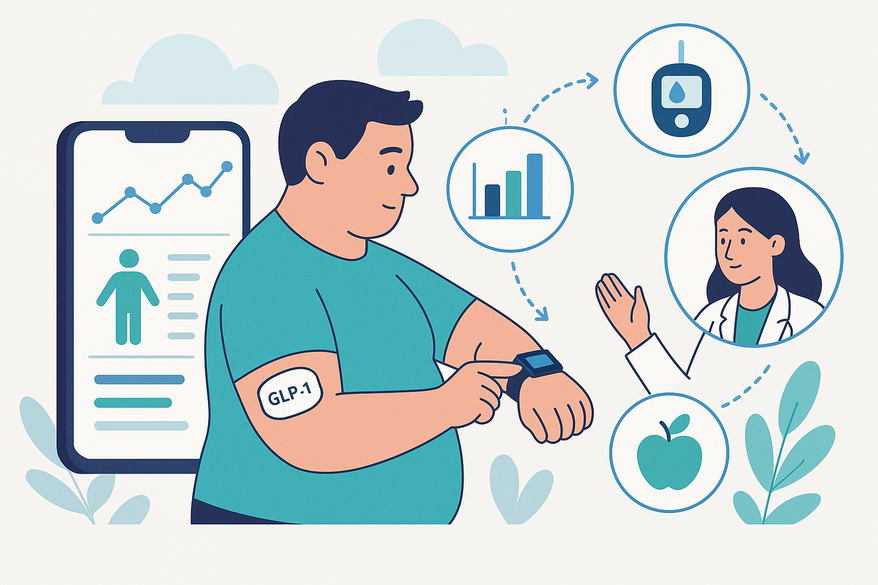
Wearable devices collect continuous data that guide GLP-1 therapy adjustments:
- Smartwatches/Fitness bands: Heart rate, HRV, steps, active minutes, ECG, SpO₂.
- Continuous Glucose Monitors (CGMs): Real-time interstitial glucose trends, hyper/hypoglycemia alerts.
- Smart rings: Sleep stages, HRV, recovery scores.
- Connected scales and cuffs: Body weight, BMI, body fat, blood pressure.
Data flow and benefits:
- Auto-sync to apps and cloud platforms
- Longitudinal dashboards reveal trends over days, weeks, months (mastering trend analysis)
- Real-time alerts for out-of-range metrics
- Enhanced patient engagement through visible progress
How GLP-1 Integration with Wearables Works
- Tracking Progress:
- Weight trajectories from smart scales.
- Activity levels indicate energy and appetite shifts.
- Heart rate and HRV flag GI side effects.
- Sleep quality reflects metabolic improvements or discomfort.
- Syncing Data for Insights:
- Medication logs, food diaries, and CGM readings merge with wearables.
- Auto-generated patterns link dose timing with side effects (managing side effects), meals with satiety, and exercise with glucose swings.
- Remote Monitoring:
- Clinician portals display summaries of weight, activity, and glucose.
- Alerts prompt outreach for rapid weight loss or glucose variability.
Adjustments enabled by this approach include dose titration, tailored lifestyle goals, and early identification of nonresponders.
Benefits of Integrating GLP-1 with Wearables
- Improved Progress Tracking: Continuous metrics fill gaps between visits.
- Enhanced Personalization: Data-driven dosing and lifestyle targets.
- Increased Engagement: Visible trends reinforce adherence.
- Early Issue Detection: Rapid weight or glucose fluctuations trigger interventions.
Sources: NCBI book, Yale Medicine guide
Challenges and Considerations for GLP-1 Integration with Wearables
- Data Privacy & Security: HIPAA/GDPR compliance, encryption, consent.
- Compatibility & Accuracy: Integration gaps, sensor limitations during intense activity.
- User Compliance: Regular charging, wearing, and syncing required.
- Evidence Gaps: Limited large-scale trials and formal protocols.
Best Practices for Successful Integration of GLP-1 with Wearables
- Device Selection: Prioritize weight, activity, heart rate, sleep, and glucose metrics.
- Data Sync & Analysis: Establish charging/sync routines; use dashboards for trend evaluation; annotate doses and events.
- Clinical Roles: Define priority metrics, educate patients on trends, integrate reviews into decision-making, leverage care teams.
Source: NCBI book
Future Trends and Innovations in GLP-1 Integration with Wearables
- AI-driven analytics to suggest personalized dose adjustments and early alerts.
- Multi-agonist therapies matched to phenotypes via digital biomarkers.
- Clinical-grade sensors for enhanced data accuracy.
- Pharmacy–wearable integration to distinguish nonadherence from nonresponse.
- Expanded indications (NAFLD, neuropsychiatric disorders) informed by digital phenotyping.
Source: Nature review
Conclusion
GLP-1 integration with wearables merges cutting-edge metabolic therapies and continuous health data to offer:
- Better monitoring of weight, activity, sleep, and glucose
- Personalized dosing and lifestyle guidance
- Stronger patient engagement and motivation
- Early detection of side effects or suboptimal response
Clinicians, health systems, and patients can pilot wearable integration alongside GLP-1 treatment to refine protocols and advance personalized metabolic care. Start today: adopt GLP-1 integration with wearables for improved outcomes in diabetes, obesity, and beyond.
To streamline your GLP-1 journey alongside wearable data tracking, check out Trimm, the web and mobile app that turns your doses, meals, side effects, and biometric logs into clear charts, milestones, and projections you can actually act on.
FAQ
- What is GLP-1 integration with wearables?
It’s the combination of GLP-1 receptor agonist therapy with data from devices like CGMs and smartwatches to personalize treatment. For more on how these devices work together, see our guide to GLP-1 tracking wearable compatibility. - Which metrics matter most?
Key metrics include interstitial glucose trends, weight, heart rate/HRV, steps, and sleep quality. - How does this improve patient outcomes?
Continuous monitoring enables tailored dosing, lifestyle goal adjustments, and early side-effect detection. For a comprehensive overview of medications, results, and safety, see our definitive guide to GLP-1 weight loss. - Are data privacy concerns addressed?
Effective solutions require HIPAA/GDPR compliance, encryption, patient consent, and controlled access. - What’s next for this model?
Future advances include AI-driven analytics, clinical-grade sensors, and multi-agonist matching via digital biomarkers. For a deeper understanding of the science behind these therapies, see our article on the science behind GLP-1 therapy. For more on the latest weight loss data trends in GLP-1 therapy, explore our in-depth analysis.