GLP-1 Tracking Wearable Compatibility: Integrating Technology for Better Outcomes
Discover how GLP-1 tracking wearable compatibility enhances diabetes management by integrating therapy data with heart rate, sleep, and activity for improved outcomes.

Estimated reading time: 8 minutes
Key Takeaways
- Unified insights: Merging GLP-1 injection logs with wearable metrics provides a comprehensive view of therapy impact.
- Continuous monitoring: Wearables track heart rate, sleep stages, activity, and weight to inform dosing decisions.
- Seamless integration: Platforms like HealthKit, Google Fit, and secure APIs enable real-time data syncing.
- Real-world impact: Personalized dose timing and adherence improve with clear timelines and trend analyses.
Table of Contents
- Introduction
- Understanding GLP-1 Therapy
- The Role of Wearable Technology
- Integrating GLP-1 Therapy with Wearable Technology
- Benefits of GLP-1 Tracking Wearable Compatibility
- Challenges and Considerations
- Future Trends and Developments
- Conclusion
- FAQ
Introduction
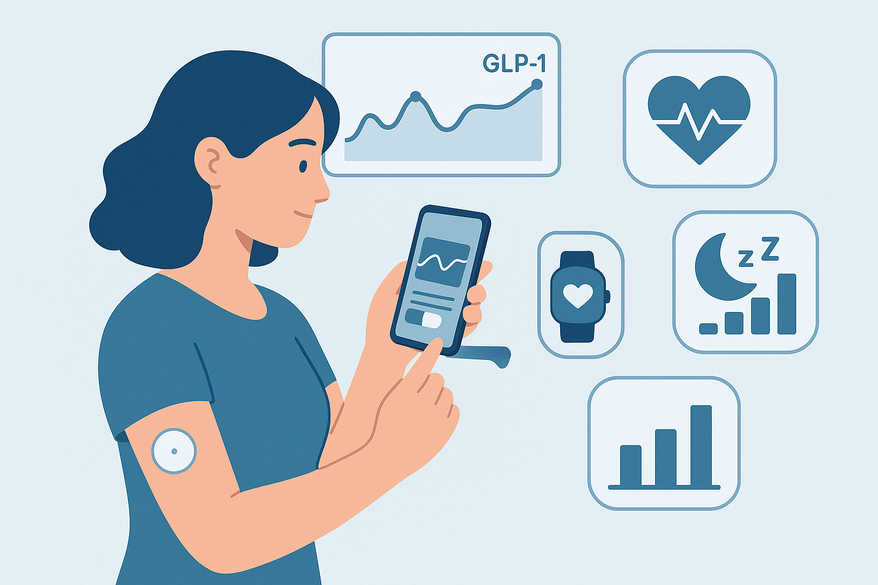
GLP-1 tracking wearable compatibility brings together your health wearables and GLP-1 therapy data on a single platform. GLP-1 therapy uses glucagon-like peptide-1 receptor agonists to manage type 2 diabetes and support weight loss. By merging injection logs with metrics like heart rate, sleep, weight, and activity, you gain clearer insights and better outcomes. Learn more about this approach in GLP-1 integration with wearables.
Understanding GLP-1 Therapy
GLP-1 receptor agonists mimic an incretin hormone to:
- Stimulate insulin release after meals
- Inhibit glucagon, lowering blood sugar
- Slow gastric emptying to curb appetite
- Promote weight reduction
Medical uses:
- Type 2 diabetes management
- Weight loss support
Why monitoring matters: Dose timing and consistency shape glycemic control and weight trends. Logging side effects—such as nausea or dizziness—guides dose adjustments.
Practical tracking tools:
- Shotsy app for dose reminders and side-effect logging.
- MyFitnessPal’s GLP-1 support for tracking progress and meal logs.
The Role of Wearable Technology
Wearables capture body signals—heart rate, steps, sleep stages, and weight—and often sync with phone apps. For device recommendations, see Best Wearables for GLP-1 Tracking.
Core features of health wearables:
- Heart rate monitoring
- Step and activity tracking
- Sleep stage analysis
- Recovery and readiness scores
- Weight and body metrics
Platform integration: Apple Health on iPhone, Google Fit on Android, or custom dashboards in third-party apps.
Why wearables matter for GLP-1 therapy: Continuous data streams let you link dosing events to changes in sleep quality, heart rate shifts, and workout performance.
For example, the Oura Ring combines nightly sleep, readiness, and daily activity with GLP-1 dose times for a clear timeline. See Oura Ring GLP-1 insights.
Integrating GLP-1 Therapy with Wearable Technology
GLP-1 tracking wearable compatibility merges:
- Injection timestamps and dose amounts
- Symptom logs (nausea, appetite)
- Weight trends, activity, sleep, and heart rate
Data alignment process:
- Wearable records timestamped metrics (heart rate, sleep stages).
- GLP-1 app logs injection events and side effects.
- An integration platform merges both sets to reveal patterns around dosing windows. See our guide on how to sync GLP-1 data with fitness devices.
Product Examples
- Oura Ring with GLP-1 Insights – dose-aware biometrics dashboard.
- Wellive GLP-1 Tracker AI – syncs Apple Health vitals, weight, and dose logs.
- Pep – connects nutrition and weight apps alongside GLP-1 logging.
- MyFitnessPal GLP-1 Support – dosage reminders, food logging, and trend reports.
- Glapp & Shotsy – dose tracking, side-effect logging, and progress summaries.
Technical Integration Methods
- HealthKit API (iOS) and Google Fit API (Android) for seamless data sharing.
- On-device processing for faster, private analysis versus cloud-based models for deeper insights.
- Secure OAuth or token exchange for app-to-app permissions.
In a real-world example, Sarah uses Oura Ring and Shotsy together. She notices lighter sleep and higher resting heart rate on injection nights. With her doctor, she adjusted her dose timing by two hours to ease evening disruptions.
For a unified dashboard of GLP-1 therapy and wearable metrics, try Trimm, which logs injections, weight, side effects, meals, and more, then visualizes trend lines and titration timelines.
Benefits of GLP-1 Tracking Wearable Compatibility
For Patients
- Real-time context: Link nausea or appetite dips to sleep and heart-rate changes.
- Self-management: Receive reminders, trend reports, and detect patterns early.
- Better adherence: View dosing, side effects, and lifestyle factors in one dashboard.
For Healthcare Providers
- Consolidated summaries: Review dosing events, side effects, and biometrics in one report.
- Personalized planning: Use long-term data to adjust doses and timing for each patient.
Case study: Dr. Lee reviews a patient’s Wellive dashboard weekly. She notes that dose days show lower readiness scores and shifts injections to mornings, improving both comfort and sleep.
Challenges and Considerations
Data accuracy: Wearable metrics are estimates, not clinical lab results; focus on long-term trends.
Interoperability: APIs vary by device and platform; full sync may require Apple Health or Google Fit as a bridge.
Technical limitations: Some GLP-1 apps only log doses without pulling full wearable data, creating gaps when devices fail to sync.
Privacy and security: Sensitive health data needs protection. On-device processing reduces breach risk, as seen in Wellive’s phone-based model.
User tip: Always review app privacy policies and choose tools that encrypt data in transit and at rest.
Future Trends and Developments
- Medication-aware analytics: Platforms will interpret biometric changes in relation to dosing and send AI-driven alerts.
- Expanded integrations: Deeper app-to-app sharing across nutrition, fitness, sleep, and medication via open APIs.
- Enhanced correlation studies: Research linking GLP-1 dose timing to sleep quality and recovery trends will refine dosing guidelines.
- Privacy-preserving workflows: On-device machine learning and standards like FHIR for secure, healthcare-grade interoperability.
Conclusion
- We explored the fundamentals of GLP-1 therapy and the importance of dose tracking.
- Wearable devices capture vital metrics—heart rate, sleep, activity—to inform therapy decisions.
- Integration relies on HealthKit, Google Fit, and secure APIs for seamless data alignment.
- Real-world examples show improved adherence, personalized care, and better outcomes.
- Challenges include data accuracy, interoperability, and privacy; future trends point toward AI-driven insights and robust security.
FAQ
- What is GLP-1 tracking wearable compatibility?
It’s the ability to merge GLP-1 injection logs with wearable data—heart rate, sleep, activity—into a single timeline for comprehensive insights. - How do I integrate my GLP-1 app with a wearable?
Most solutions use HealthKit (iOS) or Google Fit (Android) APIs, along with secure OAuth, to sync dose events and biometric data in real time. - What benefits do wearables bring to GLP-1 therapy?
Wearables provide continuous monitoring, help detect patterns around dosing, improve adherence, and support personalized dose adjustments. - How is my health data protected?
Look for apps with on-device processing, end-to-end encryption, and transparent privacy policies. Standardized frameworks like FHIR ensure healthcare-grade security.