Body Types and Muscle Gain Potential: 10 Key Insights
Explore body types and muscle gain potential, how genetics shape your frame, and tips to optimize training and nutrition for your unique body.

Estimated reading time: 12 min
Key Takeaways
- Body types like ectomorph, mesomorph, and endomorph describe genetic frames influencing muscle and fat gain tendencies.
- Muscle gain potential varies by body type but can be optimized with tailored training and nutrition.
- Wrist and ankle circumference can help estimate your natural muscle-building potential and frame size.
- Body shape categories (apple, pear, hourglass) describe fat distribution but don’t limit muscle growth.
- Tracking progress with apps like Trimm can help you tailor your journey and stay motivated.
Understanding body types and muscle gain potential can be helpful for anyone looking to build lean mass effectively and healthily. While genetics play a significant role in shaping your frame and metabolism, knowing your body type can guide you in choosing the right training, nutrition, and even how to dress to complement your physique. This guide walks you through the most recognized body type frameworks, how they relate to muscle gain, and practical tips to make the most of your unique body. For a broader perspective on body shapes, see our ultimate body-positive guide to body types and shapes.
1. What Are Body Types? Ectomorph, Mesomorph, and Endomorph Explained
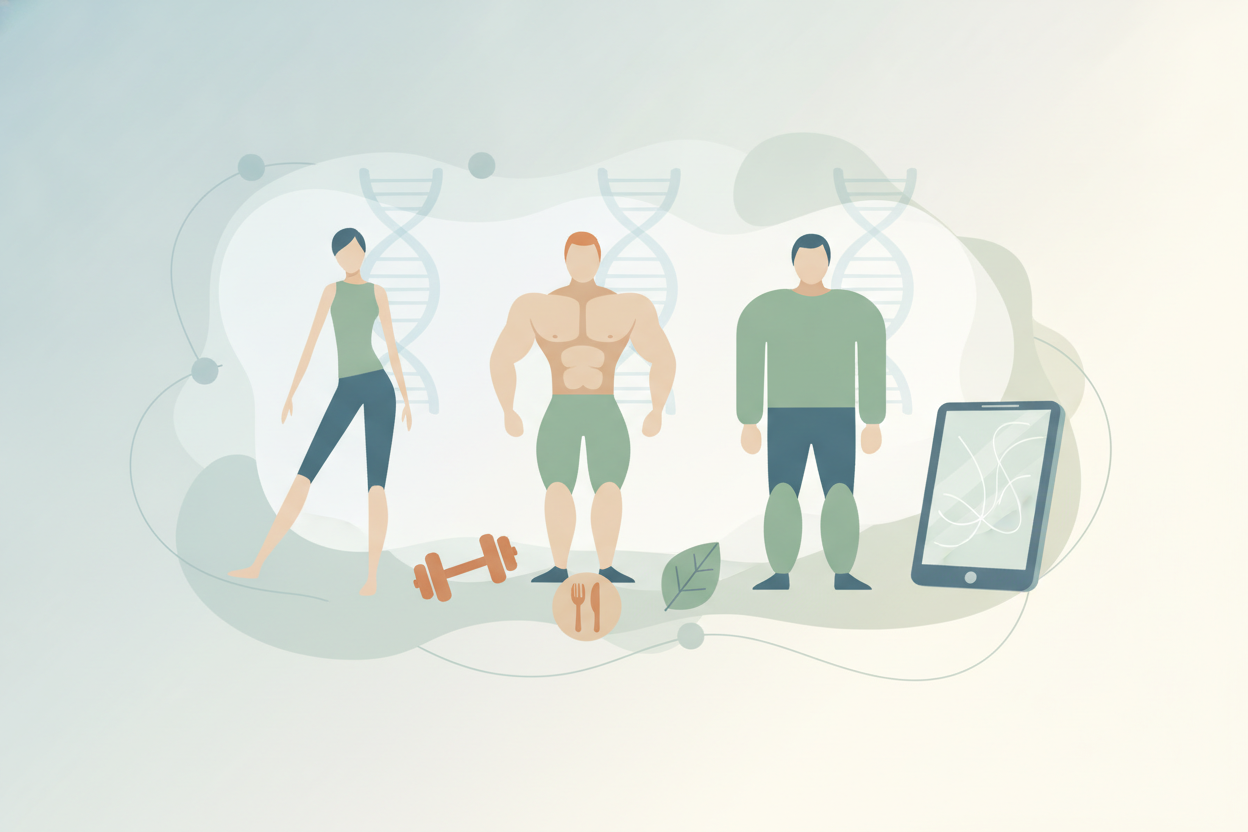
The classic somatotype system categorizes bodies into three main types based on shape and metabolism:
- Ectomorph: Characterized by a slender frame, narrow shoulders, and a typically faster metabolism. Ectomorphs may find it more challenging to gain weight or muscle.
- Mesomorph: Naturally muscular with a medium frame, broad shoulders, and an efficient metabolism. Mesomorphs often gain muscle more easily.
- Endomorph: Softer, rounder body with a wider waist and a metabolism that may be slower. Endomorphs may gain fat more easily but can build muscle with proper training.
These categories serve as descriptors rather than strict rules. Many people have mixed traits, making it important to personalize your approach rather than relying solely on labels.
2. How Body Type Relates to Muscle Gain Potential and Genetic Frame
Your body type largely reflects your genetic predisposition for muscle and fat distribution, bone structure, and metabolism. For example, mesomorphs may have a genetic advantage for muscle gain due to factors like bone density and hormonal profile. Ectomorphs, while naturally lean, may need more calories and focused training to build muscle. Endomorphs might gain muscle but may also need to manage fat gain carefully.
Understanding your frame size—often measured by wrist and ankle circumference—can provide additional insight into your muscle gain potential. Larger bone structure usually supports more muscle mass. For detailed advice on tracking body measurements for your body type, check out our ultimate guide to tracking body measurements for body types.
3. Differences in Muscle Gain Rate, Fat Gain, and Metabolism by Body Type
Each body type has distinct metabolic characteristics that may influence how quickly you gain muscle or fat:
- Ectomorphs: Often have a faster metabolism, slower muscle gain, and lower fat storage.
- Mesomorphs: Tend to have a balanced metabolism, potentially faster muscle gain, and moderate fat gain.
- Endomorphs: May have a slower metabolism, moderate to faster muscle gain, and higher fat gain risk.
These differences don't mean you can’t improve your physique but highlight why personalized nutrition and training plans can benefit your progress.
4. Does Body Type Determine Your Natural Muscular Ceiling or FFMI Potential?
Your body type can influence your natural muscular ceiling, often measured by the Fat-Free Mass Index (FFMI), which estimates lean mass relative to height. Mesomorphs may have higher FFMI potential, ectomorphs lower, and endomorphs moderate. However, FFMI calculators like those developed by Casey Butt consider bone structure, frame size, and other factors, demonstrating that genetics set a range but not a fixed limit.
Consistent training, nutrition, and recovery can help you approach your muscle gain potential, regardless of body type.
5. Wrist and Ankle Circumference as Markers of Muscular Potential
Measuring wrist and ankle circumference is a simple way to estimate your bone structure and frame size:
- Smaller wrists/ankles: Often indicate a smaller frame and potentially lower muscle gain ceiling.
- Larger wrists/ankles: Suggest a bigger frame that can support more muscle mass.
This information can help set realistic muscle gain goals and tailor your training intensity.
6. Training Recommendations for Ectomorphs, Mesomorphs, and Endomorphs
Each body type may benefit from specific training approaches:
- Ectomorphs: Focus on heavy resistance training with lower volume; prioritize compound lifts; avoid excessive cardio to preserve calories.
- Mesomorphs: Balanced training with a mix of strength and hypertrophy; include cardio for fat control.
- Endomorphs: Combine strength training with higher-intensity cardio; monitor recovery to avoid overtraining.
Regardless of type, progressive overload and consistency remain key.
7. Nutrition and Calorie Targets for Each Body Type to Support Lean Mass Gain
Nutrition strategies should align with metabolic differences:
- Ectomorphs: Higher calorie intake with emphasis on carbs and protein; frequent meals to support muscle growth.
- Mesomorphs: Moderate calorie surplus with balanced macros; adjust based on activity.
- Endomorphs: Careful calorie control; moderate carbs with higher protein and healthy fats; focus on nutrient timing.
Tracking your intake and progress can be made easier with apps like Trimm, especially if you’re also managing weight-loss medications or side effects. For more information on medications that may affect weight loss, see our definitive guide to GLP-1 weight loss medications.
8. How to Measure Your Own Body Type and Recognize Mixed Types
To determine your body type, consider the following:
- Measure wrist and ankle circumference relative to height.
- Observe your natural muscle and fat gain tendencies over time.
- Identify your predominant frame characteristics (shoulder width, waist size).
Many people don’t fit squarely into one category and may be a mix, such as ecto-mesomorph or endo-mesomorph. Recognizing this helps further customize training and nutrition.
9. Common Myths: Can You Change Your Body Type or Is It Mostly Genetics?
Body type is primarily genetic, describing your natural bone structure and metabolism. While you can’t fundamentally change your body type, you can certainly improve your physique through targeted training, nutrition, and lifestyle choices. For example, an ectomorph can add significant muscle with proper stimulus, and an endomorph can reduce fat and gain lean mass simultaneously.
Avoid extreme dieting or attempts to drastically alter your natural shape; embrace your unique frame and work with it.
10. Natural Muscle Potential Calculators and Casey Butt / FFMI-Based Estimates
Several online calculators estimate your natural muscle-building potential, such as those based on Casey Butt’s research or FFMI metrics. These use inputs like height, wrist size, and body fat to predict maximum lean mass achievable without steroids.
Use these tools as motivational guides, not rigid limits. Combining these estimates with consistent tracking, such as with Trimm, can help you set realistic goals and celebrate milestones on your muscle gain journey.
Conclusion
Understanding body types and muscle gain potential empowers you to make informed decisions about training, nutrition, and self-care. Remember, body types like ectomorph, mesomorph, and endomorph describe tendencies, not limitations. Embrace your unique genetics, use practical measurements like wrist circumference, and tailor your approach accordingly. Whether you’re a male or female body type, or identifying your apple vs pear shape, knowledge is your best tool. And tools like Trimm can support your progress with smart tracking and insights tailored to your journey.
FAQ
Q: Which body type builds muscle the fastest?
A: Mesomorphs often build muscle faster due to their natural muscular frame and balanced metabolism, but with the right training and nutrition, ectomorphs and endomorphs can also achieve impressive muscle gains.
Q: Can ectomorphs gain as much muscle as mesomorphs?
A: While ectomorphs may gain muscle more slowly and find it harder to bulk up, they can still build significant muscle over time by focusing on calorie surplus and resistance training.
Q: Does body type affect your genetic muscle-building potential?
A: Yes, body type reflects genetic predispositions related to metabolism and bone structure, influencing your natural muscular ceiling, but lifestyle and training have a huge impact too.
Q: How do I know if I am an ectomorph, mesomorph, or endomorph?
A: Assess your body frame by measuring wrist and ankle circumference, observe how easily you gain muscle or fat, and consider your overall shape and metabolism to identify your predominant body type or mixed type.
Q: What should I eat to gain muscle for my body type?
A: Ectomorphs may benefit from a calorie-dense diet with more carbs and protein; mesomorphs from balanced macros; endomorphs from moderate calories with higher protein and fat. Tailoring nutrition to your metabolism can help optimize muscle gain.
Q: How much muscle can I naturally gain based on my frame size?
A: Your frame size, estimated via wrist and ankle measurements, can help predict your muscle gain potential. Larger frames generally support more muscle, but individual results vary based on training, nutrition, and consistency.
Free to start
Try the Trimm app
Everything in this guide, in your pocket.
Get it on iPhoneGet it on Android