Wegovy vs Zepbound: Which GLP-1 Is Best for Weight Loss?
Wegovy vs Zepbound: Compare weight loss, side effects, cost, and eligibility. Discover which GLP-1 med is right for your goals and how Trimm can help.

Estimated reading time: 13 min
Key Takeaways
- Zepbound (tirzepatide) has led to greater average weight loss than Wegovy (semaglutide) in clinical trials, including head-to-head studies.
- Wegovy and Zepbound have different FDA approvals, eligibility, and uses beyond weight loss.
- Both are weekly injectable GLP-1 medications with similar side effects, but Zepbound may be associated with slightly more digestive symptoms in some studies.
- Coverage, cost, and insurance access vary for both, often requiring prior authorization.
- Bottom line: Zepbound may be more effective for weight loss in some patients, but the right choice depends on your health, goals, eligibility, and provider guidance.
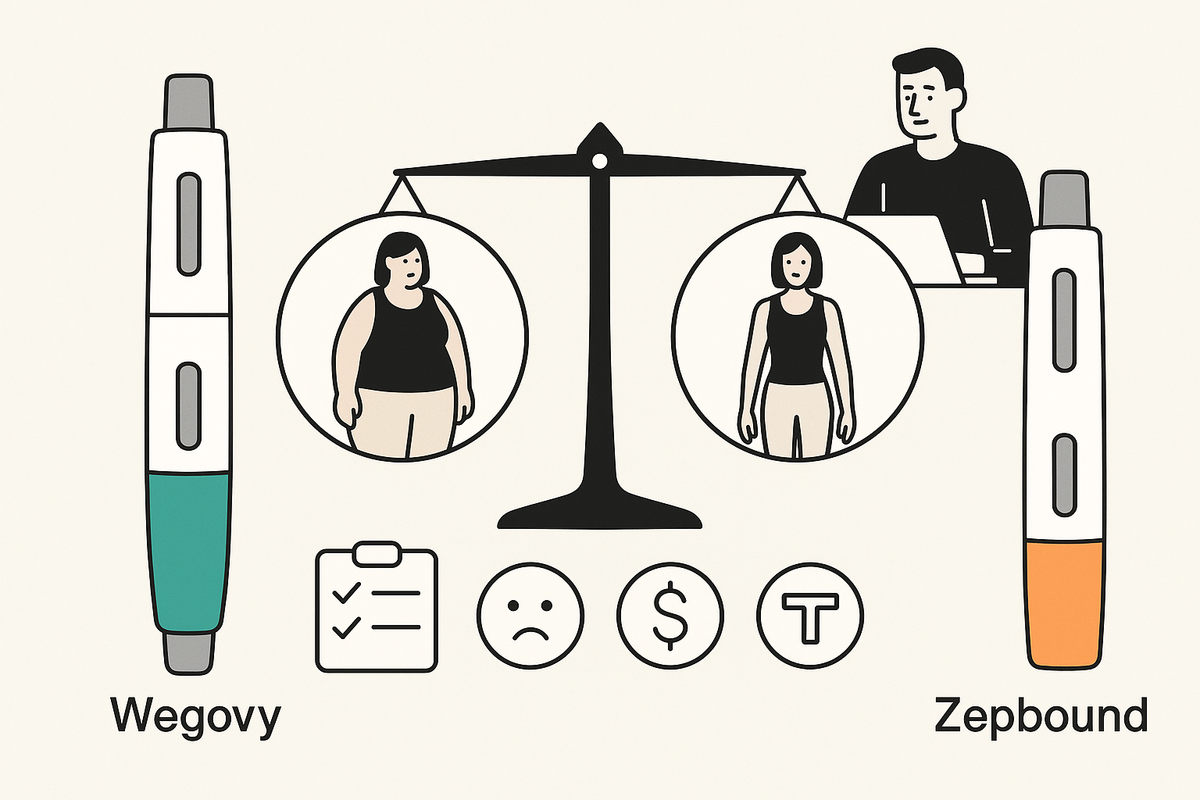
When comparing Wegovy vs Zepbound for weight loss, you’re looking at two leading GLP-1 medications—semaglutide and tirzepatide—that work in similar but distinct ways. The quick answer: Zepbound has shown greater average weight loss in clinical trials, but Wegovy is FDA-approved for a broader range of patients. Your best option depends on your health profile, age, insurance, and goals. Let’s break down the details, side by side.
Quick Comparison
| Feature | Wegovy (Semaglutide) | Zepbound (Tirzepatide) |
|---|---|---|
| Drug Class | GLP-1 receptor agonist | Dual GIP/GLP-1 receptor agonist |
| Generic Name | Semaglutide | Tirzepatide |
| FDA Approvals | Obesity (adults & teens), CV risk reduction | Obesity (adults only), sleep apnea |
| Eligible Patients | Age ≥12, BMI ≥30 or ≥27 w/ comorbidity | Age ≥18, BMI ≥30 or ≥27 w/ comorbidity |
| Average Weight Loss (trials) | ~15% (up to 17% in some studies) | ~20% (up to 22.5% at highest dose) |
| Other Approved Uses | Reduce cardiovascular risk | Treat obstructive sleep apnea |
| Main Side Effects | Nausea, vomiting, diarrhea, constipation | Nausea, vomiting, diarrhea (slightly higher rates); constipation |
| Dosing Schedule | Weekly injection, titrated up to 2.4 mg | Weekly injection, titrated up to 15 mg |
| Monthly Cost (list price) | $1,349 | $1,059 |
| Insurance Coverage | Varies, often prior auth; savings card may help | Varies, often prior auth; savings card may help |
How Do GLP-1 Medications Work?
Both Wegovy and Zepbound work by mimicking hormones that regulate appetite and blood sugar. GLP-1 receptor agonists (like semaglutide in Wegovy) activate the GLP-1 pathway, slowing stomach emptying, increasing feelings of fullness, and reducing food intake. Zepbound (tirzepatide) is unique—it targets both GLP-1 and GIP receptors, which may contribute to its effects on weight loss by acting on multiple metabolic pathways.
- GLP-1 (Glucagon-like Peptide-1): Lowers appetite, slows digestion, and helps control blood sugar.
- GIP (Glucose-dependent Insulinotropic Polypeptide): May further enhance insulin release and fat metabolism.
This dual approach (tirzepatide) may help explain why Zepbound has been associated with greater weight loss in studies. For a practical guide to tracking your GLP-1 journey—doses, side effects, progress—check out Trimm.
Semaglutide vs Tirzepatide: Weight Loss Results
The most direct way to compare Wegovy vs Zepbound is to look at clinical trial outcomes. In the pivotal SURMOUNT-1 trial, tirzepatide (Zepbound) led to an average weight loss of up to 20.9% at the highest dose, compared to 14.9% for semaglutide (Wegovy) in its own trials. In a head-to-head comparison (the SURMOUNT-5 study), Zepbound delivered a 20.2% weight loss versus Wegovy’s 13.7%.
- Wegovy: Average 15% weight loss in 68 weeks (adults), up to 17% in some trials
- Zepbound: Average 20% weight loss (adults), up to 22.5% at highest dose
Both drugs require ongoing use to maintain results—weight regain is common if stopped. Always discuss starting, stopping, or switching medications with your healthcare provider. Curious about how much weight you could lose and how to track your journey? Trimm’s visual progress charts make it easy to see your milestones over time.
FDA-Approved Uses, Age, and Eligibility
Not everyone is eligible for both medications. Here’s where the differences matter:
- Wegovy (semaglutide): FDA-approved for chronic weight management in adults and teens age 12+, with a BMI ≥30 or ≥27 with one weight-related condition (like high blood pressure, type 2 diabetes, or high cholesterol). Also approved to reduce cardiovascular risk in adults with heart disease.
- Zepbound (tirzepatide): FDA-approved for chronic weight management and for obstructive sleep apnea, but adults only (age 18+), with the same BMI criteria. Not approved for heart disease risk reduction at this time.
If you’re interested in more detail on who is a candidate for GLP-1 medications, see this eligibility guide.
Side Effects and Tolerability: GLP-1 Adverse Effects Compared
Both Wegovy and Zepbound have similar side effect profiles, typical of GLP-1s (and GIP/GLP-1s):
- Nausea (most common)
- Vomiting
- Diarrhea
- Constipation
- Stomach pain, indigestion
Zepbound may be associated with slightly more digestive issues—nausea and diarrhea—especially at higher doses, according to some studies. Most side effects are mild to moderate and may decrease as your body adjusts. Rare serious risks (for both) include pancreatitis, gallbladder issues, and very rarely, thyroid tumors. Both drugs are not for use in pregnancy or with certain medical histories.
Tracking side effects is key to managing your GLP-1 journey—see this step-by-step guide for practical tips.
GLP-1 and Muscle Loss: Rapid weight loss can involve some loss of lean muscle along with fat. Keeping up protein intake, resistance exercise, and regular monitoring are important. Discuss any concerns with your provider.
Dosing, Titration, and Injection Schedule
Both Wegovy and Zepbound are administered as once-weekly subcutaneous injections. Their dosing schedules are designed to minimize side effects by slowly increasing the dose:
- Wegovy: Dosing typically starts at a low dose and is gradually increased to a maintenance dose over several weeks, as determined by your healthcare provider.
- Zepbound: Dosing also starts at a lower dose and is titrated up to a maintenance dose, with the schedule determined by your healthcare provider.
Your provider will determine the best titration schedule for you. For tips on logging injections and staying on track, see this simple how-to guide, and consider using Trimm to keep all your info in one place.
Cost, Insurance Coverage, and Savings
Both Wegovy and Zepbound are expensive at list price—over $1,000 per month. Insurance coverage varies widely and often requires prior authorization. Key points:
- Wegovy: List price ~$1,349/month; savings cards may reduce cost for some. Coverage depends on plan and diagnosis (obesity or diabetes).
- Zepbound: List price ~$1,059/month; manufacturer savings card may help eligible patients. Coverage is expanding post-approval, but may still be denied for weight loss alone.
Out-of-pocket costs range from $0 (with full coverage and copay assistance) to full price. Always check with your insurer and pharmacy. For practical tips on app-based tracking and maximizing insurance value, you might like this complete app guide.
Which Should You Choose?
The “best” GLP-1 medication depends on your goals, eligibility, insurance, and health history. Here’s a quick guide:
- Maximum weight loss: Zepbound (tirzepatide) has shown greater weight loss in clinical trials.
- Teens/Adolescents: Wegovy is the only GLP-1 approved for ages 12-17.
- Heart disease risk reduction: Only Wegovy is approved for this use.
- Sleep apnea: Zepbound has an approval for obstructive sleep apnea.
- Sensitivity to side effects: Both have similar tolerability—side effects may be slightly more pronounced with Zepbound, but individual experience varies.
- Insurance/Cost: Check which is covered for your plan—access often determines choice.
For detailed, nonjudgmental information on GLP-1 eligibility, see this in-depth guide. And if you’re starting (or switching) medications, use Trimm to track your doses, side effects, and weight loss milestones—all in one simple app.
FAQ
Is Zepbound better than Wegovy for weight loss?In clinical trials, Zepbound (tirzepatide) produced greater average weight loss than Wegovy (semaglutide). In a head-to-head study, Zepbound resulted in about 20% weight loss versus 13-15% for Wegovy. However, the best choice depends on your health, eligibility, access, and provider recommendations.Learn more about GLP-1 weight loss medications, results, and safety in this definitive guide.What is the difference between Wegovy and Zepbound?Wegovy (semaglutide) is a GLP-1 receptor agonist approved for adults and teens for weight management and cardiovascular risk reduction. Zepbound (tirzepatide) is a dual GIP/GLP-1 agonist for adults only, approved for weight management and sleep apnea, and has shown greater weight loss in trials.Which has fewer side effects, Wegovy or Zepbound?Both have similar side effects, mainly nausea, vomiting, diarrhea, and constipation. Zepbound may be associated with slightly more digestive issues, especially at higher doses, but individual tolerance varies. Most side effects lessen over time.How much weight can you lose on Zepbound vs Wegovy?In clinical studies, Zepbound users lost up to 20% of their body weight (at highest dose), while Wegovy users lost about 15%. Your actual results will vary. Both require ongoing use to maintain weight loss.Are Wegovy and Zepbound covered by insurance and what do they cost?Coverage is highly variable and depends on your insurance plan and diagnosis. List prices are over $1,000/month for both, but savings cards and copay assistance may reduce costs if you qualify. Always check with your insurer and pharmacy.Can teens take Wegovy or Zepbound?Wegovy is FDA-approved for adolescents age 12 and older who meet BMI and health criteria. Zepbound is only approved for adults age 18+ and is not indicated for teens.