Mounjaro vs Ozempic: Full Comparison for Weight Loss & Diabetes
Compare Mounjaro vs Ozempic: mechanisms, weight loss, side effects, cost, approvals, and more. Find out which GLP-1 is right for your journey.

Estimated reading time: 15 min
Key Takeaways
- Mounjaro and Ozempic are leading GLP-1 medications, but differ in how they work and their weight loss effects.
- Mounjaro (tirzepatide) acts on two hormone receptors (GIP and GLP-1), while Ozempic (semaglutide) acts on GLP-1 only.
- Clinical trials suggest Mounjaro may result in greater average weight loss than Ozempic, though individual results vary.
- Side effects are similar (GI symptoms most common), but severity and tolerability may vary.
- Neither is a substitute for medical advice; always consult your doctor before starting or changing any GLP-1 medication.
Table of Contents
- Section 1: Mechanism of Action – Dual GIP/GLP-1 vs. Single GLP-1
- Section 2: Weight Loss Efficacy – Which Delivers More?
- Section 3: Blood Sugar and Diabetes Control
- Section 4: FDA Approval Status and Indications
- Section 5: Side Effects and Safety Profiles
- Section 6: Cost, Access, and Age Eligibility
- Section 7: Cardiovascular & Kidney Protection
- Section 8: Real-World Experience, Lawsuits & Tracking
Section 1: Mechanism of Action – Dual GIP/GLP-1 vs. Single GLP-1
How GLP-1 and GIP Receptors Work
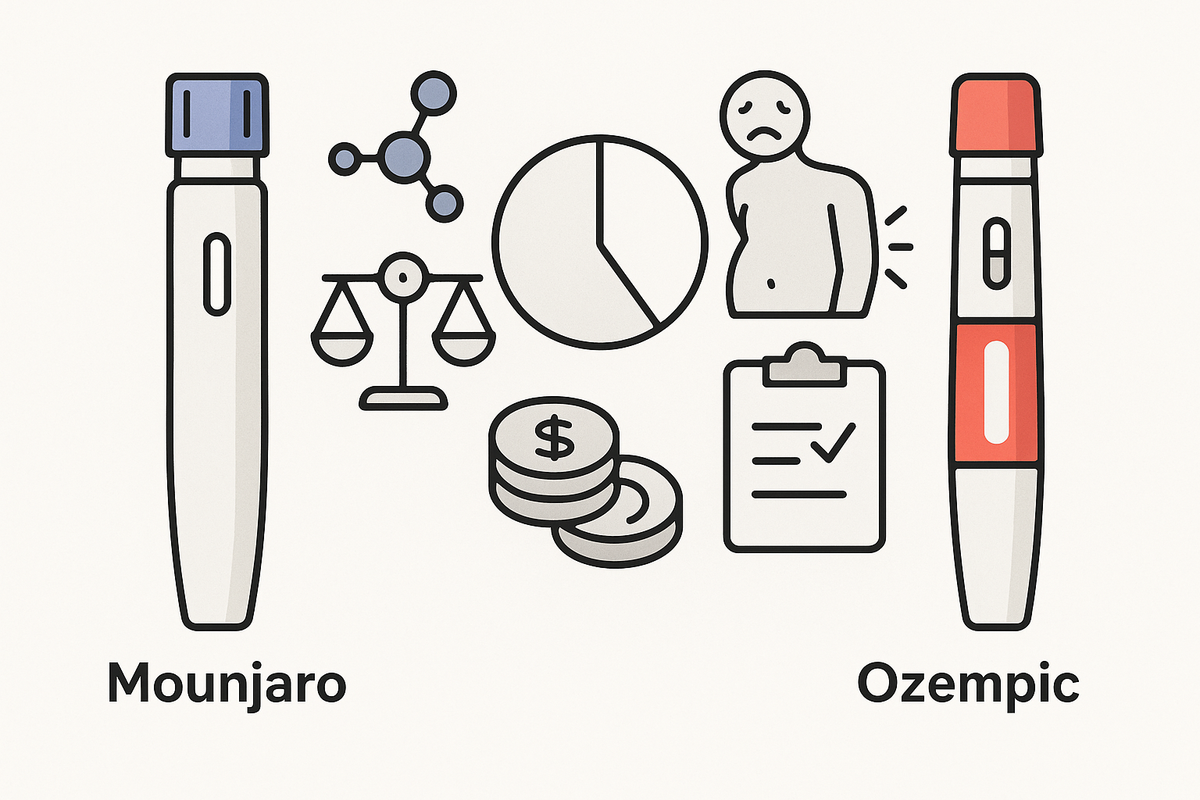
Both Mounjaro and Ozempic belong to a class of medications called GLP-1 receptor agonists, designed to mimic the action of natural gut hormones that regulate appetite and blood sugar. However, there are key differences in their targets:
- Ozempic (semaglutide): Mimics GLP-1 only. GLP-1 slows gastric emptying, increases insulin, decreases glucagon, and helps reduce appetite.
- Mounjaro (tirzepatide): Targets both GLP-1 and GIP receptors. GIP (glucose-dependent insulinotropic polypeptide) may further increase insulin release and support fat metabolism.
Why This Matters for Weight Loss
The dual-action of Mounjaro means it leverages two hormonal pathways. Early science suggests this may lead to better appetite suppression and weight loss compared to single-action GLP-1 drugs like Ozempic. Head-to-head trials are ongoing, but the distinction is a major factor for patients and clinicians comparing semaglutide vs tirzepatide.
Related Medications: Wegovy, Zepbound, and Others
It's important to note that Wegovy is simply the weight-loss brand name for semaglutide (same molecule as Ozempic, but higher doses), and Zepbound is the weight-loss version of tirzepatide (same as Mounjaro, but FDA-approved for obesity). This is why you often see comparisons like wegovy vs ozempic or zepbound vs mounjaro.
Section 2: Weight Loss Efficacy – Which Delivers More?
Clinical Trial Results: Average Pounds & Percent Lost
For people with obesity or overweight, weight loss results matter. Both Mounjaro and Ozempic have been studied extensively. Here’s what research shows:
- Ozempic/Wegovy: In clinical trials, patients lost on average about 15% of their starting body weight at the highest Wegovy dose over 68 weeks. For Ozempic (lower dose), typical weight loss is somewhat lower.
- Mounjaro/Zepbound: In trials, participants on the highest Zepbound dose lost up to around 21% of their body weight over 72 weeks. Mounjaro for diabetes (lower doses) led to somewhat lower average weight loss.
This suggests that, on average, Mounjaro may deliver more weight loss than Ozempic. However, individual results vary widely and depend on factors like dose, lifestyle, and biology.
Best GLP-1 for Weight Loss: What the Data Says
When people search for the best GLP-1 for weight loss, they're seeking the most effective, sustainable option. Current evidence points to tirzepatide (Mounjaro/Zepbound) as the leader in average pounds lost in clinical trials, but semaglutide (Ozempic/Wegovy) is still highly effective and may be preferred for some based on tolerance, insurance, or health history.
Real-World vs. Trial Results
Clinical trials are controlled environments. Real-world results can be lower due to missed doses, insurance barriers, or side effects. Tools like Trimm help users track doses, weight, and progress, making it easier to stay consistent and see long-term results. For more on monitoring your GLP-1 journey, see our guide: How to Track GLP-1 Progress: A Complete Guide.
Section 3: Blood Sugar and Diabetes Control
Effectiveness at Lowering A1C
Both Ozempic and Mounjaro are important tools for managing type 2 diabetes. Their main job in this setting is to lower blood sugar (measured by hemoglobin A1C). Here's how they compare:
- Ozempic: A1C reductions of about 1.5% to 2.0% are typical in studies.
- Mounjaro: May lower A1C by up to 2.5% at highest doses, and has outperformed semaglutide in some head-to-head trials.
This means Mounjaro may give a slightly greater improvement in average blood sugar levels, but both are highly effective.
Diabetes Management Beyond Blood Sugar
These medications also help reduce risk of diabetes complications by promoting weight loss and improving blood pressure and cholesterol. For many, this may mean fewer medications and better overall metabolic health.
When to Choose One Over the Other
The choice between Mounjaro and Ozempic for diabetes depends on factors like insurance coverage, response to treatment, and side effect tolerance. Both are major advances, but only your doctor can determine which is best for your individual health picture.
Section 4: FDA Approval Status and Indications
FDA Approvals for Diabetes vs. Weight Loss
The regulatory status of each drug impacts how they're prescribed and covered:
- Ozempic: FDA-approved for type 2 diabetes. Its sister drug Wegovy (higher dose, same molecule) is FDA-approved for chronic weight management in adults and teens aged 12+.
- Mounjaro: FDA-approved for type 2 diabetes. Its higher-dose twin, Zepbound, is approved for chronic weight management in adults with obesity or overweight and at least one weight-related condition.
Age Eligibility: Who Can Use These Medications?
There's a difference in who can receive these drugs for weight loss:
- Wegovy: Approved for adults and children 12 and older with obesity.
- Zepbound: Approved for adults only (18+).
Neither Mounjaro nor Ozempic is FDA-approved for weight loss in children under 18. Always consult a healthcare provider for age-appropriate treatment.
Insurance and Off-Label Use
Doctors sometimes prescribe Ozempic or Mounjaro "off-label" for weight loss, but insurance coverage varies widely. FDA approval status can affect prior authorization and cost. For more on insurance and privacy, see Compare GLP-1 Trackers for Privacy: What You Need to Know.
Section 5: Side Effects and Safety Profiles
Most Common Side Effects: What to Expect
Mounjaro and Ozempic share a side effect profile, as both slow stomach emptying and affect gut hormones. The most common issues include:
- Nausea
- Vomiting
- Diarrhea or constipation
- Abdominal pain
- Reduced appetite
These typically occur when starting or increasing the dose, and often improve over time. Tracking your symptoms can help you and your doctor manage side effects and adjust your plan. See our step-by-step guide: How to Track Side Effects on GLP-1s.
Severe or Rare Side Effects
- Severe GI symptoms: Persistent vomiting or abdominal pain should be reported promptly.
- Gastroparesis: Slowed stomach emptying can be severe in rare cases.
- Gallbladder issues: Rare but possible.
- Pancreatitis: Inflammation of the pancreas, a rare but serious risk.
- Thyroid tumors: Animal studies suggest a risk; human data is limited.
Side effect severity is similar between Mounjaro and Ozempic, though some patients report more GI upset with Mounjaro. There is no clear evidence that one is universally safer or riskier.
Individual Tolerance and Monitoring
Everyone’s experience is unique. Some individuals tolerate one medication better than the other. Using a tracking tool like Trimm can help you document side effects, share accurate data with your provider, and make informed decisions together.
Section 6: Cost, Access, and Age Eligibility
Price Without Insurance: A Major Consideration
GLP-1 medications are expensive out-of-pocket. Here are ballpark figures (exact prices may vary by pharmacy, location, and discounts):
- Ozempic: $900–$1,100/month
- Mounjaro: $1,000–$1,200/month
- Wegovy: $1,300–$1,500/month
- Zepbound: $1,000–$1,200/month
Insurance coverage varies. Many plans cover these drugs for diabetes, but only some cover them for weight loss. Manufacturer coupons may be available for those who qualify.
Access Challenges: Shortages and Prior Authorizations
High demand has led to periodic shortages and delays. Prior authorization is often required, especially for weight loss indications. Persistence and documentation (such as weight logs and side effect diaries) can help with insurance approval.
Age Restrictions Recap
- Ozempic/Mounjaro: Approved for adults with type 2 diabetes.
- Wegovy: Approved for ages 12 and up for weight loss.
- Zepbound: Approved for adults only.
For help tracking medications and documentation, see our app guide: Best App for GLP-1 Tracking: Your Complete Guide.
For a detailed breakdown of what you might pay for these medications and strategies to save, check out our complete guide to affording Ozempic and Wegovy.
Section 7: Cardiovascular & Kidney Protection
Heart Disease Benefits: What We Know
GLP-1 medications are not just about weight or blood sugar. Large studies show that semaglutide (Ozempic/Wegovy) offers substantial cardiovascular protection in people with type 2 diabetes and at high risk of heart disease, reducing the risk of heart attack, stroke, and cardiovascular death.
Tirzepatide (Mounjaro/Zepbound) is newer, so large outcome studies are ongoing. Early data is promising, but as of now, semaglutide has more robust evidence for heart protection.
Kidney Health: A Growing Area of Study
Semaglutide and tirzepatide may both help protect the kidneys, especially in people with diabetes or at risk of kidney disease. More research is needed to determine the extent of these benefits.
Which Drug is Best for Heart Protection?
If you have heart disease or high risk, Ozempic/Wegovy currently has the strongest supporting evidence for cardiovascular benefit, with FDA endorsement for this indication. Mounjaro may catch up as ongoing studies report results, but for now, Ozempic/Wegovy are the leaders in this area.
Section 8: Real-World Experience, Lawsuits & Tracking
Real-World Results: What Patients Report
Outside of clinical trials, patients report a range of experiences with both drugs. Some find Mounjaro’s weight loss effect dramatic, while others prefer the more gradual effect and tolerability of Ozempic. Tracking your own experience—doses, weight, side effects—can be crucial to long-term success. Trimm is designed to make this process simple and visual, helping you spot patterns and milestones along your journey.
Lawsuits and Adverse Event Concerns
As with any medication, there have been reports of rare but serious side effects, and lawsuits have emerged alleging insufficient warnings regarding risks like gastroparesis. The overall safety profile remains favorable based on current evidence, but ongoing monitoring and open communication with your provider are essential. Never stop or start medication without consulting your doctor.
Personalizing Your GLP-1 Journey
- Discuss your values, goals, and side effect tolerance with your healthcare team.
- Use tracking tools to document progress and side effects. Our resource: How to Log GLP-1 Injections: A Step-by-Step Guide.
- Focus on holistic well-being, not just the number on the scale. For a compassionate perspective, see Am I Fat Quiz: Understanding Your Body & Weight Health or our ultimate body-positive guide to body types and shapes.
Whichever GLP-1 you choose, support, structure, and self-tracking are key ingredients for success.
Conclusion
Choosing between Mounjaro vs Ozempic is a complex decision that should be made with your healthcare provider. Mounjaro’s dual GIP/GLP-1 mechanism may offer more weight loss and blood sugar reduction for some, while Ozempic boasts robust cardiovascular data and a proven safety track record. Both have similar side effect profiles and high costs without insurance, and neither is "best" for everyone. Your body, goals, and health history matter most. Throughout your journey, using a tool like Trimm can help you stay organized, track your progress, and make informed choices alongside your care team.
FAQ
Q: Is Mounjaro better than Ozempic for weight loss?
A: Clinical trials show Mounjaro (tirzepatide) may result in greater average weight loss than Ozempic (semaglutide), especially at higher doses. However, individual results vary, and tolerability, insurance, and health factors also play a role. For a comprehensive overview of GLP-1 medications, results, and safety, see GLP-1 Weight Loss: The Definitive Guide.
Q: What is the difference between Mounjaro and Ozempic mechanisms?
A: Mounjaro acts on both GIP and GLP-1 receptors (dual agonist), while Ozempic targets only GLP-1. This dual action may enhance both weight loss and blood sugar control for some people.
Q: Are Mounjaro and Ozempic FDA approved for weight loss?
A: Ozempic is FDA-approved for type 2 diabetes, and Wegovy (higher-dose semaglutide) is FDA-approved for weight loss. Mounjaro is FDA-approved for type 2 diabetes, and Zepbound (higher-dose tirzepatide) is approved for weight loss in adults.
Q: How much does Mounjaro cost compared to Ozempic without insurance?
A: Out-of-pocket, Mounjaro typically costs $1,000–$1,200 per month, while Ozempic costs $900–$1,100 per month. Prices vary by pharmacy and location.
Q: Which drug has more severe side effects: Mounjaro or Ozempic?
A: Both have similar side effects (mainly GI symptoms). Some patients report more GI issues with Mounjaro, but overall severity is comparable. Always discuss side effects with your doctor.
Q: Does Ozempic protect against heart disease better than Mounjaro?
A: Ozempic (semaglutide) has more established evidence for cardiovascular protection, especially in people with diabetes and heart risk. Mounjaro's heart benefits are still being studied.