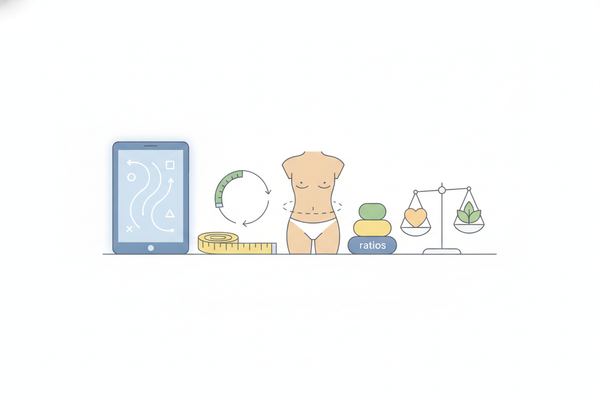
How to Measure Healthy Weight for Chronic Illness Patients
Learn how to measure healthy weight for chronic illness patients using BMI, waist measures, body fat, and more for better health insights.


Estimated reading time: 8 min
Key Takeaways
- BMI is a helpful starting point but has limitations for chronic illness patients.
- Waist circumference and waist-to-height ratio can better indicate abdominal fat risks.
- Accurate, consistent weight measurement methods matter for monitoring health.
- Body composition and medical context are essential to interpret healthy weight.
- Regular tracking with tools like Trimm supports informed health decisions.
Knowing how to measure healthy weight for chronic illness patients is important for managing health effectively. Unlike the general population, people with chronic conditions may need more nuanced assessments than just looking at the number on the scale or their BMI. This guide explains practical steps to measure and interpret healthy weight while considering the unique challenges of chronic illness.
Step 1: Understand What BMI Really Means and Its Limitations
BMI (Body Mass Index) is a simple calculation using weight and height (kg/m2) that categorizes people into underweight, normal weight, overweight, or obese. For adults, it’s often the first measure doctors check.
However, BMI has important limitations, especially with chronic illness:
- BMI does not distinguish between fat and muscle. Someone with muscle loss but high fat can have a “normal” BMI but an unhealthy body composition.
- It doesn’t account for fluid retention (edema), common in some chronic conditions, which can increase weight temporarily.
- Long-standing disability or illness may alter body shape and composition, making BMI less reliable.
Read more on these limitations in our detailed post BMI Limitations: What BMI Really Means (and Misses) for Your Health.
Step 2: Use Waist Circumference and Waist-to-Height Ratio for Abdominal Obesity
Measuring waist circumference helps assess central or abdominal obesity, which is linked to metabolic risks more than overall weight. To measure:
- Use a flexible tape measure at the midpoint between the lowest rib and the top of the hip bone.
- Measure while standing, after exhaling normally.
The waist-to-height ratio (waist circumference divided by height) is another useful marker—ratios over 0.5 may indicate higher health risk.
These measures provide insight into fat distribution, which BMI alone can’t reveal. For more on body shapes, see Apple vs Pear Body Shape: How to Tell & What It Means.
Step 3: Measure Weight Accurately and Consistently
Accurate weight measurement is foundational yet can be challenging, especially for chronic illness patients. Follow these tips:
- Weigh at the same time of day, ideally in the morning after using the bathroom and before eating.
- Use the same scale each time, calibrated if possible.
- Wear similar clothing or no clothes to reduce variability.
- Remove shoes, prosthetics, or heavy accessories if possible.
Consistency helps detect true weight changes rather than fluctuations caused by external factors. For more detailed methods, see How to Measure Healthy Weight with Body Measurements.
Step 4: Special Weighing Methods for Mobility-Limited Patients
For patients who are bedbound or use wheelchairs, traditional weighing scales may not work. Alternatives include:
- Bed scales designed to measure weight without moving the patient.
- Wheelchair scales that weigh the patient plus the chair, then subtract the wheelchair weight.
- Consult healthcare providers for appropriate equipment and techniques.
Regularly recording these weights helps track progress or detect concerning weight loss or gain.
Step 5: Interpret Weight in the Context of Medical Conditions and Body Composition
Healthy weight is not a single number but a range influenced by:
- Muscle mass vs fat mass — body fat percentage gives more insight than weight alone.
- Fluid retention (edema), which can temporarily increase weight without fat gain.
- Disability-related changes in body shape and muscle tone.
Body fat percentage can be measured by bioelectrical impedance or other methods, helping clarify if someone is “skinny fat” (normal weight but high fat and low muscle), a concern sometimes seen in chronic illness. For more on fluid retention and healthy weight, see How to Know if Weight Is Healthy with Fluid Retention.
Step 6: Monitor for Unintentional Weight Loss or Gain
Sudden or unexplained weight changes can signal worsening health or complications. Maintaining serial measurements over weeks or months is important. Use tools like Trimm to log weight, doses, and symptoms for a comprehensive view of your health journey.
Regular monitoring allows early intervention and better management in collaboration with your healthcare team.
Step 7: Account for Clothing, Shoes, Prosthetics, and Timing
Weight readings can be affected by:
- Heavy clothing or shoes adding several pounds.
- Prosthetics or medical devices worn during weighing.
- Time of day and recent meals or fluid intake.
Document these factors when weighing to maintain consistency and accurate interpretation.
Tips & Common Mistakes
- Don’t rely solely on BMI; use multiple measures like waist circumference and body fat percentage.
- Avoid obsessing over the scale number; focus on trends and overall health markers.
- Be mindful of measurement conditions to reduce variability.
- Consult a doctor before making any medication or diet changes.
- Use tracking apps like Trimm to keep all your data organized and easy to share with your healthcare team.
Conclusion
Measuring healthy weight for chronic illness patients requires a holistic approach beyond just BMI. Incorporating waist measurements, body composition, and consistent weight tracking provides a clearer health picture. Remember, health is more than a number — it’s about how you feel, function, and manage your condition with your care team. Tools like Trimm can support your journey by tracking doses, weight, and symptoms in one place, helping you and your doctor make informed decisions together.
FAQ
How do you calculate healthy weight for someone with a chronic illness?
Healthy weight for chronic illness patients involves using BMI as a starting point but also considering waist circumference, body fat percentage, muscle mass, and medical conditions. Consulting a healthcare provider for personalized goals is essential. For a comprehensive overview, see How to Tell If You Are at a Healthy Weight: The Complete Guide.
Is BMI accurate for patients with chronic conditions or disability?
BMI has limitations for chronic illness and disability since it doesn’t differentiate fat from muscle or account for fluid retention. It should be combined with other measures like waist-to-height ratio and body composition for a fuller picture.
What is the best way to measure weight in a bedbound patient?
Using bed scales or wheelchair scales designed for mobility-limited patients is recommended. These devices can accurately capture weight without requiring standing on a traditional scale.
Should waist circumference be used instead of BMI in chronic disease?
Waist circumference provides valuable information about abdominal fat and related risks, complementing BMI rather than replacing it. Both measures together yield better risk assessment.
How often should chronic illness patients be weighed to track weight changes?
Regular weight monitoring frequency depends on the condition but typically weekly or biweekly measurements help detect meaningful trends. Always follow healthcare provider recommendations.
What counts as a healthy weight if a patient has fluid retention or muscle loss?
Healthy weight must be interpreted alongside clinical signs and body composition. Fluid retention can temporarily elevate weight, and muscle loss may lower it. Professional evaluation is necessary to set realistic and safe targets.
Free to start
Try the Trimm app
Everything in this guide, in your pocket.
Get it on iPhoneGet it on Android