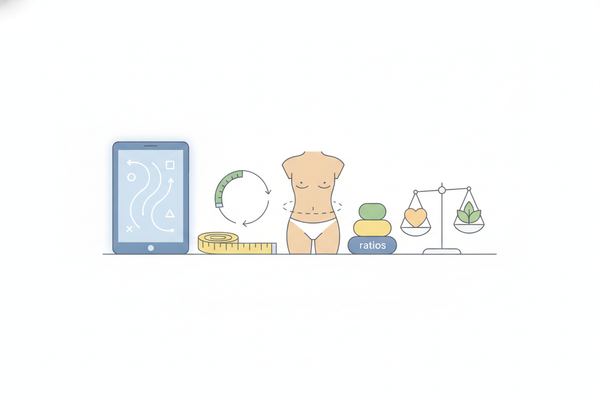
Healthy Weight Versus Healthy Body Composition: A Clear Comparison
Discover the difference between healthy weight and healthy body composition, why BMI falls short, and how to track true health beyond the scale.


Estimated reading time: 9 min
Key Takeaways
- Healthy weight is a number on the scale, but healthy body composition reveals fat, muscle, and bone balance.
- BMI is a quick screening tool but misses nuances like muscle mass, fat distribution, and visceral fat risks.
- Body fat percentage and waist-to-height ratio provide better insight into metabolic health than weight alone.
- You can be "skinny fat"—normal weight but high body fat—which may increase health risks despite a healthy BMI.
- Tracking progress with tools like Trimm helps understand your journey beyond weight, focusing on composition and wellness.
When trying to answer "Is my weight healthy?" many people first look at their number on the scale or calculate their BMI. But the more important question is often "Do I have a healthy body composition?" This comparison explores the difference between healthy weight and healthy body composition, why relying on BMI alone can be misleading, and how you can gain a clearer picture of your health through fat percentage and waist measurements. Understanding these concepts can empower you to track progress more meaningfully and make informed decisions—whether you’re starting a fitness routine, managing your weight loss journey with GLP-1 medications, or simply aiming for better health.
Quick Comparison
| Dimension | Healthy Weight | Healthy Body Composition |
|---|---|---|
| Definition | Body weight within a recommended range often assessed by BMI or weight charts | Proportion of fat, muscle, bone, and water in the body |
| Measurement Tools | Scale weight, BMI calculator | DEXA scan, bioelectrical impedance analysis (BIA), skinfold calipers, waist circumference |
| Key Indicators | Body Mass Index (BMI), weight-for-height ratio | Body fat percentage, muscle mass, bone density, visceral fat level |
| Health Insights | General indicator of weight status (underweight, normal, overweight, obesity) | Shows fat distribution, muscle health, and metabolic risk factors |
| Limitations | Does not differentiate fat from muscle or fat types; can misclassify muscular people | Requires specialized measurement; some methods less accessible |
| Examples of Misleading Results | "Skinny fat" (normal BMI but high body fat), athletes with high BMI but low fat | More precise view of metabolic health and fitness |
| Why It Matters | Easy to track but incomplete for health decisions | Better guides diet, exercise, and medical advice for lasting health |
Understanding Healthy Weight and Its Limits
Healthy weight is traditionally measured using body weight scales and BMI calculations. BMI, or Body Mass Index, is a formula that divides your weight in kilograms by your height in meters squared. It categorizes weight status as underweight, normal weight, overweight, or obese. While BMI is popular for its simplicity, it has significant limitations:
- Does not differentiate muscle from fat: A muscular person may have a high BMI but low fat percentage.
- Ignores fat distribution: BMI doesn’t reveal if fat is stored around the abdomen (visceral fat) or hips.
- Does not account for age, sex, or ethnicity: These factors influence healthy ranges but BMI treats everyone the same.
For example, someone might have a BMI of 24 (considered "normal") but carry a higher percentage of body fat, especially around the waist, which may increase health risks. This condition is often called "skinny fat"—a normal weight but body composition that could be improved.
To understand more about these pitfalls, the article BMI Limitations: What BMI Really Means (and Misses) for Your Health is an excellent resource.
Body Composition: The True Health Indicator
Body composition breaks down your body into components:
- Fat mass: Includes essential fat and storage fat; excess fat, especially visceral fat, is linked to heart disease and diabetes.
- Muscle mass: Important for metabolism, strength, and overall function.
- Bone mass: Reflects bone density and health.
- Water content: Influences weight fluctuations but is generally stable.
Tools such as DEXA scans (dual-energy X-ray absorptiometry) are considered a gold standard to measure these components precisely but are costly and less accessible. More common methods include bioelectrical impedance analysis (BIA) scales, skinfold caliper measurements, and simple waist circumference or waist-to-height ratio assessments.
Body fat percentage is key. Healthy ranges vary by sex and age, but generally:
- Women: 21-33% body fat is often considered healthy
- Men: 8-19% body fat is often considered healthy
Visceral fat—fat stored around internal organs—is particularly associated with health risks and may not be apparent from weight alone. Waist-to-height ratio is a practical proxy for visceral fat risk; a ratio above 0.5 is commonly used as a threshold for higher cardiometabolic risk.
Why You Can Be at a Healthy Weight But Have Unhealthy Body Fat Levels
The phenomenon of being "skinny fat" illustrates the disconnect between weight and health. An individual might have a weight classified as healthy by BMI but actually carry excess fat and insufficient muscle. This imbalance may increase risks of insulin resistance, cardiovascular disease, and metabolic syndrome.
Signs you might be "skinny fat" include:
- Normal BMI but high waist circumference or waist-to-height ratio
- Low muscle tone or strength despite normal weight
- Fat accumulation around the abdomen rather than hips or limbs
Improving body composition often involves strength training to increase muscle mass, alongside dietary changes to reduce fat, rather than focusing solely on weight loss. As you track your body composition, you may notice fat mass decreasing even if your weight stays relatively stable.
How to Measure Body Composition Accurately
Accurate measurement helps you understand your health beyond the scale. Methods include:
- DEXA Scan: Provides detailed fat, muscle, and bone analysis; expensive and usually done in clinics.
- BIA Scales: Inexpensive home devices that estimate body fat by electrical impedance; accuracy varies with hydration and device quality.
- Skinfold Calipers: Measures subcutaneous fat at multiple sites; requires skill to perform accurately.
- Waist Circumference and Waist-to-Height Ratio: Simple, inexpensive, and effective measures of abdominal fat and cardiometabolic risk.
Tracking these measurements over time provides a clearer picture of your health journey. For example, in a GLP-1 medication weight-loss journey, logging your doses, side effects, weight, and measurements in one place can support motivation and insight. Apps like Trimm are designed to help you do this seamlessly.
Which Should You Choose? Healthy Weight or Healthy Body Composition?
Both metrics have roles, but focusing on healthy body composition is generally more informative for your long-term health.
If you want simplicity and quick screening:
- Check your weight and BMI as an initial baseline.
- Use waist circumference or waist-to-height ratio to screen for abdominal fat risks.
If you want detailed health insights and progress tracking:
- Consider body composition analysis through calipers, BIA scales, or clinical scans if accessible.
- Focus on increasing muscle mass and reducing fat mass rather than just losing weight.
- Track your progress consistently with tools like Trimm, especially if using GLP-1 medications for weight management.
For people starting fitness or weight loss journeys:
- Don’t rely solely on the scale; take measurements and photos to capture changes in shape and composition.
- Understand that healthy weight ranges vary and that fat distribution matters more for health than total weight. Learn more about body types and shapes to appreciate how fat distribution affects your health.
Remember, no number fully defines your health. Always consult a healthcare professional to interpret your measurements and guide your plan safely and effectively. For those on GLP-1 medications, proper tracking of doses and side effects alongside body metrics is important; learn more in the Best App for GLP-1 Tracking guide.
FAQ
Is body composition more important than weight for health?
Body composition reveals fat and muscle proportions and fat distribution, which are often more directly linked to health risks than weight alone.
Can you be at a healthy weight but have unhealthy body fat levels?
Yes. The "skinny fat" condition describes people with normal BMI but higher body fat and lower muscle mass, which may increase health risks.
What is the difference between BMI and body composition?
BMI is a ratio of weight to height that estimates weight category but does not differentiate fat from muscle. Body composition measures the actual percentages of fat, muscle, and bone.
How do you measure body composition accurately?
Methods include DEXA scans, bioelectrical impedance analysis, skinfold calipers, and waist circumference measurements. Each varies in accuracy and accessibility.
What is a healthy body fat percentage for women and men?
Generally, healthy ranges are approximately 21-33% for women and 8-19% for men, but these vary by age and health status. For more on determining if your weight is healthy, see How to Tell If You Are at a Healthy Weight: The Complete Guide.
How can I improve body composition without losing a lot of weight?
Focus on strength training to build muscle and a balanced diet to reduce fat. Tracking progress with measurements and photos helps see changes beyond the scale.