How to Ensure Robust Data Security in GLP-1 Apps: Best Practices & Guidance
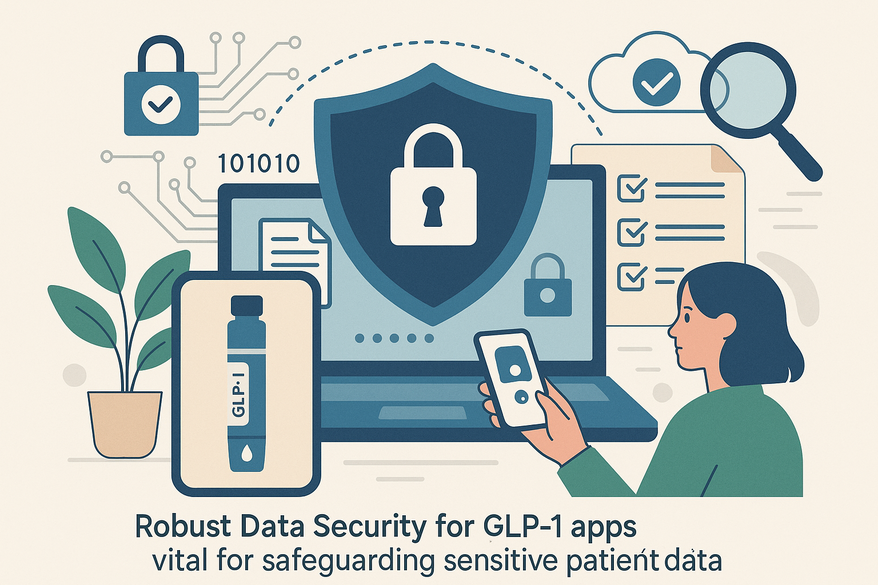
Discover best practices for ensuring robust data security in GLP-1 apps, vital for safeguarding sensitive patient data. Learn compliance strategies and future trends.

Estimated reading time: 8 minutes
Key Takeaways
- GLP-1 apps handle highly sensitive PII and PHI, making data security essential for patient trust.
- Implement strong encryption, MFA, RBAC, and secure SDLC practices to protect data in transit and at rest.
- Adhere to regulatory frameworks like HIPAA, GDPR, FTC rules, CCPA/CPRA, and state privacy laws.
- Foster a security-first culture through regular audits, employee training, and clear incident response plans.
- Stay ahead with emerging privacy-preserving technologies such as federated learning and homomorphic encryption.
Table of Contents
- Introduction: Data Security in GLP-1 Apps
- Understanding GLP-1 Apps and Data Security
- Importance of Data Security in GLP-1 Apps
- Common Threats and Vulnerabilities
- Best Practices for Data Security
- Challenges in Maintaining Security
- Recommendations & Guidance
- Future Trends & Considerations
- Conclusion: Data Security in GLP-1 Apps
Introduction: Data Security in GLP-1 Apps
GLP-1 apps are digital tools that support patients on GLP-1 receptor agonists—such as semaglutide—to manage obesity, diabetes, and metabolic health. These platforms offer telehealth visits, dose tracking, and real-time coaching and thus collect and process highly sensitive health, biometric, and behavioral data.
Weak protections can lead to breaches that expose personal health information, erode patient trust, and trigger legal penalties. For those managing a GLP-1 journey who need a secure way to log doses, weight, side effects, meals, and more, check out Trimm, which consolidates all your GLP-1 data with industry-standard encryption and privacy controls. For a deeper dive into privacy considerations, see our post on GLP-1 App Privacy: How Your Health Data Is Collected, Stored & Protected.
This guide provides actionable best practices, compliance considerations, and future trends to safeguard patient information in GLP-1 applications.
Understanding GLP-1 Apps and Data Security
Definition: Mobile or web-based platforms that facilitate telehealth consultations, prescription management, adherence coaching, and real-time biometrics integration for GLP-1 therapies.
Common categories:
- Telehealth prescription & fulfillment platforms (online consultations, e-scripts, AI coaching)
- Companion/adherence apps with injection reminders and behavior coaching
- Wearable-integrated applications correlating sleep and heart rate with medication
- Regulated digital therapeutics capturing real-world evidence in obesity treatment
Typical data types managed:
- PII: name, date of birth, contact info
- PHI: diagnoses, lab results, comorbidities, prescription details
- Medication logs: dosing, schedules, refill history
- Biometric & behavioral telemetry: weight, sleep, heart rate, mood
- Engagement & commercial analytics: session metrics, subscription status
Importance of Data Security in GLP-1 Apps
Medical and behavioral data in GLP-1 apps is more sensitive than general wellness information. Users managing stigmatized conditions face heightened privacy and discrimination risks if data is leaked.
Key risks of breach:
- Identity theft & medical fraud
- Discrimination & profiling by insurers or employers
- Loss of patient trust & clinical under-reporting
- Legal/regulatory penalties under HIPAA, GDPR, FTC rules
Regulatory landscape:
- HIPAA (US): technical, administrative, physical safeguards for covered entities
- FTC Act & Health Breach Notification Rule: applies to non-HIPAA health apps
- GDPR: health data as special category requiring strong protection
- State laws (CCPA/CPRA): biometric & health data as sensitive
Common Threats and Vulnerabilities
General threats:
- External attacks on APIs & cloud storage
- Weak authentication & session management
- Data leakage via third-party tracking
- Insider threats & supply-chain risks
GLP-1-specific vulnerabilities:
- Granular behavioral telemetry enabling re-identification
- Data monetization pressures in venture-backed telehealth
- Fragmented partner network expanding attack surface
- Wellness-vs-medical boundary leading to underinvestment
Best Practices for Data Security
- Encryption & Secure Storage/Transmission
- TLS 1.2+ for in-transit data
- AES-256 for at-rest encryption; key management via HSM/KMS
- Field-level encryption for PHI; minimize device storage
- Robust Authentication & Access Control
- Enforce MFA for all users
- Implement RBAC and least privilege
- Use short-lived tokens and secure session handling
- Secure SDLC & Regular Audits
- Threat modeling in design phase
- SAST/DAST and third-party assessments (SOC 2, pen tests)
- Defined SLAs for vulnerability management
- Data Minimization & Privacy-Preserving Analytics
- Collect only necessary data
- Apply de-identification or pseudonymization
- Segregate health analytics from ad networks
- Employee Training & Security Culture
- Regular PHI handling and phishing education
- Clear policies on data access and incident reporting
Challenges in Maintaining Security
Technical & Operational Challenges:
- Rapid feature releases vs. security
- Complex EHR/pharmacy/wearable integrations
- Legacy systems in compounding pharmacies
- Continuous telemetry pipeline management
Budgetary, Regulatory & Organizational Constraints:
- Startup budget pressures on security
- Regulatory ambiguity between HIPAA, FTC, state laws
- Vendor management overhead across partners
Recommendations & Guidance
For Developers & Product Teams:
- Map data flows end-to-end
- Embed security/privacy by design
- Build transparent consent dashboards with granular opt-outs
- Secure APIs and mobile code
For Healthcare Providers & Clinical Orgs:
- Conduct vendor due diligence: BAAs, SOC 2, pen-test reports
- Enforce access control & monitoring
- Educate patients on privacy settings
For IT & Security Teams:
- Develop and test a GLP-1 incident response plan
- Inventory and risk-assess all third-party integrations
- Implement DLP, SIEM monitoring, continuous permission reviews
Future Trends & Considerations
- Advancing wearable & ambient sensing integration
- AI-driven personalization & model governance
- Emerging PETs: differential privacy, homomorphic encryption, federated learning
- Regulatory tightening: enhanced enforcement and global convergence
Conclusion: Data Security in GLP-1 Apps
Data security in GLP-1 apps is not optional—it’s foundational to patient trust and regulatory compliance. Core pillars include:
- Encryption and secure transmission
- Strong authentication and access control
- Secure SDLC with regular audits
- Data governance, minimization, and privacy-preserving analytics
- A culture of security through training and transparency
Implement these best practices, conduct regular security reviews, and share feedback to continuously strengthen protections for sensitive GLP-1 data.
FAQ
What makes data in GLP-1 apps particularly sensitive?
GLP-1 apps collect both personal identifiers and detailed health information—such as diagnoses, lab results, medication logs, and biometric telemetry—making them subject to stricter privacy and security requirements than general wellness apps.
Which regulations should GLP-1 app developers follow?
Developers must adhere to HIPAA for covered entities, comply with the FTC Health Breach Notification Rule for non-HIPAA apps, follow GDPR for EU users, and consider state laws like CCPA/CPRA addressing health and biometric data.
How can users verify an app’s security posture?
Look for third-party audits and certifications (SOC 2, ISO 27001), review published pen-test summaries, check for clear privacy policies, and confirm support for MFA and encrypted data practices.
What emerging technologies will impact future GLP-1 app security?
Privacy-enhancing technologies (PETs) such as federated learning, differential privacy, and homomorphic encryption will enable data analysis without exposing raw PHI. AI governance frameworks will also become critical.
How often should GLP-1 apps conduct security reviews?
Continuous monitoring is ideal, with formal assessments—such as vulnerability scans, pen tests, and compliance audits—conducted at least annually or whenever major features are released.