GLP-1 App Privacy: How Your Health Data Is Collected, Stored & Protected
Explore GLP-1 app privacy to understand how your sensitive health data is managed, stored, and protected against risks like stigma and discrimination.

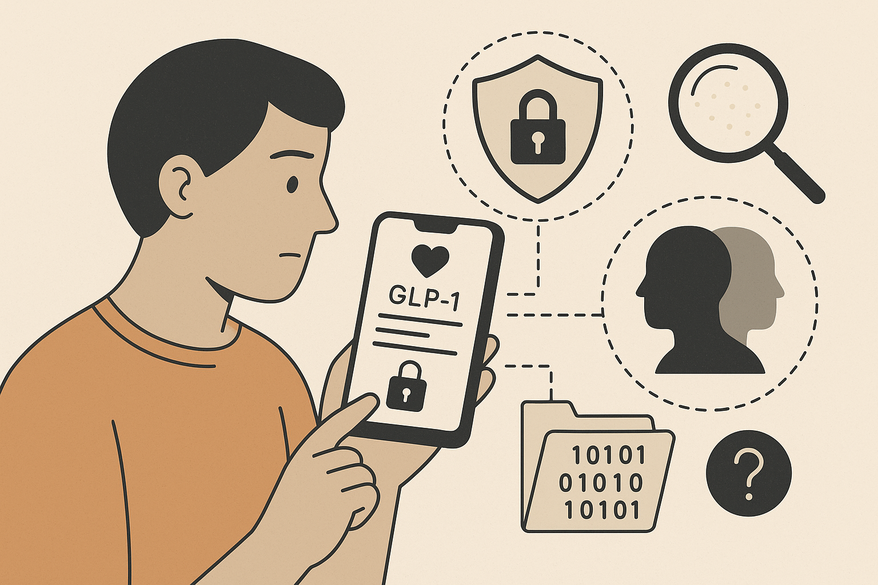
Estimated reading time: 8 minutes
Key Takeaways
- GLP-1 apps collect sensitive health and behavioral data, requiring robust privacy safeguards.
- Storage models (on-device, encrypted sync, hybrid) offer different security trade-offs.
- Strong encryption, authentication, and clear policies are essential for data protection.
- Users and developers should follow best practices to minimize privacy risks.
- Emerging trends include local-first storage, privacy-preserving analytics, and regulatory shifts.
Table of Contents
- Introduction
- Background on GLP-1 Apps and GLP-1 App Privacy
- In-Depth Look at Privacy Features
- Best Practices for Ensuring GLP-1 App Privacy
- Emerging Trends & Future Considerations
- Conclusion
- Additional Resources
Introduction
GLP-1 app privacy refers to how apps that support GLP-1 medications—like Ozempic and Wegovy—collect, store, and share highly sensitive health and behavioral data. These companion tools track injections, side effects, weight changes, mood, food intake, and more. Without solid protections, users face risks of stigma, discrimination in insurance or employment, and unwanted marketing outreach.
For instance, Trimm provides end-to-end encryption for dose logs, weight, side effects, meals and more—all in one place so you can see your trends without worrying about leaks.
Why privacy matters:
- Stigma and discrimination from health or weight data leaks.
- Insurance or job consequences if sensitive data is misused.
- Loss of trust in digital health tools.
Background on GLP-1 Apps and GLP-1 App Privacy
What Are GLP-1 Apps?
GLP-1 apps are digital tools designed for people on GLP-1 therapies. They range from simple dose trackers to full telehealth platforms. Common types:
- Dose trackers and reminder apps.
- Side-effect and symptom journals.
- Photo progress and weight logging tools.
- Nutrition coaches with meal planning.
- Telehealth services prescribing GLP-1 meds.
If you’re just getting started, check out our complete guide to tracking your GLP-1 journey.
Common Functionalities
- Injection reminders and scheduling.
- Weight, symptom, and mood logging.
- Photo-based progress tracking.
- Integration with wearables and nutrition apps.
- Chat or video sessions with clinicians.
For apps that sync with your fitness device data—heart rate, steps, sleep—see how integration can boost insights while raising privacy questions.
Data Sensitivity and Regulations
- Health and behavioral logs are often “protected” or “sensitive” personal data.
- Location patterns and daily routines add to privacy risks.
- Many wellness apps are not HIPAA-covered, even if they collect health data.
- Such apps fall under consumer privacy laws (GDPR, CCPA) or FTC rules instead of health-specific rules.
In-Depth Look at Privacy Features
Storage Architectures
- On-device only
All logs and entries stay on your device—no server sync, zero risk from server breaches or third-party tracking. - Encrypted cloud sync
Data stored locally, then synced via end-to-end encryption to services like iCloud or Google Drive—developers can’t read your logs. - Hybrid/telehealth models
Minimal account info stored on servers with aggregated metrics; full telehealth platforms may share data with vendors.
Data Security Measures
- Encryption
TLS/SSL in transit and AES-256 at rest; on-device OS-level protections (Secure Enclave, file-based encryption). - Strong authentication
Password complexity, multi-factor authentication (MFA), session timeouts, reauthentication for sensitive actions. - Retention policies
Automatic deletion or anonymization of analytics after set periods (e.g., 30–90 days); clear backup and archival timelines.
Privacy Policies & Standards
- Required elements
Data types collected, legal basis for processing, third-party sharing, user rights (access, deletion, portability), contact info. - No-sale statements
Some apps pledge no sale of health data and no health-based advertising. - Policy gaps
Many wellness apps mix health data with broader analytics without healthcare-grade safeguards.
Best Practices for Ensuring GLP-1 App Privacy
User-Side Practices
- Read and compare privacy policies; favor local-first or encrypted-cloud storage.
- Limit app permissions; avoid unnecessary location tracking.
- Use unique passwords and enable MFA.
- Keep software updated to patch vulnerabilities.
- Avoid public Wi-Fi for health apps; use private networks or a VPN.
- Manage your data; regularly delete old logs and close unused accounts.
Developer-Side Practices
- Minimize data collection to essential metrics only.
- Implement local-first or zero-access cloud storage.
- Use end-to-end encryption and secure authentication.
- Commit to a “no-advertising” stance on personal health information.
- Publish clear, plain-language privacy policies.
- Offer easy data export, deletion, and account closure features.
- Ensure compliance with HIPAA, GDPR, CCPA, and FTC guidelines.
Emerging Trends & Future Considerations
Local-First & Edge Computing
Apps are shifting to on-device processing and storage, using the cloud only for encrypted backups or aggregated metrics.
Privacy-Preserving Analytics
Techniques like differential privacy and secure multi-party computation let developers analyze trends without exposing individual records.
Regulatory Shifts
- Increased FTC enforcement on health data tracking.
- Expanded GDPR and CCPA rights for data control and marketing opt-outs.
- New guidelines affecting telehealth and GLP-1 platforms.
Challenges & Opportunities
- Balancing personalized support with minimal data collection.
- Ensuring interoperability while limiting third-party exposure.
- Building user trust through transparency and robust security.
Conclusion
GLP-1 app privacy is essential to safeguard personal health, autonomy, and trust. With GLP-1 therapies on the rise, apps must protect sensitive data on injections, weight, mood, and more.
For users:
- Choose local-first or zero-access cloud-sync apps.
- Read privacy policies and manage permissions.
- Use strong passwords, enable MFA, and avoid public Wi-Fi.
- Regularly export, review, and delete data.
For developers:
- Minimize data collection and avoid health-based advertising.
- Implement end-to-end encryption and local-first storage.
- Publish clear, plain-language policies with user controls.
- Stay compliant with HIPAA, GDPR, CCPA, and FTC guidelines.
Additional Resources
- GLP1.app Privacy Policy
- Pep GLP-1 Tracker Policy
- The GLP-1 Telehealth & Privacy Boom
- FTC & HIPAA Guidance on Tracking
- Consumer Privacy Law Summaries
FAQ
Are GLP-1 apps HIPAA-covered?
Only apps run by covered entities or their business associates fall under HIPAA. Stand-alone wellness trackers typically rely on consumer privacy laws (GDPR, CCPA) and FTC rules.
Can my data be sold?
Some GLP-1 apps declare a no-sale policy for personal health information. Others may share data with analytics or marketing partners if you consent. Always check the privacy policy.
Is anonymized data safe?
Aggregated or de-identified data can sometimes be re-identified when combined with other datasets. Seek apps detailing technical safeguards like differential privacy.
How can I delete all my GLP-1 data?
Look for in-app deletion or account closure features. Many local-first apps delete data upon uninstall. For cloud-based apps, submit a deletion request and check policy timelines (often 30 days).