Best Wearables for GLP-1 Tracking: Top Devices to Monitor Your Therapy Progress
Discover the best wearables for GLP-1 tracking to enhance your therapy progress, including must-have features and top device recommendations.

Estimated reading time: 7 minutes
Key Takeaways
- Wearables provide continuous, whole-body monitoring—vital for semaglutide or tirzepatide therapy.
- Must-have features include heart-rate & HRV, activity & sleep tracking, recovery metrics, and app integration.
- Top devices: Apple Watch, WHOOP, Oura Ring, Samsung Galaxy Watch, and Garmin outdoor watches.
- Seamless syncing with apps like Apple Health, Google Fit, MyNetDiary, or Trimm amplifies insights.
- Future trends: non-invasive glucose sensing, AI-driven coaching, body-composition estimates, and dosing suggestions.
Table of Contents
- GLP-1 Therapy and Tracking Overview
- Wearable Technology in GLP-1 Tracking
- Criteria for Wearables Selection
- Top Wearable Recommendations for GLP-1 Tracking
- Maximize Your Wearable for GLP-1 Therapy
- Future Trends in Wearable Technology
- Conclusion: Wearable Recommendations
- FAQ
GLP-1 Therapy and Tracking Overview
GLP-1 therapy employs semaglutide or tirzepatide to support diabetes management and weight loss. Effective tracking goes beyond the scale—it’s whole-body monitoring of:
- Fat mass and lean mass
- Blood pressure and heart rate patterns
- Appetite and eating habits
- Sleep quality and recovery
- Glucose trends (when paired with a CGM)
Why tracking matters:
- Early side-effect detection (fatigue, lean-mass loss)
- Informed diet, exercise, and dose adjustments
- Better long-term health and weight maintenance
For a complete guide on what metrics to track and best practices, explore our in-depth walkthrough.
Wearable Technology in GLP-1 Tracking
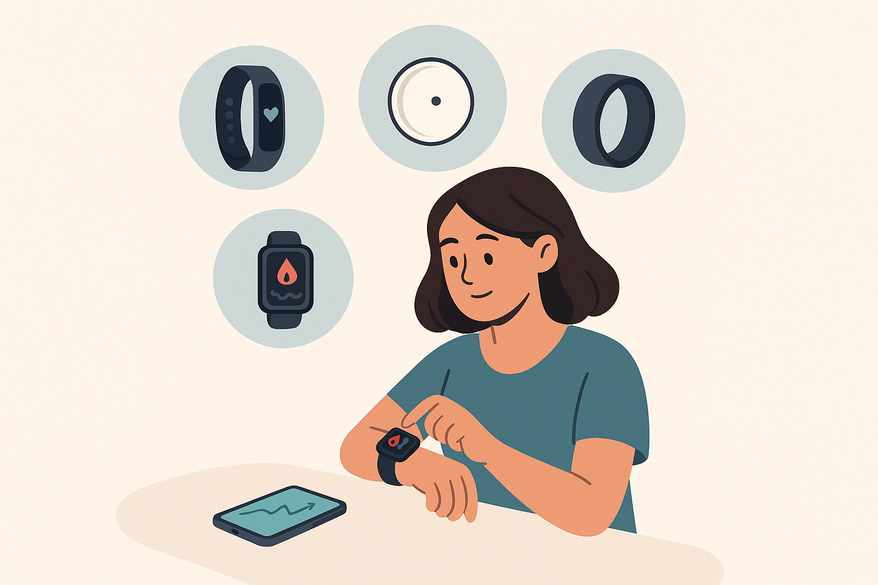
Wearables deliver continuous insights, capturing habits day and night to reveal the drivers behind your therapy results. Key features to look for:
- Heart-rate monitoring and heart rate variability (HRV) for stress and recovery
- Activity tracking (steps, workouts, calories burned) for energy balance
- Sleep tracking (duration, stages, disturbances) to flag fatigue
- Recovery metrics (strain, readiness score) for lean-mass and performance
- Glucose trend estimation when paired with a continuous glucose monitor (CGM)
- Seamless integration with health apps (Apple Health, Google Fit, MyNetDiary)
For unified tracking of weight, dosing, side effects, and more, check out Trimm, which consolidates data into intuitive charts, milestones, and reminders.
Criteria for Wearables Selection
Accuracy & Reliability
- Validated optical sensors for heart rate and HRV
- Clinically reviewed sleep algorithms
- Precise activity detection (GPS for distance, accelerometers for steps)
Usability & Comfort
- Lightweight, ergonomic design for 24/7 wear
- Adjustable bands or ring sizes
- Water-resistance for shower and swim
Integration
- Compatibility with Apple Health, Google Fit, MyNetDiary
- Open-source or API access for custom dashboards
- Automatic syncing over Bluetooth or Wi-Fi
Battery Life & Durability
- Smartwatches: ≥24 hours per charge
- Rings/bands: ≥4 days per charge
- Water- and impact-resistance to survive workouts
Cost & Value
- Device price range ($100–$400+)
- Subscription fees (e.g., WHOOP monthly)
- Included features versus add-ons
Top Wearable Recommendations for GLP-1 Tracking
1. Apple Watch
Best for: general health tracking & safety
Pros:
- Broad health ecosystem with ECG and blood-oxygen apps
- Fall detection and emergency SOS
- Vast app library for nutrition, workout, and glucose logging
Cons:
- Battery life ~18 hours per charge
- Higher upfront cost (~$300+)
2. WHOOP
Best for: recovery & behavior tracking
Pros:
- Strain and recovery scores guide daily activity
- HRV, sleep staging, and respiratory rate
- Body-composition logging for lean-mass trends
Cons:
- Subscription model (~$30/month)
- No on-device display; data lives in the app
3. Oura Ring
Best for: sleep & early illness/recovery signals
Pros:
- Tracks temperature, HRV, and resting heart rate during sleep
- Discreet design with 4–7 day battery life
- Insightful readiness score for recovery planning
Cons:
- Limited on-the-go workout feedback
- Precise ring sizing required for accuracy
4. Samsung Galaxy Watch
Best for: mixed health & coaching features
Pros:
- ECG and sleep apnea detection
- AI-driven coaching for workouts and stress management
- Strong app ecosystem with rotating bezel UI
Cons:
- Battery life varies by model (1–3 days)
- Tizen/One UI integration can lag behind Apple Watch apps
5. Garmin Outdoor-Focused Watches
Best for: exercise, GPS & durability
Pros:
- Rugged build and water resistance for outdoor workouts
- Long battery life in GPS mode (20+ hours)
- Advanced metrics: VO₂ max, training load, recovery time
Cons:
- Less emphasis on recovery analytics like HRV scores
- Steeper learning curve for advanced features
Maximize Your Wearable for GLP-1 Therapy
- Log weight, energy levels, meals, and side effects each morning in your companion app.
- Review heart-rate, sleep, and activity trends weekly to spot fatigue or lean-mass loss early.
- Sync wearable data with MyNetDiary to correlate medication timing with meals and workouts. Learn more in our meal plan guide.
- Adjust diet (protein intake), exercise (strength vs. cardio), and dosage in real time with your healthcare team.
- Share weekly reports in appointments for data-driven dose adjustments.
Future Trends in Wearable Technology
- Non-invasive glucose sensing: early prototypes aim to track glucose without a CGM.
- AI-driven coaching: personalized nutrition and exercise plans based on trends.
- Body-composition estimates: optical and bioimpedance sensors for fat and lean mass.
- Sleep apnea and early illness detection: temperature and respiratory rate analytics.
- Integrated dosing suggestions: algorithms that suggest GLP-1 dose tweaks based on recovery and glucose trends.
For more on integrating GLP-1 data with wearable insights, dive into our expert analysis.
Conclusion: Wearable Recommendations
Choosing the best wearables for GLP-1 tracking can transform your therapy journey. By monitoring sleep, activity, heart rate, and recovery, devices like Apple Watch, WHOOP, and Oura Ring offer real-time feedback to optimize semaglutide or tirzepatide treatment. Consider your priorities—general health, recovery focus, or outdoor durability—and select the device that fits your lifestyle. Subscribe for updates and share your wearable experiences in the comments below.
FAQ
- Can wearables replace medical monitoring?
- No. Wearables complement clinician guidance by tracking lifestyle and recovery, but they don’t replace blood tests or professional exams.
- Do I need a CGM?
- Not for all. Continuous glucose monitors offer deep glucose insights but aren’t routinely recommended for non-diabetics. Wearables can still flag trends.
- Which wearable is best overall?
- Apple Watch is ideal for mainstream users, while WHOOP or Oura Ring excel in recovery-focused tracking. Choose based on battery life, comfort, and required metrics.