
AI-Powered GLP-1 Progress Notes: Transforming Clinical Documentation
Discover how AI-powered GLP-1 progress notes enhance clinical documentation, improving data quality and reducing the burden for personalized patient care.

Estimated reading time: 7 minutes
Key Takeaways
- AI streamlines documentation by automating data capture and structured templates for semaglutide and tirzepatide care.
- Enhanced insights from real-time vitals and trends support safer dosing and early side-effect detection.
- Reduced burden on clinicians frees time for patient interaction and complex decision-making.
- Integration challenges include EMR compatibility, data privacy, and clinician adoption hurdles.
Table of Contents
- Introduction
- Understanding GLP-1 Progress Notes
- The Role of AI in Enhancing Documentation
- Detailed Benefits of AI-Powered GLP-1 Progress Notes
- Practical Applications & Use Cases
- Challenges & Considerations
- Future Trends & Innovations
- Conclusion & Actionable Recommendations
- FAQ
Introduction
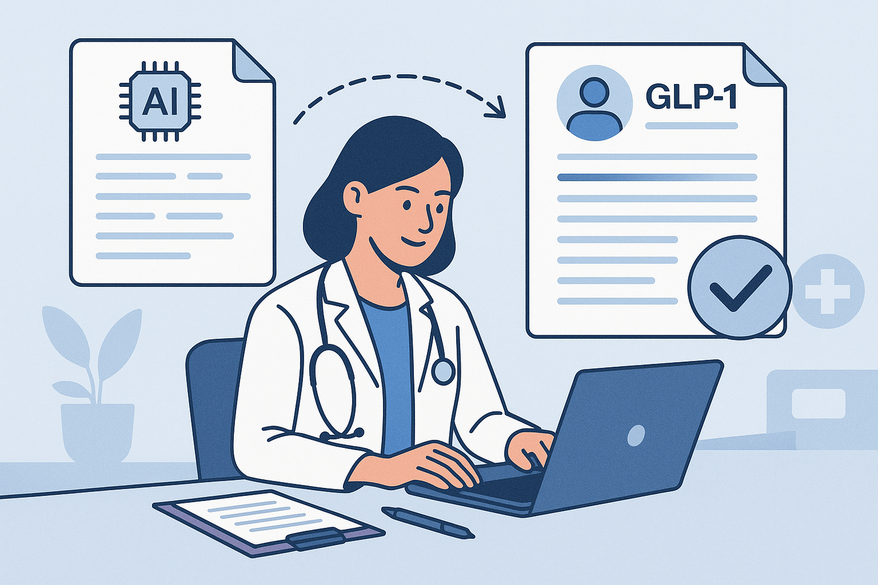
AI-powered GLP-1 progress notes are changing how clinicians track semaglutide and tirzepatide care. They use artificial intelligence to generate or augment digital notes that capture dosing, side effects, vital signs, lifestyle factors, and long-term outcomes. As GLP-1 medications for type 2 diabetes and obesity surge, providers face a parallel rise in documentation demands.
With manual note-taking, data lives in silos—EMRs, patient apps, lab portals—leading to fragmented insights and heavy time burdens. Patients can centralize tracking with detailed logs of doses, weight, and side effects (see How to Track Your GLP-1 Weight Loss Journey: A Complete Guide).
Understanding GLP-1 Progress Notes
GLP-1 progress notes are structured entries in an EMR/EHR or wellness-EMR that document each patient encounter on GLP-1 therapy. They form a longitudinal record of dose, response, and lifestyle data.
Typical components include:
- Medication details: agent, dose, injection timing, titration plan (for dosing best practices, refer to Comprehensive GLP-1 Dosage Guidelines)
- Adherence data: missed doses, barriers, timing deviations
- Clinical response: weight, BMI, waist circumference, vitals, lab values
- Side effects: nausea, GI upset, fatigue
- Lifestyle factors: diet, physical activity, sleep, stress
- Labs and diagnostics: A1c, lipids, liver enzymes
- Patient-reported outcomes: hunger, satiety, quality of life
- Assessment & plan: interpretation, dose changes, follow-up intervals
Clinician challenges:
- Fragmented data across portals and apps
- High time burden of manual entry
- Scalability issues in high-volume obesity and diabetes programs
- Inconsistent detail leading to missed trends
The Role of AI in Enhancing Documentation
AI in documentation automates data capture, note generation, and decision support:
Automated data integration
- Pulls dosing, side-effect reports, vitals, scans, and questionnaires from apps and devices
- Structures multi-source inputs into standardized fields for GLP-1 notes
Protocol-based templates
- Embed GLP-1 dosing algorithms and titration pathways
- Ensure consistent, compliant documentation across patients
Natural Language Processing (NLP)
- Transcribes clinician–patient dialogues into problem-oriented notes
- Extracts dose changes, symptoms, and goals from free text
- Normalizes patient-reported data into structured EMR fields
Machine Learning (ML)
- Predicts adherence patterns and dropout risk
- Stratifies side-effect risk and suggests follow-up intensity
- Personalizes reminders and coaching messages
Key benefits
- Real-time documentation updates from remote monitoring
- Improved accuracy and completeness of GLP-1 notes
- Seamless integration with existing EMR workflows
Detailed Benefits of AI-Powered GLP-1 Progress Notes
1. Increased Efficiency
- Automated data capture reduces manual entry and copying
- Generative AI pre-drafts notes for clinician review
- Protocol-driven templates speed up note completion
2. Enhanced Data Quality & Clinical Insight
- Integration of 3D body-shape scans and video-derived vitals enriches metrics
- Structured continuous data reveals adherence dips and early plateaus (Learn how to analyze trends in Mastering GLP-1 Trend Analysis: A Step-by-Step Guide)
- Actionable analytics highlight trends clinicians might miss
3. Reduced Administrative Burden
- Unified platforms eliminate re-entry across tools
- Automated follow-ups and centralized histories reduce manual tracking
- More time for patient interaction and complex decision-making
Practical Applications & Use Cases
Deployment settings:
- Specialty obesity/metabolic clinics using protocolized GLP-1 pathways
- Virtual/telehealth GLP-1 programs with remote AI monitoring
- Wellness/integrative practices with wellness EMRs and AI templates
- Primary care networks delivering longitudinal cardiometabolic care
Tracking and tailoring care:
- Visual AI progress tracking motivates adherence by showing body changes
- Real-time vital signs and body composition alerts guide clinicians
- Dose, meal, and side-effect logging apps feed insights into notes
Example scenarios:
- Obesity clinic plateau reframing: AI-driven 3D scans show waist reduction despite weight plateau; progress note highlights positive trends to encourage the patient.
- Telehealth AI monitoring: Weekly video scans detect rising blood pressure; automatic note alerts clinician for early cardiac follow-up.
- Multi-site wellness EMR: AI templates and centralized histories enable small teams to manage large patient volumes.
Challenges & Considerations
- Technical/implementation pitfalls: EMR integration complexity can silo AI insights; model accuracy and generic outputs require clinician oversight; risk of over-reliance on AI without manual validation.
- Data privacy & cybersecurity: HIPAA compliance demands encryption, audit trails, and access controls; app and device vulnerabilities introduce new attack surfaces; vendors must ensure robust cybersecurity and breach response plans.
- Human factors & adoption: Clinician resistance from narrative loss and trust issues; learning curve for new AI-augmented workflows; adoption strategies include co-design workflows, use AI as draft assistant, measure performance, and provide hands-on training.
Future Trends & Innovations
- Generative AI in EMRs for multi-modal input (speech, images, sensors)
- Multi-modal monitoring combining wearables, 3D scans, labs
- Advanced decision support simulating therapy trajectory scenarios
Documentation as a passive by-product of care interactions, scalability of GLP-1 programs through standardized AI workflows, and consolidation of scheduling, documentation, and billing in unified platforms will define the next wave of clinical technology.
Conclusion & Actionable Recommendations
AI-powered GLP-1 progress notes reduce documentation burden, enhance data quality, and enable personalized care for patients on GLP-1 therapy. They capture dosing, side effects, and subtle body-composition changes in a coherent, actionable record.
- AI handles data capture, structuring, and draft note creation.
- Clinicians retain control for interpretation, judgment, and care decisions.
Action steps for clinics and digital programs:
- Choose EMRs with GLP-1 protocol support and AI automation.
- Integrate remote AI health monitoring (video/3D scanning).
- Establish governance for privacy, security, validation, and oversight.
Action steps for individual practitioners:
- Start with AI augmentation of existing notes (summaries, templates).
- Use structured note templates for dosing, side effects, and outcomes.
- Gradually expand AI roles as trust in the system builds.
For a patient-facing perspective, the web and mobile app Trimm brings dose logs, weight trends, side-effect patterns, and more into one seamless interface.
FAQ
Q: What are AI-powered GLP-1 progress notes?
A: They are digital clinical notes enhanced by AI to automate data capture, integrate multisource inputs, and generate structured entries for GLP-1 therapy monitoring.
Q: How do they improve patient care?
A: By providing real-time insights on dosing, vitals, and side effects, AI-powered notes enable proactive adjustments and early detection of complications.
Q: Are these systems secure?
A: Yes, they must comply with HIPAA, use encryption, audit trails, and access controls, and adhere to robust cybersecurity standards.
Q: How can clinicians adopt AI-driven documentation?
A: Start with AI draft-assist tools and structured templates, involve end-users in workflow design, measure performance, and provide hands-on training to build trust.